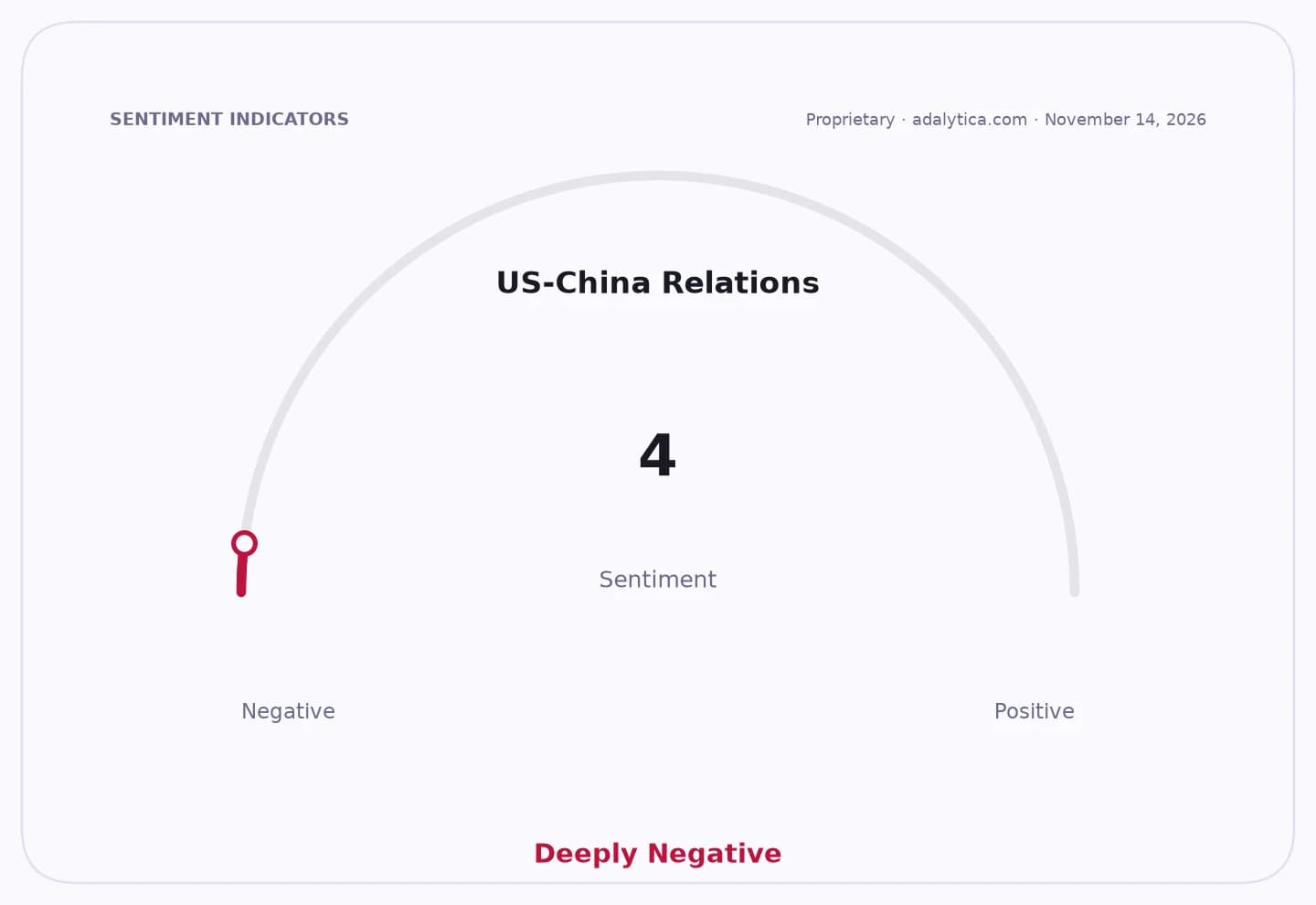
The Philippines’ rare call for officials to dial back anti-China rhetoric is unlikely to alter the underlying South China Sea dispute, because the country’s maritime policy and enforcement decisions remain driven by security agencies rather than the foreign ministry.
Philippines Rethinks Anti-China Rhetoric on Sea Dispute
That matters for investors and regional policymakers because the row with Beijing is not a messaging problem alone: it is tied to patrols, coast guard encounters, defense deals and the strategic alignment of the Philippines with Washington and other partners. A change in tone may lower the temperature around speeches, but it does little to change the incentives that keep confrontations at sea recurring.
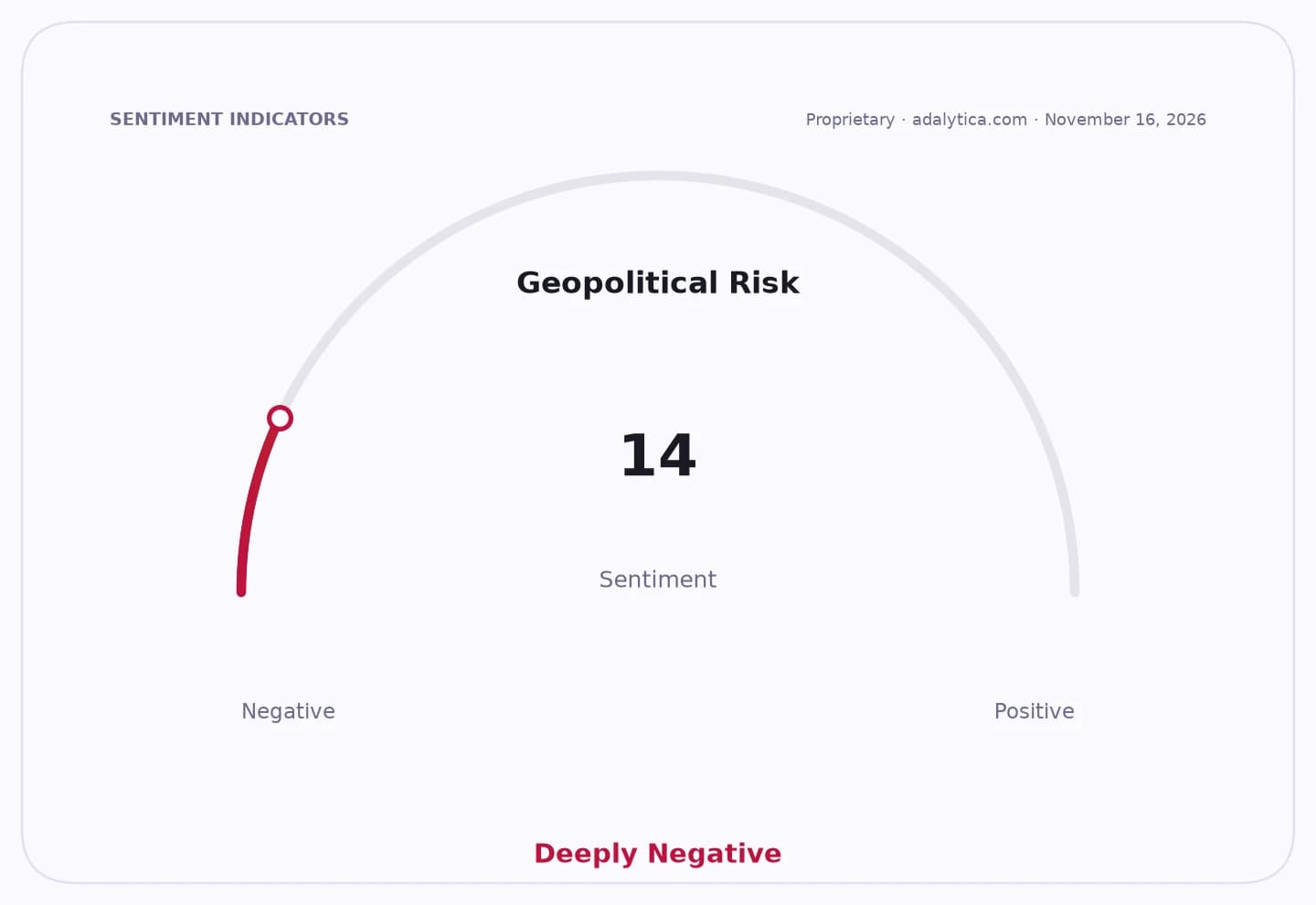
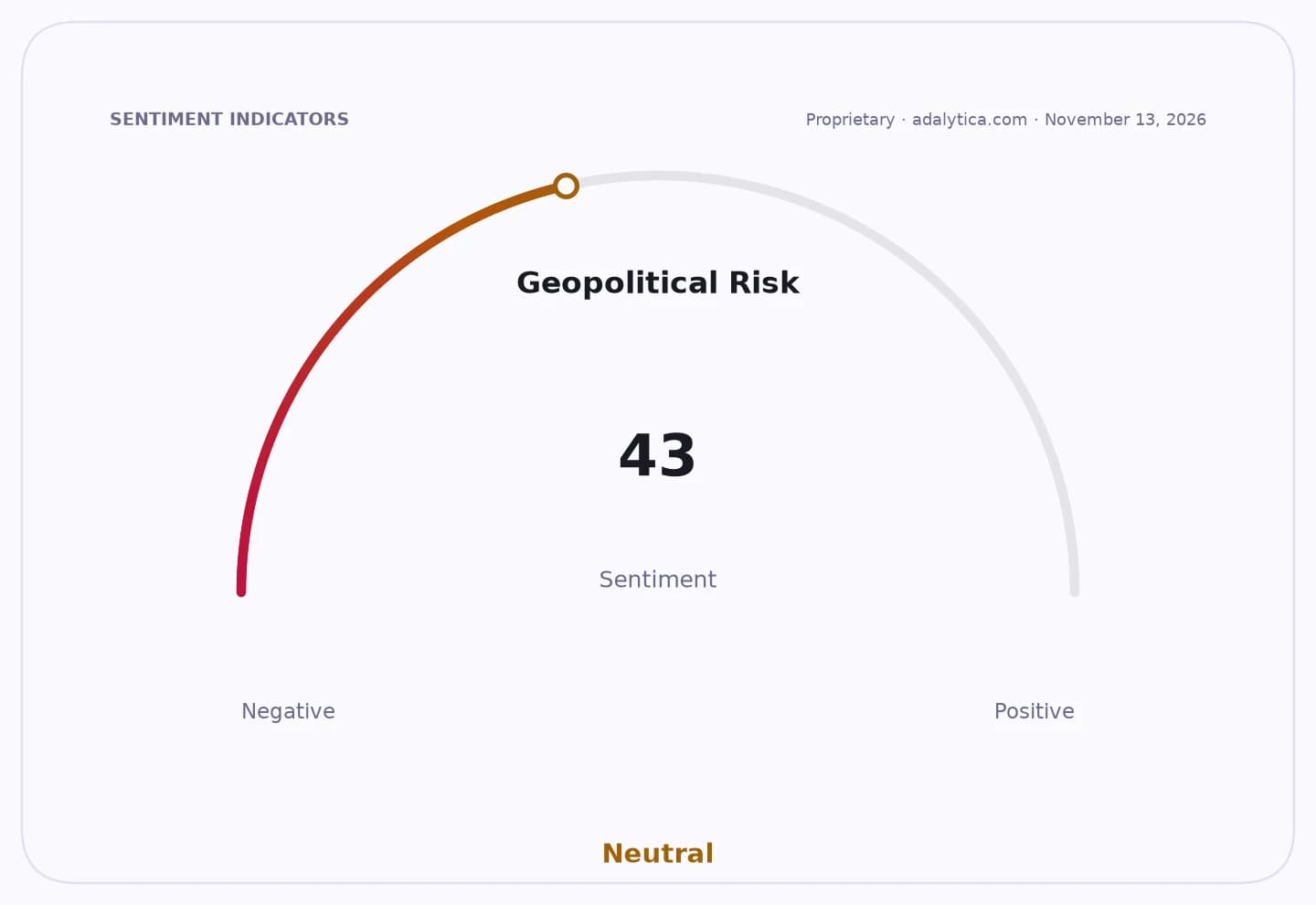
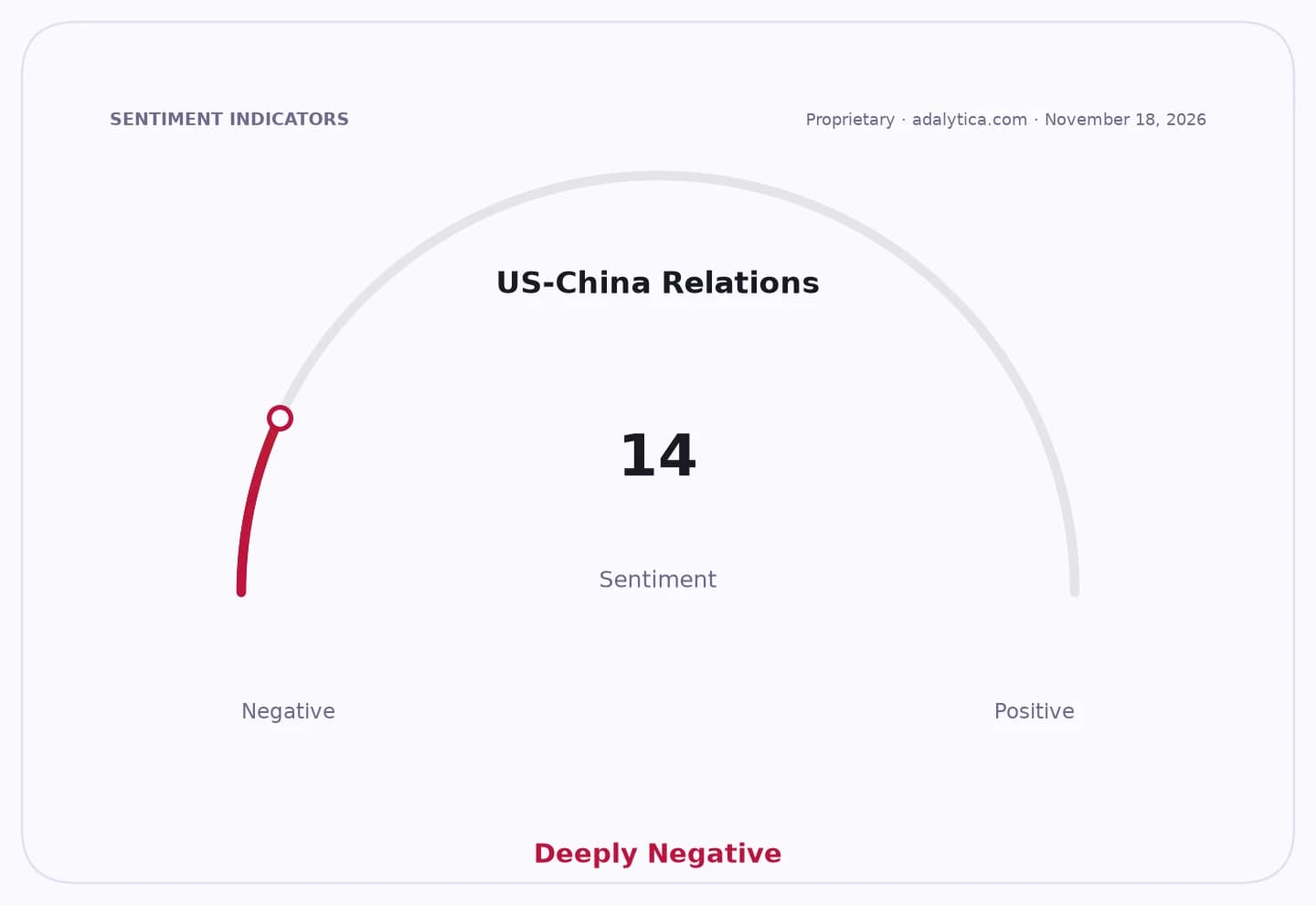
Sentiment Indicators
The Philippine foreign ministry on Sunday cautioned against inflammatory rhetoric and urged a unified foreign policy to preserve stable ties with China. But analysts said the move should be read as an effort to manage the message, not a strategic pivot away from a tougher line on maritime claims.
The ministry has limited influence over actual maritime operations, according to a South China Sea researcher cited in local reporting, leaving the defense establishment and coast guard to determine the practical posture in contested waters. That institutional split has been a recurring feature of the dispute and is why public language in Manila often shifts without producing a corresponding shift in behavior.
The standoff remains economically relevant well beyond diplomacy. The South China Sea is a key trade artery for energy, commodities and manufactured goods, while any escalation can pressure shipping sentiment, insurance costs and regional risk assets. Adalytica’s Global Stability Sentiment gauge shows awareness at “Extreme Fear” even after a one-day rebound, underscoring how quickly geopolitical flashes can rattle markets.
The market impact has been selective rather than broad, but the exposure is real for Asia-focused funds and ETFs with large China and Philippines weights. The iShares MSCI Philippines ETF, ticker EWW, closed at $77.13 on Nov. 13, well above its 50-day moving average of $74.39, while the iShares China Large-Cap ETF, FXI, ended at $33.48, just below its 50-day average of $33.91. The KraneShares CSI China Internet ETF, KWEB, finished at $22.93, also under its 50-day average of $24.23.
Broader regional diplomacy is still moving in the background. China and ASEAN have said they have completed roughly 70% to 77% of a South China Sea code of conduct, but key issues remain unresolved, leaving the prospect of a binding framework uncertain. That means investors are likely to keep treating the dispute as an episodic risk rather than a resolved one, with defense ties, maritime encounters and Beijing-Manila rhetoric the main catalysts to watch.
| Entity | Gains | Losses |
|---|---|---|
| Philippine foreign ministry | ▲Lowers diplomatic heat | ▼Limits its leverage |
| China | ▲Easier optics, less rhetoric | ▼No relief on disputes |
| Philippine security agencies | ▲Policy status quo | ▼Less room for messaging |
| Regional investors | ▲Clarity on risk remains | ▼Higher geopolitical volatility |