The Philippines is leaving military-to-military communications with China suspended, a hardening stance that raises the risk of miscalculation in the South China Sea but also signals Manila is willing to pay a diplomatic price to protect its maritime claims.
Philippines keeps China military hotline suspended
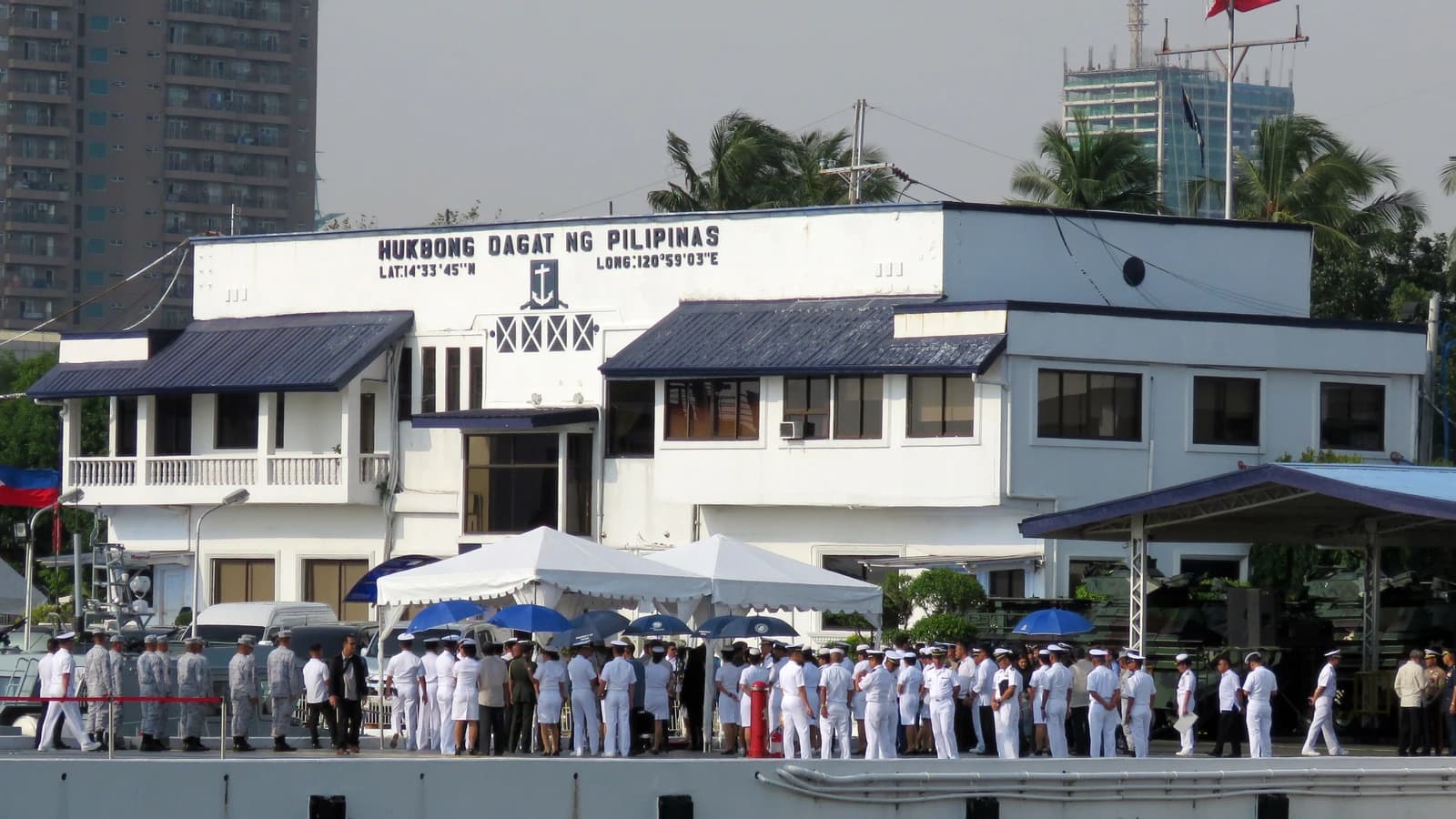
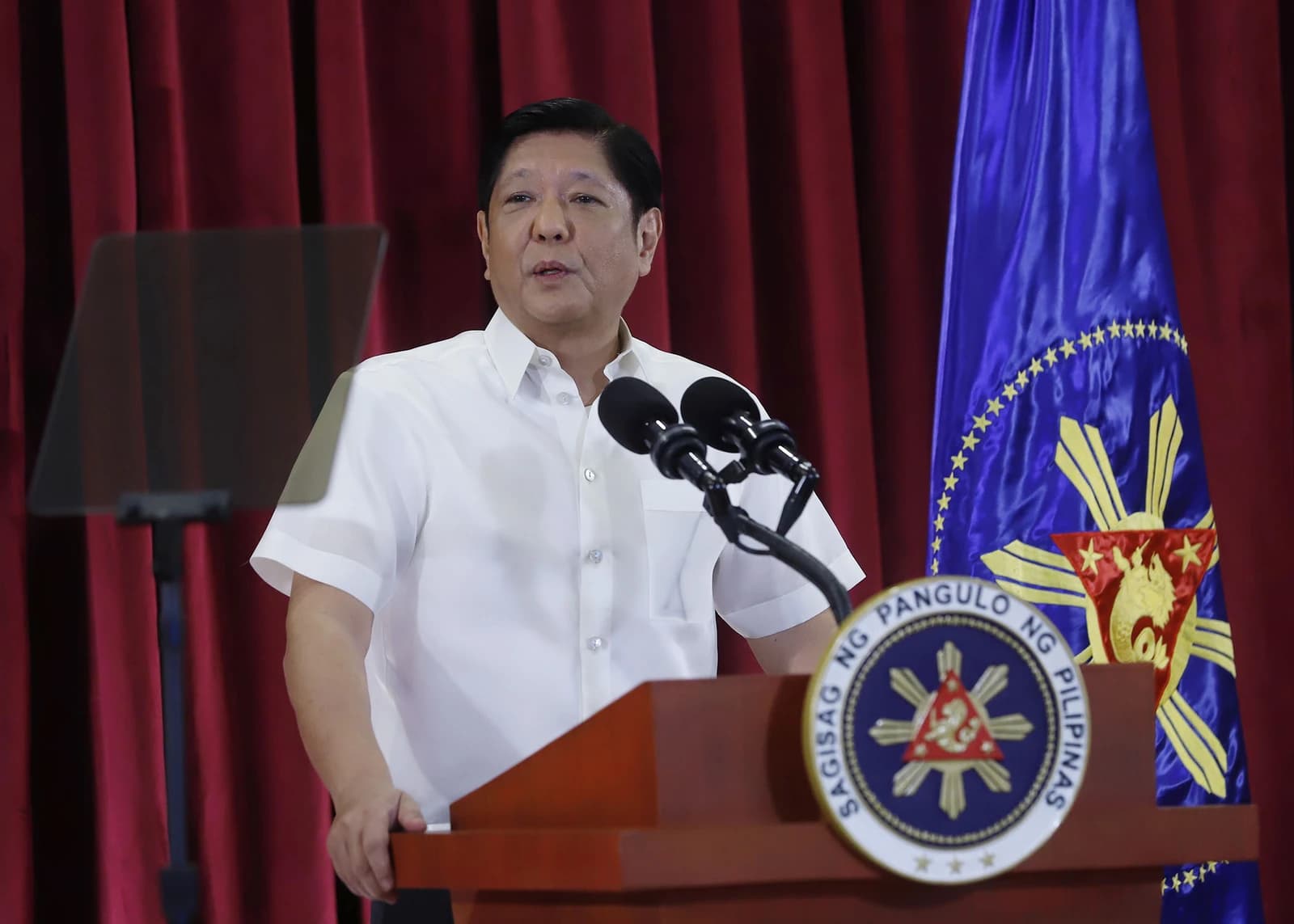
Defense Secretary Gilbert Teodoro said the channel has been shut for about three years because Beijing had “abused” it by twisting narratives and using the contact line as cover for what Manila sees as coercive behavior. The immediate economic issue is not a trade shock, but the stability premium attached to one of Asia’s most strategically important waterways. Any further deterioration in Philippine-China ties complicates shipping confidence, raises security costs and adds another layer of uncertainty for companies exposed to regional supply chains, energy routes and maritime insurance.
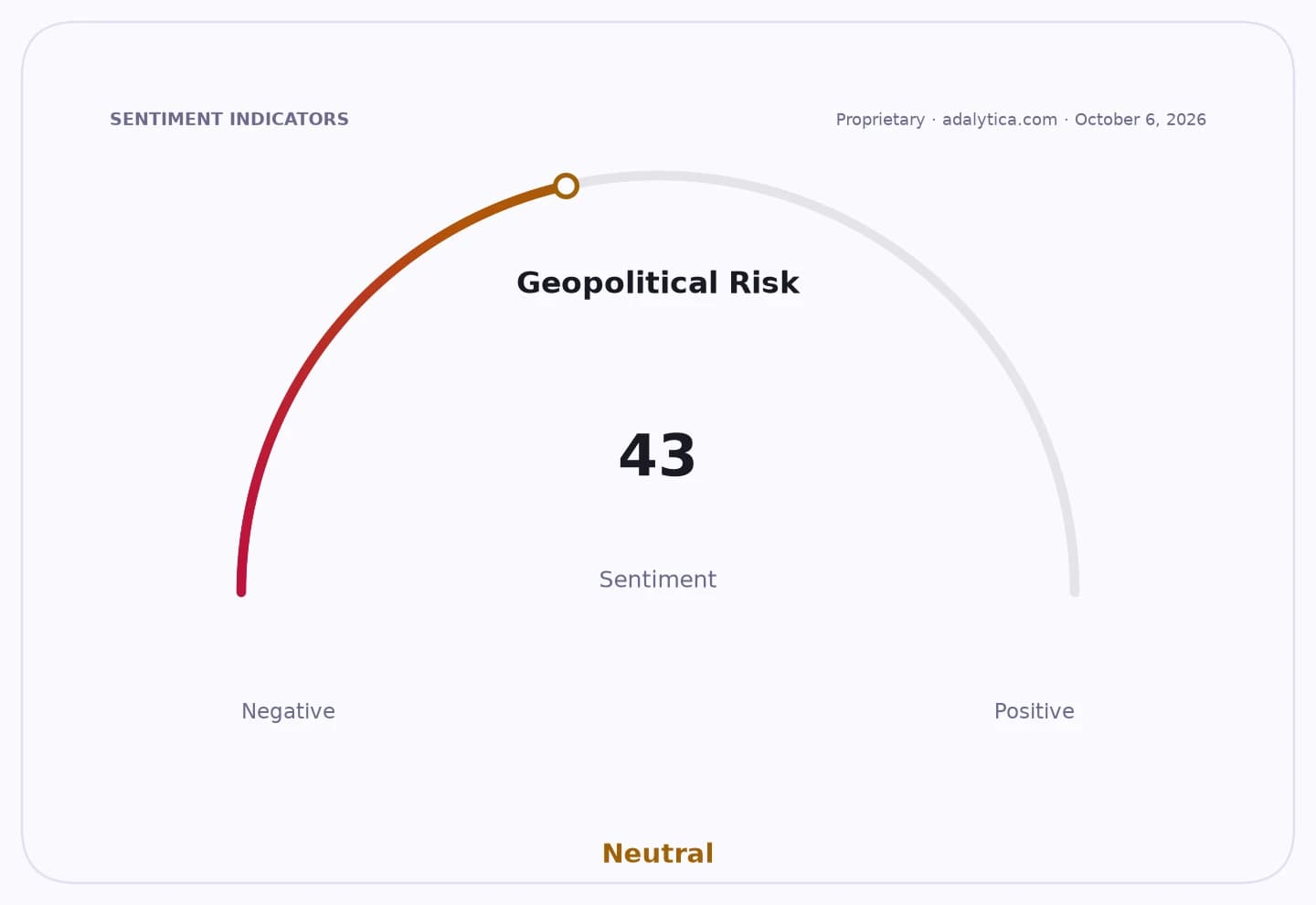
Sentiment IndicatorsⓘProprietary · adalytica.com · October 15, 2026
This is a snapshot — live sentiment, awareness and momentum for 130+ markets update continuously in the dashboard.Open AlphaPulse
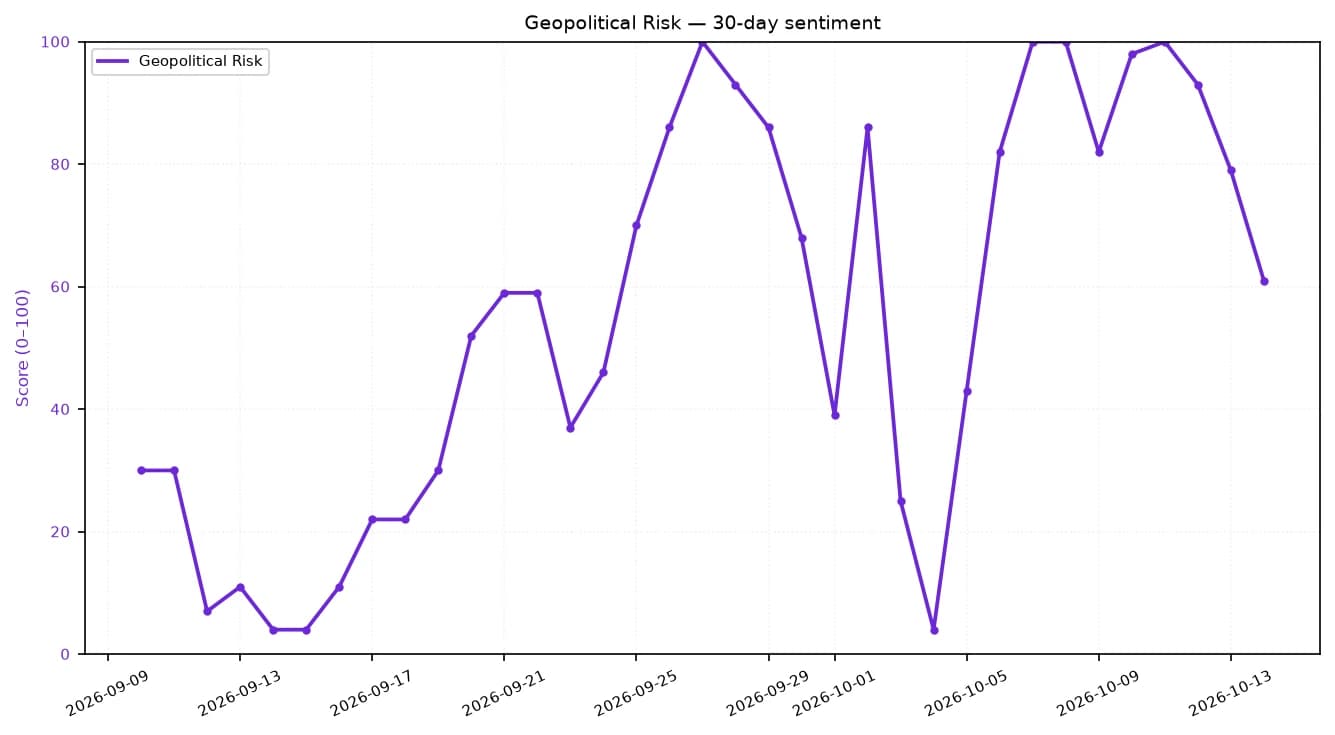
What matters to investors is that the dispute is no longer being managed through symbolic diplomacy alone. A sustained breakdown in defense communications makes flashpoints harder to contain, and markets generally do not price tail risks well until they suddenly do. The Philippines has already accused China of harassing patrols in disputed waters, while Beijing says Manila is provoking confrontation. With both sides dug in, the West Philippine Sea is becoming a more persistent geopolitical risk factor rather than a periodic headline.
Teodoro said civilian channels through the foreign ministry remain open, and he specifically kept communication flowing with the Philippine Coast Guard. That distinction matters: Manila is trying to preserve limited de-escalation tools without restoring direct military access it believes China has exploited. The Armed Forces of the Philippines backed that position, calling the hotline a “smokescreen” for China’s “coercive and aggressive actions.”
The market takeaway is straightforward. The longer this standoff lasts, the more it reinforces demand for defense spending, maritime surveillance, coast guard capacity, ports security and alliance-linked infrastructure across the region. It also strengthens the investment case for companies tied to deterrence, monitoring and logistics resilience, while keeping a lid on confidence in sectors that depend on uninterrupted South China Sea traffic.
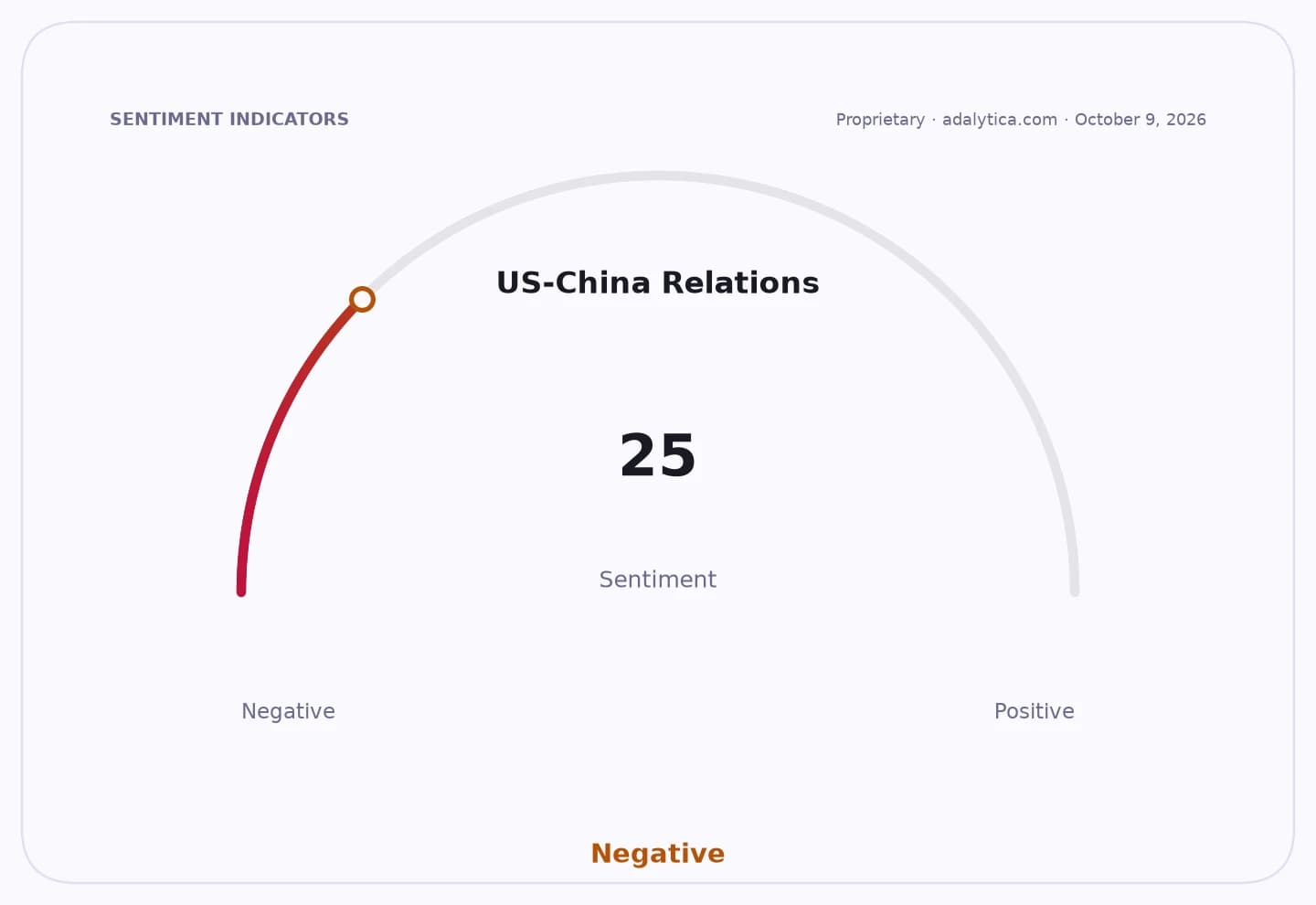
Adalytica’s U.S.-China relations sentiment gauge sits in “Extreme Greed,” suggesting complacency remains high even as the Philippines-China dispute deteriorates. That mismatch is exactly where geopolitical risk can become tradable: when policymakers are preparing for a longer confrontation while investors are still treating it as background noise. The thesis here is not to panic, but to position early for a world in which maritime friction, not détente, is the base case.
| Entity | Gains | Losses |
|---|---|---|
| Philippine defense and coast guard | ▲More deterrence funding | ▼Less room for dialogue |
| China | ▲Leverage through pressure | ▼Diplomatic trust |
| Defense contractors | ▲Higher procurement demand | ▼— |
| Shipping and insurers | ▲— | ▼Higher risk premium |