Poland is pressing Europe to treat artificial intelligence less like a niche technology debate and more like an industrial policy fight, a stance that matters because the continent’s ability to scale AI will determine where the next wave of capital spending, data-center construction and high-value manufacturing lands.
Poland pushes Europe to treat AI as industrial policy
The economic significance is straightforward: AI is no longer just software. It is a demand engine for chips, servers, power, cloud infrastructure and advanced manufacturing, and countries that position themselves early stand to capture jobs, investment and supply-chain influence. Poland’s push comes as global companies pour money into the stack. Intel said surging AI data-center demand helped drive its strongest quarterly sales growth in 15 years and is lifting capital expenditures by $2 billion this year. Microsoft, meanwhile, said AI infrastructure spending is climbing sharply, with research and development up 9% and cost of revenue rising on investments tied to Microsoft 365 Copilot growth.
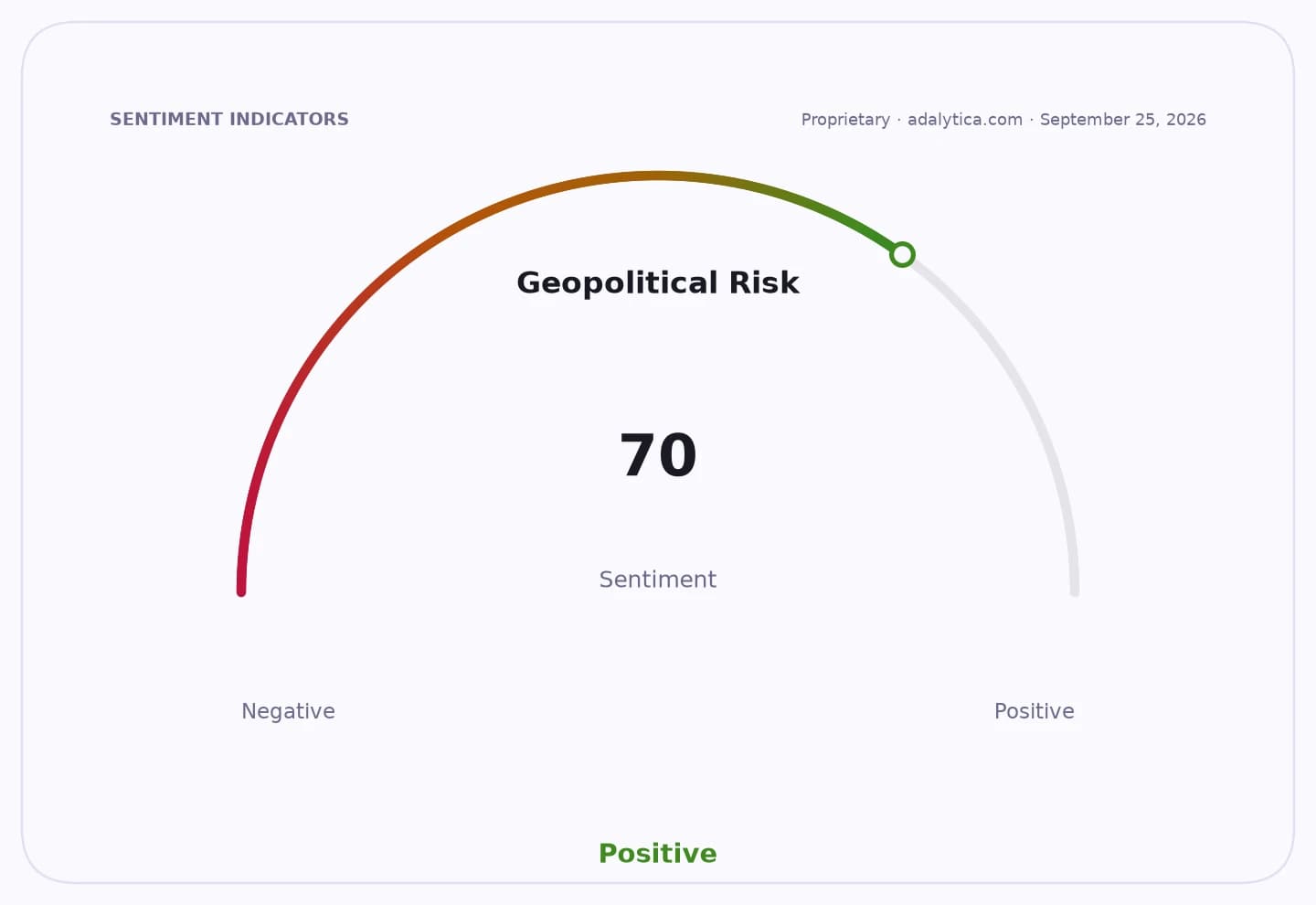
Sentiment IndicatorsⓘProprietary · adalytica.com · July 30, 2026
This is a snapshot — live sentiment, awareness and momentum for 130+ markets update continuously in the dashboard.Open AlphaPulse
That backdrop makes Poland’s stance more than a political gesture. Europe has spent years worrying about whether it can regulate AI without ceding the industrial upside to the U.S. and Asia. Poland’s message suggests a tougher, more strategic approach: compete to host the infrastructure, talent and compliance frameworks that will define the industry, rather than simply policing it from Brussels. For investors, that is the crucial distinction. The winners are likely to be the picks-and-shovels names tied to AI capex — chipmakers, server suppliers, cloud platforms, data-center operators, power and grid beneficiaries — not the firms waiting for a neat regulatory regime.
Markets are already pricing the AI buildout as a global capex cycle, but the regional allocation is still up for grabs. Intel’s rebound shows how fast sentiment can shift when data-center orders accelerate. Microsoft’s latest earnings and stock action also underscore the point: AI spending pressures margins in the short run, but it is becoming the price of admission for long-duration growth. If Poland can help tilt Europe toward a more investment-friendly AI framework, it strengthens the case for mainland industrial beneficiaries and for multinational suppliers that can localize production and service demand inside the bloc.
The real opportunity here is second-order. The market still talks about AI in terms of model breakthroughs and software monetization, but the larger trade is infrastructure and sovereignty. Europe will not want to depend entirely on foreign compute, foreign chips and foreign cloud capacity. That creates a multi-year tailwind for companies exposed to semiconductor equipment, electrification, cooling, fiber, data-center real estate and sovereign-cloud builds.
Poland’s position is therefore part of a much bigger story: AI is becoming an industry, not just a tool, and the countries that decide where the industry is allowed to scale will shape the next investment cycle. For investors, the takeaway is clear — stay overweight the infrastructure layer, because that is where Europe’s AI policy fight can turn into real revenue.
| Entity | Gains | Losses |
|---|---|---|
| Poland | ▲Industrial investment | ▼Regulatory laggards |
| AI infrastructure suppliers | ▲Higher capex demand | ▼Pure software hype names |
| Europe’s manufacturing base | ▲New compute spending | ▼Offshoring to U.S./Asia |
| Regulators | ▲Strategic relevance | ▼Freedom to overregulate |