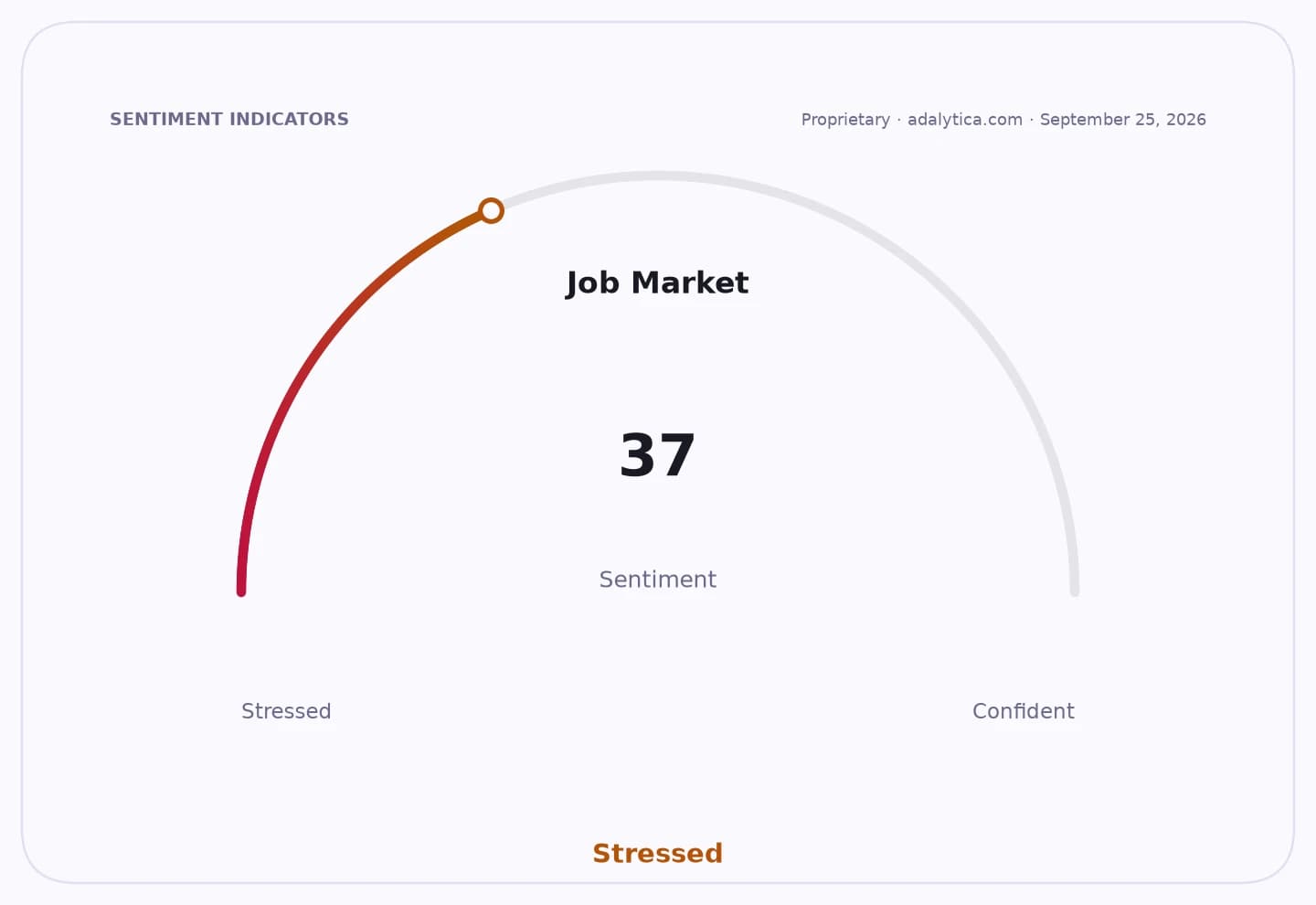
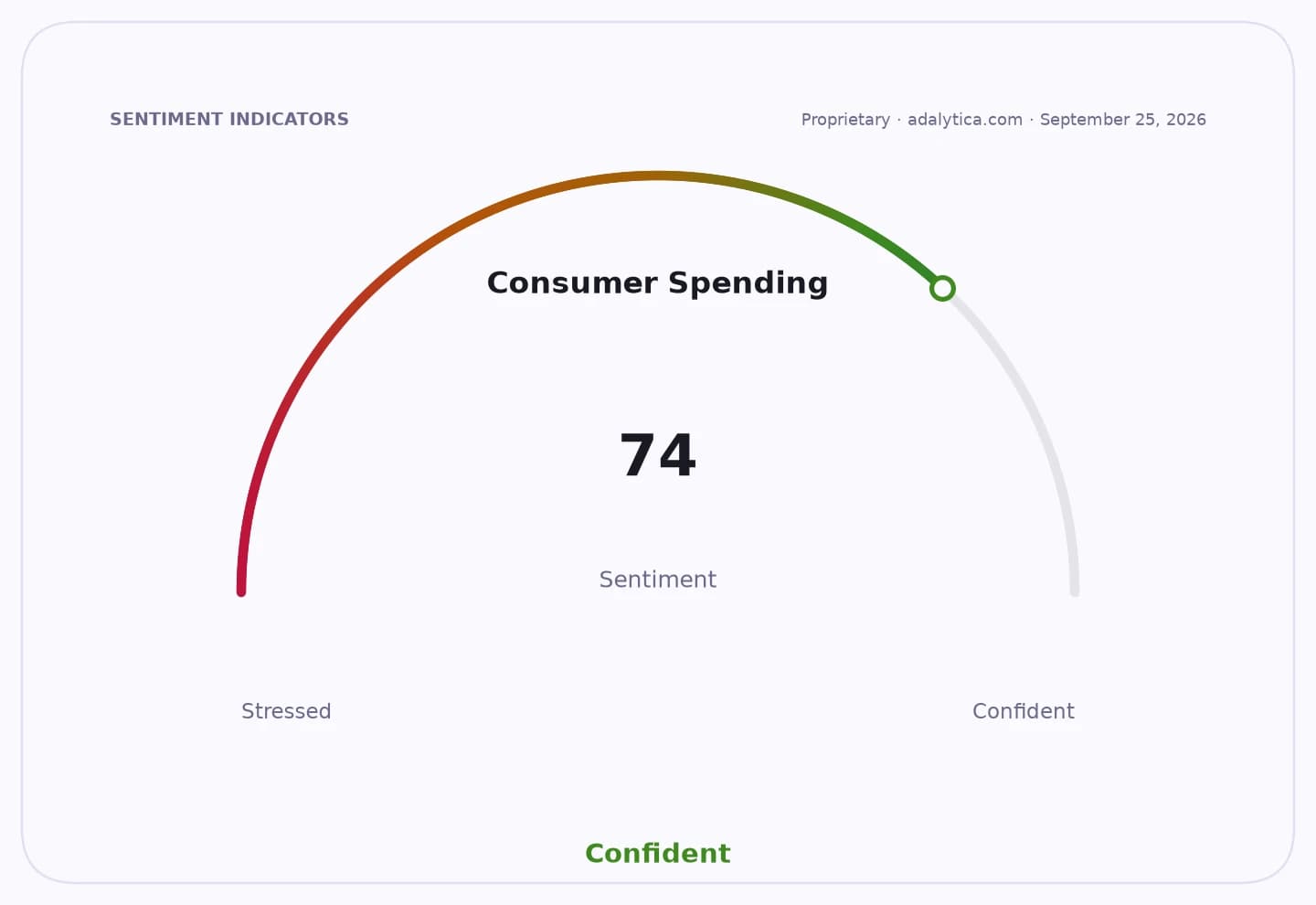
Consumer sentiment in Poland is still struggling to find a floor, with Konfederacja Lewiatan saying it is difficult to expect a clear rebound even as the labor market remains solid. That matters because households are the engine of domestic demand, and persistent caution is likely to keep a lid on spending, retail sales and broader economic growth.
Poland Sentiment Weakens Despite Solid Labor Market
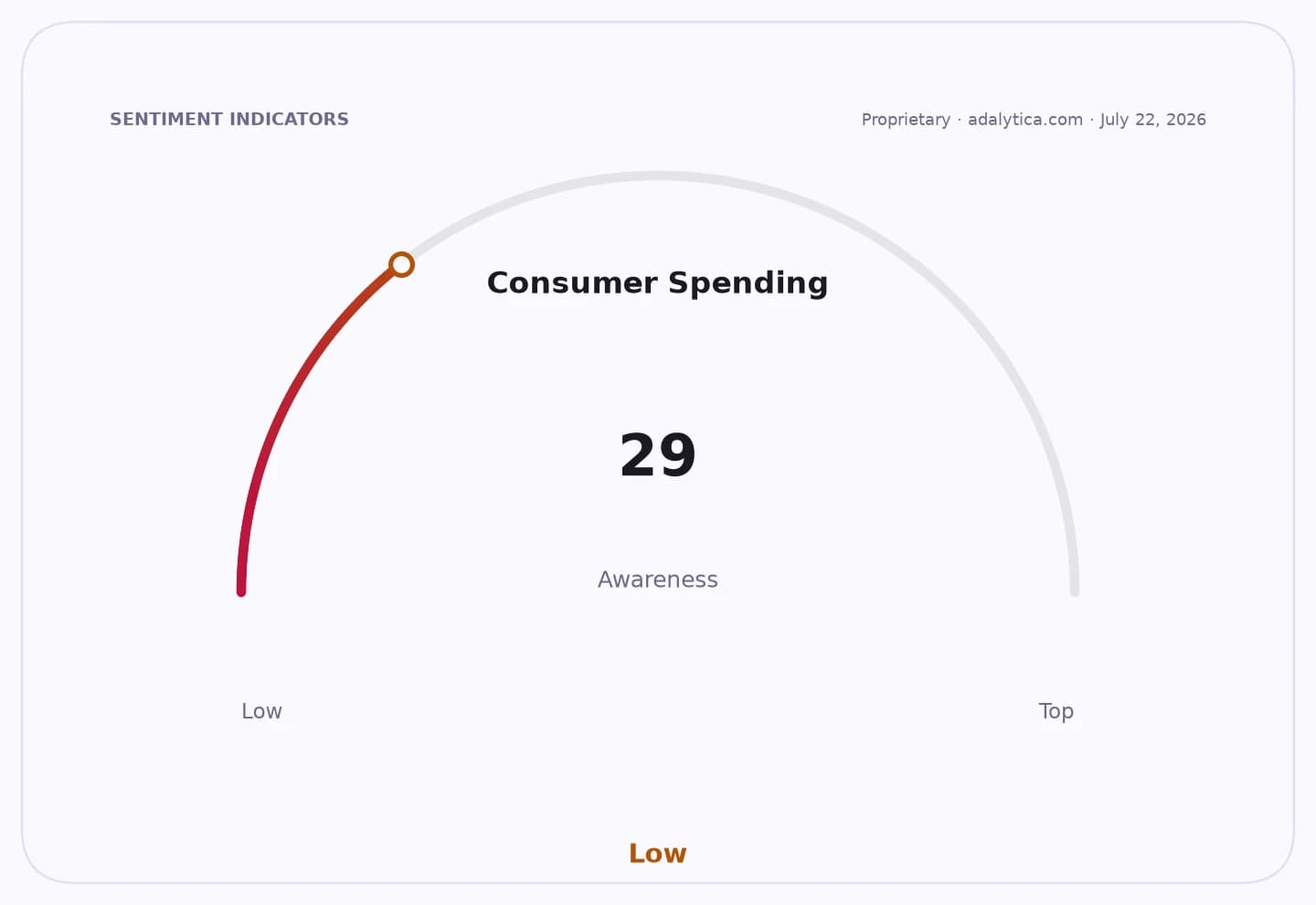
The latest data point to a consumer mood that is still deteriorating rather than stabilizing. The UMCSENT gauge fell to 44.8 in May from 49.8 in April and 53.3 in March, and the forecast for June is another drop to 43.18. That leaves the index well below the neutral 50 mark and far from the levels typically associated with a durable pickup in spending.
Sentiment IndicatorsⓘProprietary · adalytica.com · July 22, 2026
This is a snapshot — live sentiment, awareness and momentum for 130+ markets update continuously in the dashboard.Open AlphaPulse
For investors, the message is that Poland’s consumer-facing sectors may have to wait longer for relief. Weak confidence usually translates into slower purchases of discretionary goods, weaker pricing power for retailers and more pressure on margins in areas tied to household demand.
The labor market is offering only partial support. The unemployment rate is projected at 4.18% in July, edging down from 4.2% in June and remaining low by European standards. But a stable job market has not been enough to translate into a sharper improvement in sentiment, suggesting households remain wary about inflation, future income and overall economic conditions.
That disconnect is also visible in market behavior. The iShares MSCI Poland ETF, EWG, has been trading around $41.33, close to its 50-day moving average of $41.59 and 200-day average of $41.18, with RSI readings near neutral. The iShares MSCI Poland ETF, EPOL, has pushed up to $41.32 and sits above both its 50-day average of $39.59 and 200-day average of $36.30, but the advance looks more like a technical recovery than a broad conviction trade tied to improving domestic demand.
The broader story is one of an economy that can avoid a sharp downturn but still struggle to generate a strong consumer-led acceleration. Unless sentiment starts to improve more clearly in the coming readings, retailers, banks and other domestic cyclical names may continue to face a cautious spending environment even if employment remains resilient.
The next catalyst is the June consumer confidence print, which will show whether the latest slide is beginning to bottom out or whether households are still bracing for a longer period of weak demand.
| Entity | Gains | Losses |
|---|---|---|
| Export-oriented firms | ▲Resilient external demand | ▼Weaker domestic boost |
| Retailers and discretionary names | ▲Stable employment backdrop | ▼Softer household spending |
| Polish equity bulls | ▲Low unemployment support | ▼Weak sentiment drag |
| Consumers | ▲Lower joblessness | ▼Persistent caution |