Poland is falling behind its bigger EU peers in the contest to secure industrial subsidies, a gap that matters for where factories are built, which supply chains expand and how quickly Europe can rearm, decarbonise and localise strategic production.
Poland Lags EU Rivals in Industrial Subsidies
The problem is not just political pride. In an era when governments are using state aid to steer investment into batteries, semiconductors, clean-tech equipment and defence manufacturing, the country that moves slower risks losing capital-intensive projects to better-funded rivals. That can translate into weaker job creation, lower productivity growth and less bargaining power for Poland inside the bloc.
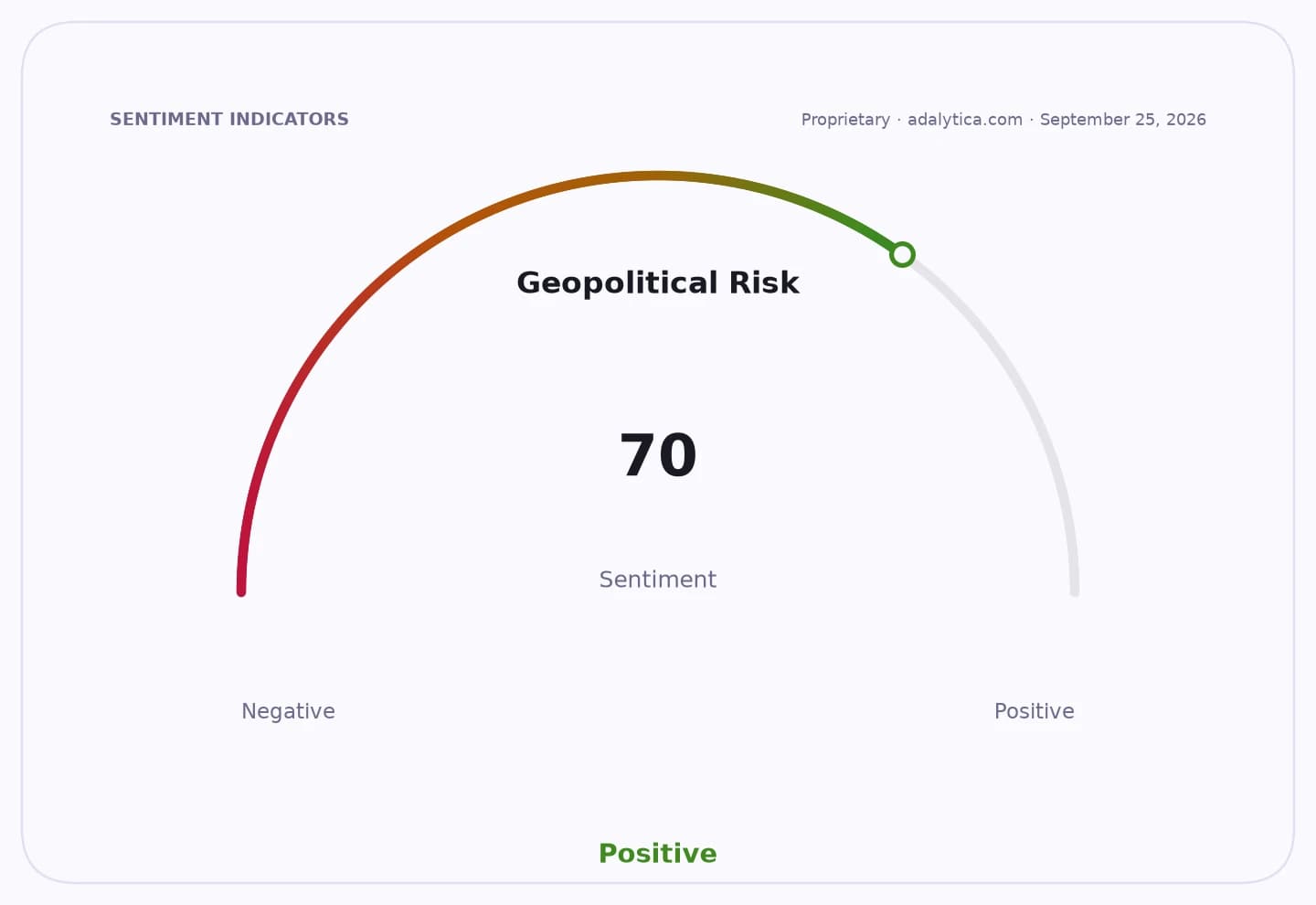
Sentiment IndicatorsⓘProprietary · adalytica.com · August 19, 2026
This is a snapshot — live sentiment, awareness and momentum for 130+ markets update continuously in the dashboard.Open AlphaPulse
The divergence also has direct market implications. Countries with more aggressive subsidy regimes are better positioned to attract foreign direct investment and the high-value industrial capacity that often follows it. For Poland, which has long sold itself as a manufacturing hub on the EU’s eastern flank, missing out on that wave could weigh on medium-term growth and keep the zloty more exposed to shifts in European industrial demand.
The wider backdrop is a Europe-wide subsidy scramble. The European Commission has loosened some state-aid constraints in recent years to allow member states to respond to U.S. industrial policy and Chinese overcapacity, but that has favoured richer governments able to deploy larger balance sheets. Germany and France can afford to move quickly; smaller and fiscally tighter economies often cannot match them euro for euro.
That matters for investors because subsidy access increasingly affects corporate strategy. Manufacturers evaluating new plants, upgrades or supply-chain relocations now factor in not only labour costs and logistics, but also how fast a government can turn policy into cash support, tax relief or permitting advantages. A country perceived as slower or less generous may still win projects on cost, but it loses leverage when competing for the most strategic assets.
The stakes are especially high for Poland’s industrial policy at a time when the country is trying to deepen its role in European defence and clean-energy supply chains. If Warsaw cannot close the subsidy gap, it may be forced to rely more heavily on labour-cost competitiveness and EU funds already earmarked for cohesion and recovery, rather than on direct national support that can sway location decisions.
For markets, the key question is whether Poland responds with faster approvals, more targeted aid and clearer industrial priorities. A more effective subsidy regime could help preserve foreign investment flows and support domestic manufacturers. If not, the gap with the bloc’s larger economies is likely to widen, leaving Poland more dependent on cyclical export demand and less able to capture the next wave of strategic industrial spending.
| Entity | Gains | Losses |
|---|---|---|
| Germany/France | ▲More investment wins | ▼Smaller rivals |
| Poland | ▲Better rules, faster aid | ▼Subsidy lag |
| Manufacturers | ▲Bigger support packages | ▼Delayed decisions |
| EU industrial hubs | ▲Higher capital inflows | ▼Peripheral regions |