Koalicja Obywatelska remains the clear frontrunner in Poland’s latest parliamentary poll, but the broader result points to a fragmented Sejm that could leave Donald Tusk’s camp short of the seats needed to govern comfortably.
Poland poll shows KO leads, fragmented Sejm

In an IBRiS survey for Polsat News conducted Oct. 14-16 among 1,000 respondents, the Civic Coalition scored 27.8%, little changed from 27.5% in August, while Law and Justice rose to 19.1% from 16.9%. Confederation slipped to 12.7%, but the hard-right Konfederacja Korony Polskiej jumped to 11.4%, underscoring the continued growth of anti-establishment and nationalist blocs.
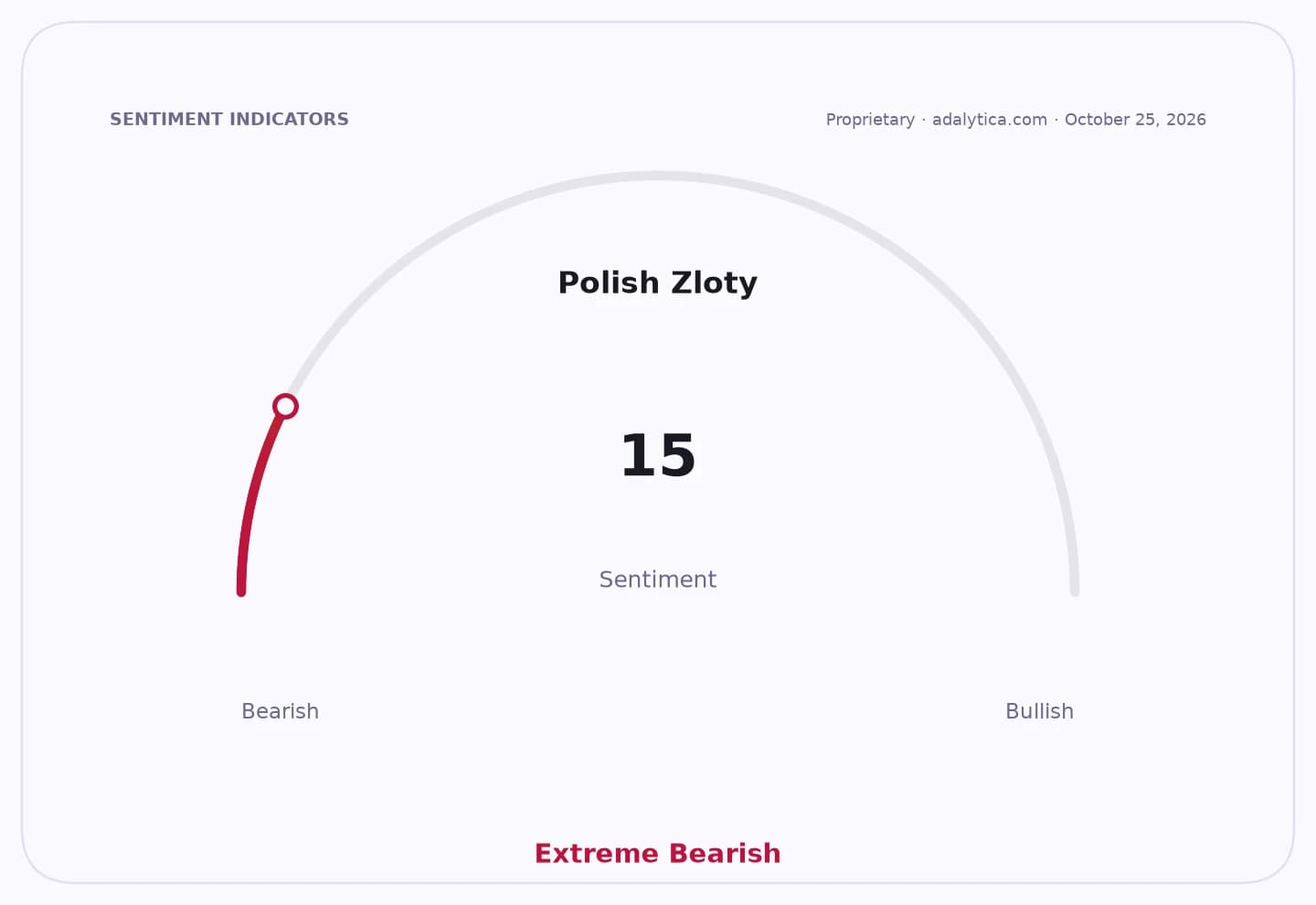
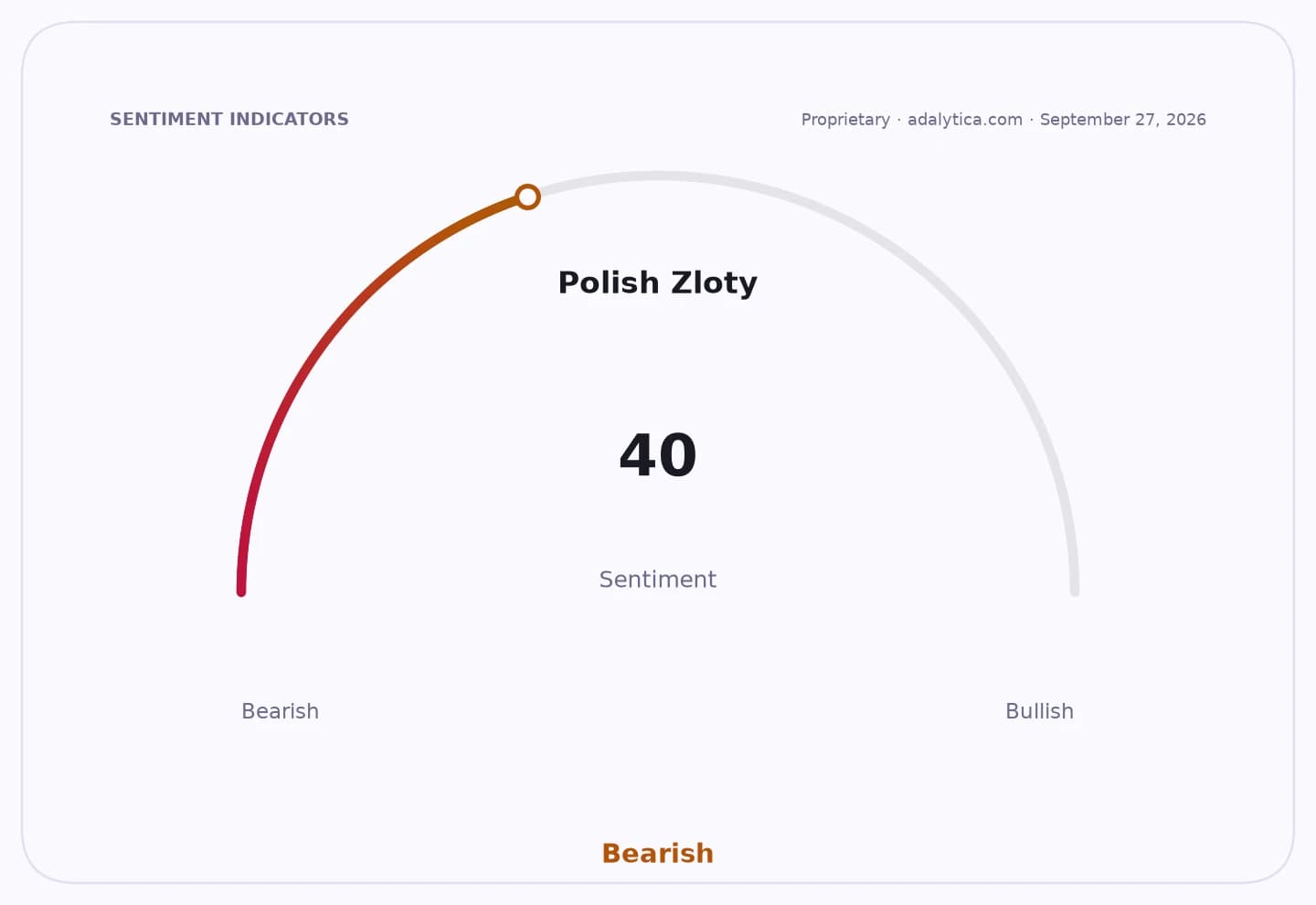
Sentiment IndicatorsⓘProprietary · adalytica.com · October 25, 2026
This is a snapshot — live sentiment, awareness and momentum for 130+ markets update continuously in the dashboard.Open AlphaPulse
The key economic and political significance is not that KO is losing the lead — it is not — but that the opposition landscape is splintering in a way that complicates post-election arithmetic. Even with polling almost 9 percentage points ahead of PiS, KO would still struggle to assemble a majority coalition based on these numbers, leaving Poland vulnerable to prolonged bargaining, policy delays and a more fragile governing majority.
That matters for investors because Poland is one of central Europe’s largest economies and a key EU recipient of funds, with fiscal planning, judicial reform, energy policy and EU relations all sensitive to parliamentary stability. A government that lacks a clear majority can still pass budgets and manage day-to-day policy, but it has less room to push through structural changes or maintain a predictable reform path. For markets, that usually means a higher political risk premium, even if immediate regime change is unlikely.
The poll also shows sharp voter segmentation that could shape coalition strategy. KO leads overwhelmingly among women, at 36.4% versus 19.1% among men, while Confederation and Braun’s party are much stronger among male voters. Age also matters: Confederation tops the 18-29 cohort at 37.4%, while PiS dominates voters over 70 at 42.2%. Those splits suggest the right wing’s gains are broadening, but not consolidating around a single force.
IBRiS said turnout would reach 64.5%, and several smaller parties would clear the 5% threshold, including the Polish People’s Party at 5.1%, Left at 7.0% and Rozwój Plus at 5.8%. That helps explain why KO’s lead does not translate cleanly into governing strength. The more parties entering parliament, the harder it becomes to build a stable majority and the more leverage smaller blocs gain in coalition talks.
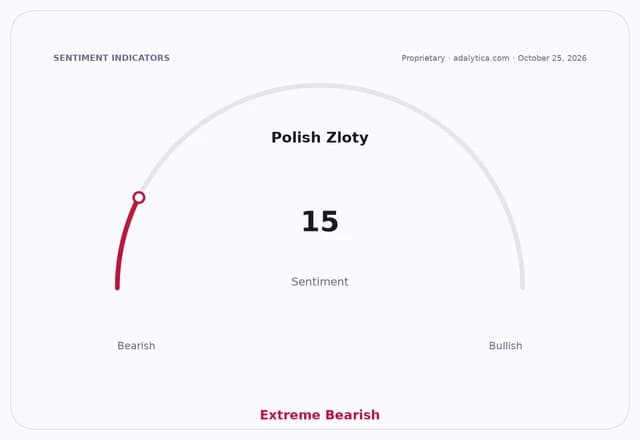
For markets, the immediate read-through is cautious rather than dramatic. Adalytica’s signals on the zloty show elevated fear, with the PLN sentiment gauge at 15, while the euro gauge points to stronger risk appetite. That divergence fits a market that is watching Polish politics for possible volatility but is not yet pricing a full-blown crisis. The more important catalyst will be whether the governing camp can hold together around budget and ministry control questions, or whether polling weakness accelerates factional conflict ahead of any election.
If the current pattern holds, Tusk’s bloc may remain the largest force but still govern under constant coalition pressure. That would preserve continuity, but not the kind of policy certainty that typically supports a stronger domestic-rates and currency story.
| Entity | Gains | Losses |
|---|---|---|
| Civic Coalition | ▲Remains poll leader | ▼Still lacks majority path |
| Law and Justice | ▲Narrows gap vs KO | ▼Still trails by a wide margin |
| Confederation / Konfederacja Korony Polskiej | ▲Expands right-wing influence | ▼Vote split limits coalition leverage |
| Zloty (PLN) | ▲Some support from policy continuity | ▼Faces higher political-risk premium |