The Polish zloty has become one of the clearest beneficiaries of a global currency squeeze, with traders leaning into high-yielding emerging-market units as Japanese authorities step up pressure on the yen.
Polish zloty trades near 3.75 per dollar as yen weakens
That matters because when the yen weakens until policymakers intervene, it often forces a quick unwind in one of the market’s most profitable funding trades — and the money does not disappear, it rotates. For now, that rotation is favoring currencies such as the zloty, while the yen is bearing the brunt.
The zloty is trading near 3.75 per dollar, after touching 3.77 in the latest data, leaving it weaker than in March but still above its 50-day moving average of 3.73 and well above its 200-day average of 3.65. The move comes as the yen has slid sharply to about 156.75 per dollar from 163.30 at the end of July, a drop that makes Japanese intervention talk louder and keeps FX volatility elevated.
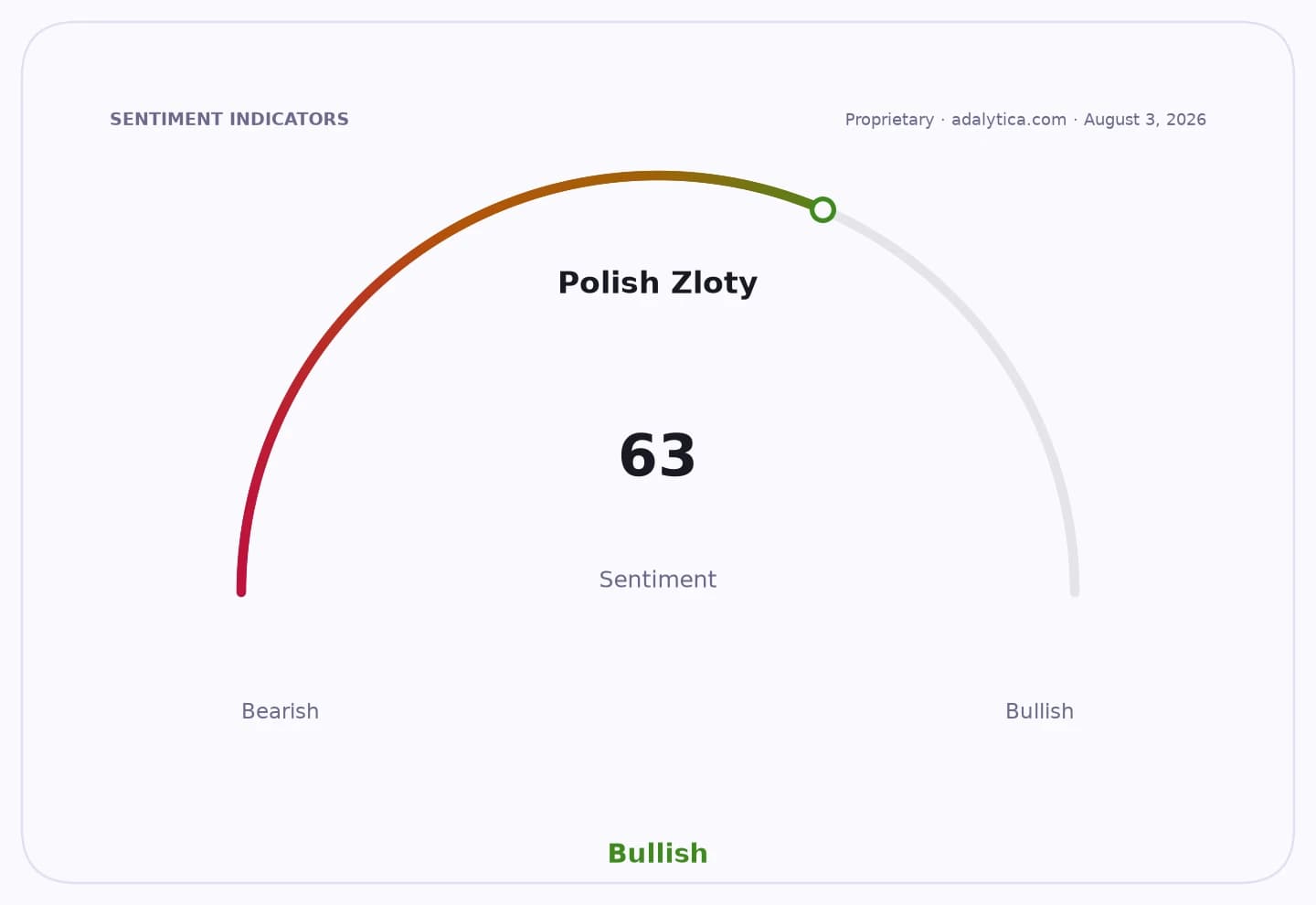
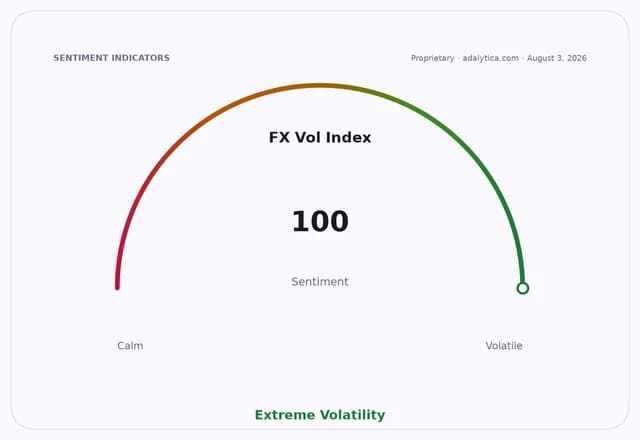
That volatility is exactly the backdrop in which carry trades thrive. Investors borrow in low-yielding currencies and park money in higher-yielding ones, and Poland remains attractive relative to Japan as long as risk appetite holds. The zloty’s own trading signals from Adalytica show sentiment at 63, with awareness at 72, while FX volatility is flashing extreme greed — a sign the market is aggressively positioned and vulnerable to a reversal, but still leaning toward yield pickup for now.
For investors, the implication is straightforward: the zloty’s strength is not just a local Poland story. It is a second-order consequence of global capital flow, and it tends to reward those exposed to Polish assets while punishing unhedged dollar investors in the wrong direction. It also raises the stakes for Polish exporters, whose competitiveness improves when the currency weakens, but can deteriorate quickly if risk appetite flips and the zloty rallies further.
The broader macro picture is that the yen is acting like a pressure valve for global FX. If Tokyo continues to defend the currency, the market may keep searching for alternatives with carry and relative stability — and the zloty is near the top of that list. That makes PLN a tactical beneficiary today, but also a candidate for sharp swings if intervention succeeds too well and the carry trade starts to unwind.
For investors, the best read here is not to chase the zloty blindly, but to recognize the setup: a weak yen, elevated FX volatility and still-supportive yield differentials can keep PLN bid in the near term. The asymmetric trade is in hedging the winners and losers around that rotation — long Polish currency exposure on dips, while staying alert for a violent reversal if Japan escalates intervention or global risk sentiment deteriorates.
| Entity | Gains | Losses |
|---|---|---|
| PLN | ▲Carry inflows | ▼Hedged importers |
| JPY | ▲Intervention support | ▼Carry trade shorts |
| Polish exporters | ▲Weaker currency tailwind | ▼Stronger-zloty squeezes |
| Dollar holders | ▲Higher FX volatility | ▼Unhedged PLN exposure |