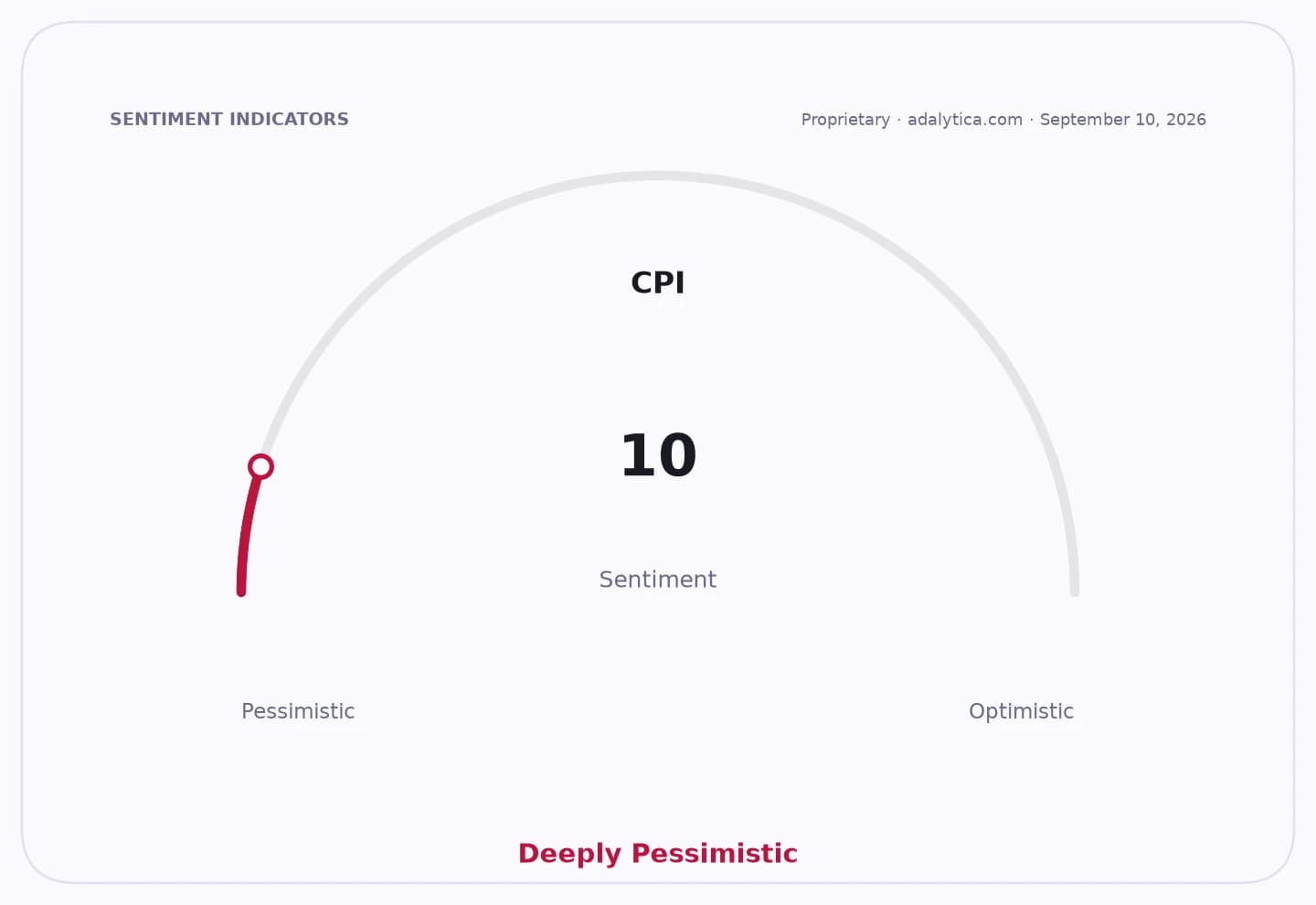
Portugal’s annual inflation rate rose to 3.3% in August, with the pickup driven almost entirely by higher diesel prices, underscoring fresh pressure on household budgets and keeping the country above the euro area average.
Portugal inflation rises to 3.3% in August
The National Statistics Institute said inflation accelerated by 0.3 percentage point from July, while core inflation held at 2.6%. That suggests the latest increase was led by fuel rather than a broad-based reacceleration in underlying price pressures, a detail that matters for the European Central Bank’s inflation assessment and for traders watching how sticky services prices remain.
Sentiment IndicatorsⓘProprietary · adalytica.com · September 12, 2026
This is a snapshot — live sentiment, awareness and momentum for 130+ markets update continuously in the dashboard.Open AlphaPulse
Energy prices were the main culprit. The energy component jumped to 12.2% from 8.7% in July, while unprocessed food inflation eased to 3.4% from 3.7%. Transport was among the biggest contributors to the annual CPI rise, alongside restaurants and accommodation, highlighting how fuel costs continue to feed through the wider economy.
On a monthly basis, the consumer price index was flat, after falling 0.5% in July. The 12-month average inflation rate rose to 2.7%, while the average excluding housing, which is used as a benchmark for next year’s rent increases, was 2.6%.
Portugal’s harmonized inflation rate, the measure used for euro zone comparisons, climbed to 3.6% from 3.1% in July and stood 0.3 percentage point above the Eurostat estimate for the currency bloc. That widens the gap with the euro area, where inflation is running lower, and may reinforce expectations that the ECB can stay cautious even as Portuguese consumers face a faster cost of living than the region as a whole.
Investors will read the report as a sign that Portugal’s inflation profile is being pulled more by energy and transport than by demand-driven overheating. Still, the higher reading can weigh on real incomes, support pricing power in travel and financial services, and keep pressure on bond markets if fuel costs spill into broader services inflation.
The next watchpoint is whether the diesel-driven jump fades in September or filters into core categories, which would make the inflation picture more persistent and more relevant for ECB policy and household spending.
| Entity | Gains | Losses |
|---|---|---|
| Energy suppliers | ▲Higher fuel-linked pricing | ▼None |
| Transport operators | ▲Pass-through potential | ▼Higher operating costs |
| Portuguese households | ▲None | ▼Higher living costs |
| ECB rate doves | ▲Lower core inflation still supports caution | ▼Oil-driven headline noise |