The pound’s hold near a 16-month high against the euro reflects a market that is still pricing in more weakness in the single currency than strength in sterling, with France’s rising debt burden and political unrest keeping pressure on the eurozone’s growth and fiscal outlook.
Pound Holds Near 16-Month High vs Euro
Euro
At 1.1703, GBP/EUR remains elevated, leaving British travelers looking for euro cash with one of the more favourable exchange levels in more than a year. In practical terms, the gap in retail rates is material: on £500, TravelFX’s quoted 1.1703 delivers €585.15, versus €543.65 at Barclays, a difference of €41.50. That spread is a reminder that the travel-money market is still highly fragmented, with pricing power concentrated among specialist bureaus and banks often lagging the top of market.
Sentiment Indicators
The broader economic story is not just about holiday spending. A stronger pound against the euro tends to tighten financial conditions for UK exporters selling into the euro area while improving purchasing power for British consumers and importers. It also underscores how currency markets are treating the euro as the weaker leg of the pair, rather than assigning a durable premium to sterling. That matters because the exchange rate is being driven less by short-term retail demand than by relative macro risks: France’s fiscal trajectory, political stability and the eurozone’s limited room to absorb shocks.
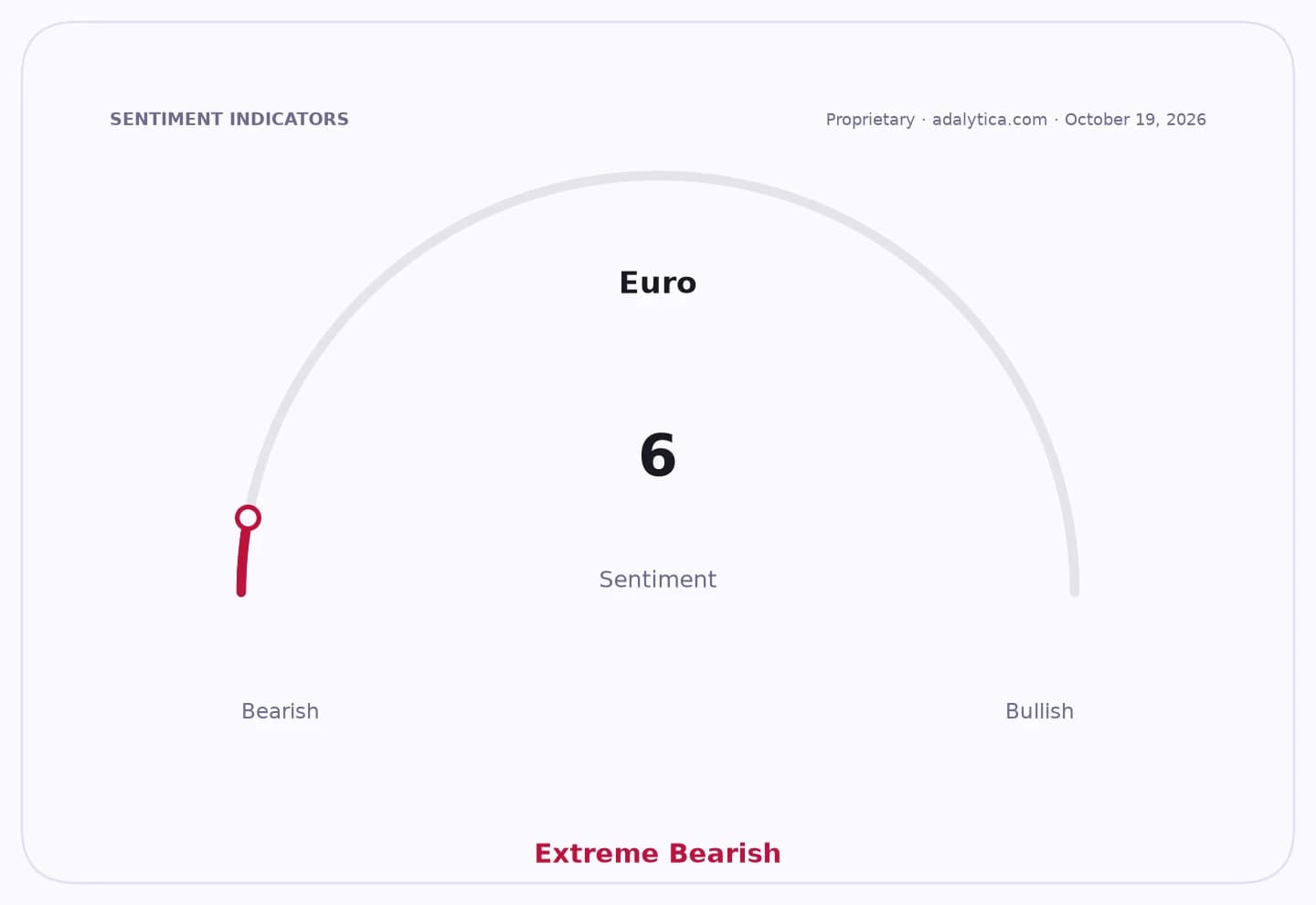
For investors, the message is mixed. A firm sterling can help UK consumers and companies with euro-denominated costs, but it can also weigh on multinational earnings translated back into pounds. For euro-sensitive sectors, the exchange rate is an input into margins, travel demand and pricing competitiveness. The pound’s move also sits uneasily with a market backdrop in which sterling sentiment is only neutral, according to Adalytica’s British Pound Trade Signals, while the euro remains neutral too — suggesting the pair is being steered more by relative vulnerabilities than by conviction on either side.
Technical indicators on FXB, a sterling-tracking fund, show the pound still trading slightly above its 50-day moving average and just above its 200-day average, with RSI in moderately strong territory and the MACD turning positive. That points to a market that has not yet signalled exhaustion in sterling strength, even if momentum has cooled from earlier peaks. By contrast, FXE, which tracks the euro, remains below its 50-day and 200-day averages, with the MACD still negative, reinforcing the view that the euro’s recovery has yet to gain traction.
The key risk for the euro is that France’s debt and political problems continue to act as a regional drag, limiting any meaningful rebound against the pound. The main upside scenario for the euro would be a stabilisation in French fiscal concerns and a broader improvement in eurozone confidence. Until then, GBP/EUR is likely to stay sensitive to headlines that keep investors focused on the eurozone’s weakest links.
| Entity | Gains | Losses |
|---|---|---|
| UK travellers buying euros | ▲Better spending power | ▼Higher-cost euro trip if rate slips |
| UK exporters to eurozone | ▲None | ▼Less pricing competitiveness |
| Eurozone consumers/importers | ▲None | ▼Stronger pound raises UK-priced goods |
| Travel money specialists | ▲Wider retail spreads | ▼Banks losing share if rates improve |