Pound sterling is hovering near a five-week high, but the bigger story for investors is that the currency’s strength is being tempered by renewed nerves over Labour’s fiscal stance and what a looser definition of “flexibility” could mean for UK borrowing.
Pound sterling near five-week high at $1.3490

That matters because currencies do not rise in a vacuum. When traders are comfortable that the UK will keep public finances on a disciplined path, sterling can attract capital and support valuations across domestically exposed assets. When that confidence slips, even a resilient pound can struggle to extend gains, especially with Britain already carrying a debt burden above £3 trillion and close to 95% of GDP.
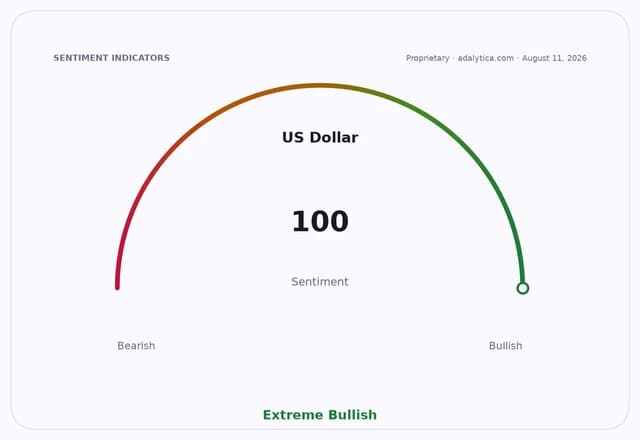
Sentiment IndicatorsⓘProprietary · adalytica.com · August 11, 2026
This is a snapshot — live sentiment, awareness and momentum for 130+ markets update continuously in the dashboard.Open AlphaPulse

On Monday, the dollar was steady against the pound at about $1.3490, leaving sterling close to its strongest level in roughly five weeks. The move has been orderly rather than explosive, which tells you the market is not pricing a crisis. But it is also not embracing a full rerating of UK assets either. Investors are balancing the appeal of a firmer currency against the risk that Treasury discipline could become more politically negotiable if Burnham-style fiscal “flexibility” gains traction in the policy debate.
For long-term investors, that tension is important. A stronger pound can ease imported inflation and support consumer purchasing power, but it can also weigh on UK exporters and overseas earnings translation for multinationals. At the same time, any whiff of weaker fiscal credibility tends to push up the risk premium on gilts and can leak into broader market sentiment, particularly for banks, utilities and other sectors that trade heavily on domestic stability.
The technical picture also shows a market that is firm but not overheated. FXB, the pound-tracking fund, has climbed to 129.81, above both its 50-day moving average of 128.25 and 200-day moving average of 127.74. RSI readings near 66 suggest momentum is positive without yet screaming mania, while the recent move has stayed below the upper Bollinger Band. That is consistent with a currency that is being supported, not euphorically bid.
The FTSE 100 has also pushed to 10,866.5, holding well above its 50-day and 200-day averages, which suggests investors are still willing to own UK equities even as the fiscal discussion gets noisier. But the market is telling a subtle story: Britain is still investable, yet policy credibility now matters more than simply talking up growth.
Adalytica’s trade signals on the US dollar show “Extreme Greed,” underscoring how crowded dollar positioning can leave room for sterling to hold up if UK headlines do not deteriorate further. That gives the pound some near-term breathing room. The danger is that any sign of looser fiscal language, especially around Labour’s policy direction, could quickly revive concerns that the UK is drifting toward higher borrowing and less room to maneuver.
For investors, the takeaway is simple: sterling’s strength is real, but it rests on a fragile mix of global dollar demand, stabilizing risk appetite and confidence that Westminster will not let fiscal rules become too elastic. If you own UK assets, this is worth watching closely over the next several quarters, not just the next few sessions.
| Entity | Gains | Losses |
|---|---|---|
| Pound sterling | ▲Lower imported inflation | ▼Exporters with overseas revenue |
| UK gilts | ▲Calm if fiscal discipline holds | ▼Investors if borrowing fears rise |
| FTSE 100 domestic shares | ▲A steadier macro backdrop | ▼Rate-sensitive sectors if yields jump |
| Dollar bulls | ▲Little if sterling stays firm | ▼If UK policy credibility improves |




