The US dollar and crude oil eased while precious metals drew fresh buying, underscoring how quickly investors are rotating back toward defensive assets as macro uncertainty persists and industrial metals stay under pressure.
Precious metals gain as dollar and oil soften
That mix matters because a softer dollar can lift dollar-priced commodities, while lower crude prices can ease inflation expectations and support rate-sensitive metals. It also points to an uneven commodity tape rather than a broad-based rally: gold and silver are attracting flows, but base metals and cyclicals are not sending the same growth signal.
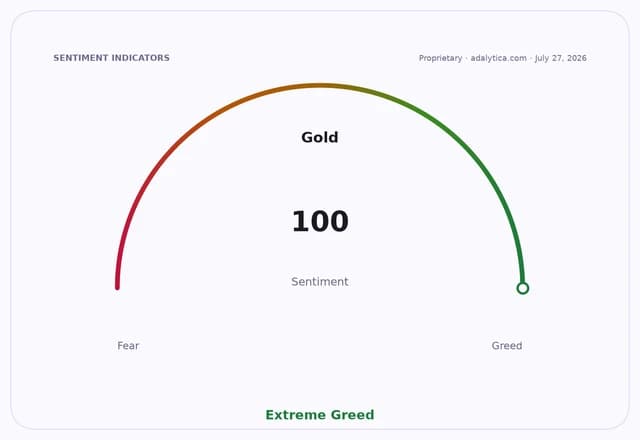
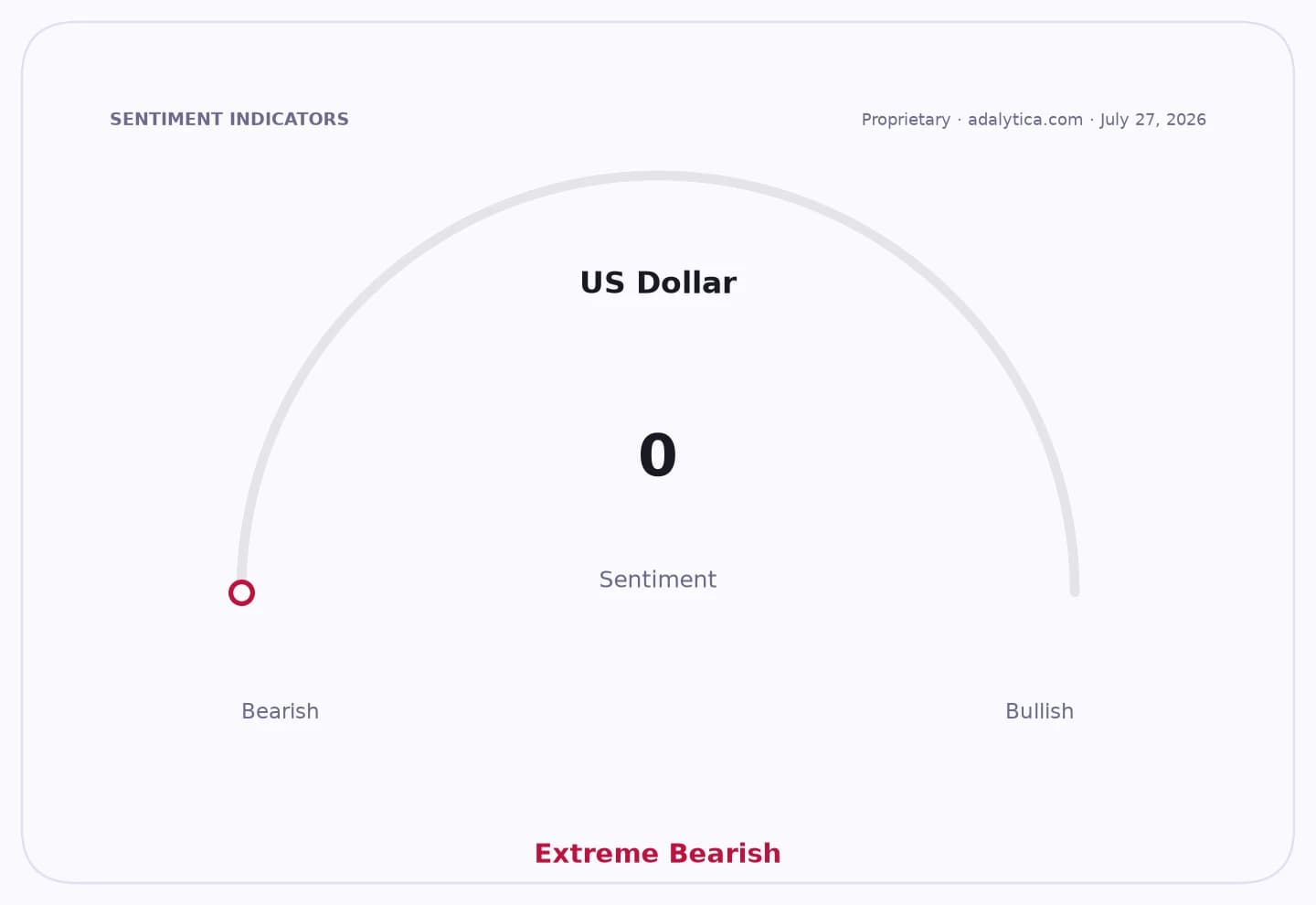
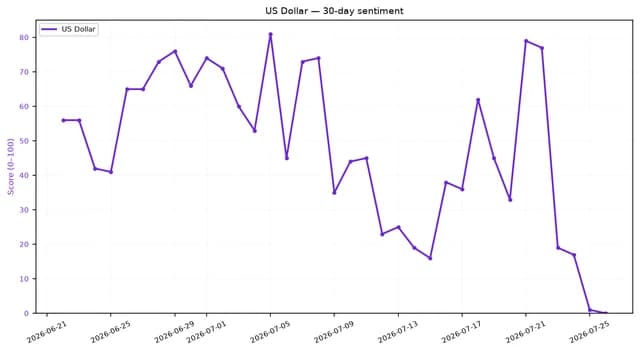
Adalytica’s US Dollar Trade Signals showed “Extreme Fear” in the greenback, with sentiment at 0 and a 56-point drop over the past week, a sharp shift that helps explain the rebound in precious metals. Gold sentiment, by contrast, registered “Extreme Greed,” with the index at 100 and up 75 points over 30 days, suggesting investors are leaning harder into hedges against policy and geopolitical risk.
That backdrop lined up with the price action in exchange-traded funds. GLD, the SPDR Gold Shares ETF, closed at 371.9 on July 24, still below its 200-day moving average of 411.8 but above its 50-day average of 390.1, a sign the longer-term trend has been damaged even as short-term momentum improves. Its RSI at 41.3 and MACD still below the signal line indicate the rebound remains incomplete despite the strong sentiment reading.
Silver has shown a similar but more volatile pattern. PPLT, the Aberdeen Physical Platinum Shares ETF, ended at 14.43 on July 24, below both its 50-day and 200-day averages, while SIVR, the iShares Silver Trust, finished at 55.28, also under its 50-day and 200-day moving averages. The technicals suggest traders are buying dips, but not yet enough to restore a durable uptrend across the complex.
The broader macro picture remains mixed. US crude was last around 84.38 a barrel on July 20, with a modest forecast rise to 84.976 the following day, but the recent pullback signals that energy is no longer reinforcing the inflation trade as aggressively as it did earlier in the cycle. At the same time, the US producer price index remains elevated at 286.827 in June, with a July forecast of 295.8433, leaving the market caught between sticky prices and slowing risk appetite.
That is why the metal market’s internal split is important for investors. Tin, silver, platinum and palladium leading gains while lead falls more than 1% suggests the move is being driven more by safe-haven demand and idiosyncratic positioning than by a clean read-through on industrial demand. Investors are effectively distinguishing between assets that benefit from macro fear and those that depend on a firm manufacturing cycle.
The bullish case is that a weaker dollar, softer oil and recurring geopolitical stress keep supporting precious metals and related funds. The bearish case is that if the dollar stabilizes, real yields rise, or growth concerns deepen, the rally may remain narrow and vulnerable, especially for industrial metals. For now, the tape says capital is favoring protection over cyclicality.
| Entity | Gains | Losses |
|---|---|---|
| Gold and silver bulls | ▲Higher safe-haven demand | ▼Overextended positioning risk |
| Dollar bears | ▲Weaker greenback | ▼Loss of currency support |
| Energy importers | ▲Lower crude costs | ▼Energy exporters |
| Industrial metals users | ▲Potential input relief | ▼Lead and cyclical metals traders |




