Procter & Gamble said stronger first-quarter sales are keeping it on track even as higher fuel and other commodity costs squeeze margins, underscoring how the consumer staple giant is leaning on pricing and resilient demand to absorb a tougher cost backdrop.
Procter & Gamble Raises Sales Outlook After Q1 Beat
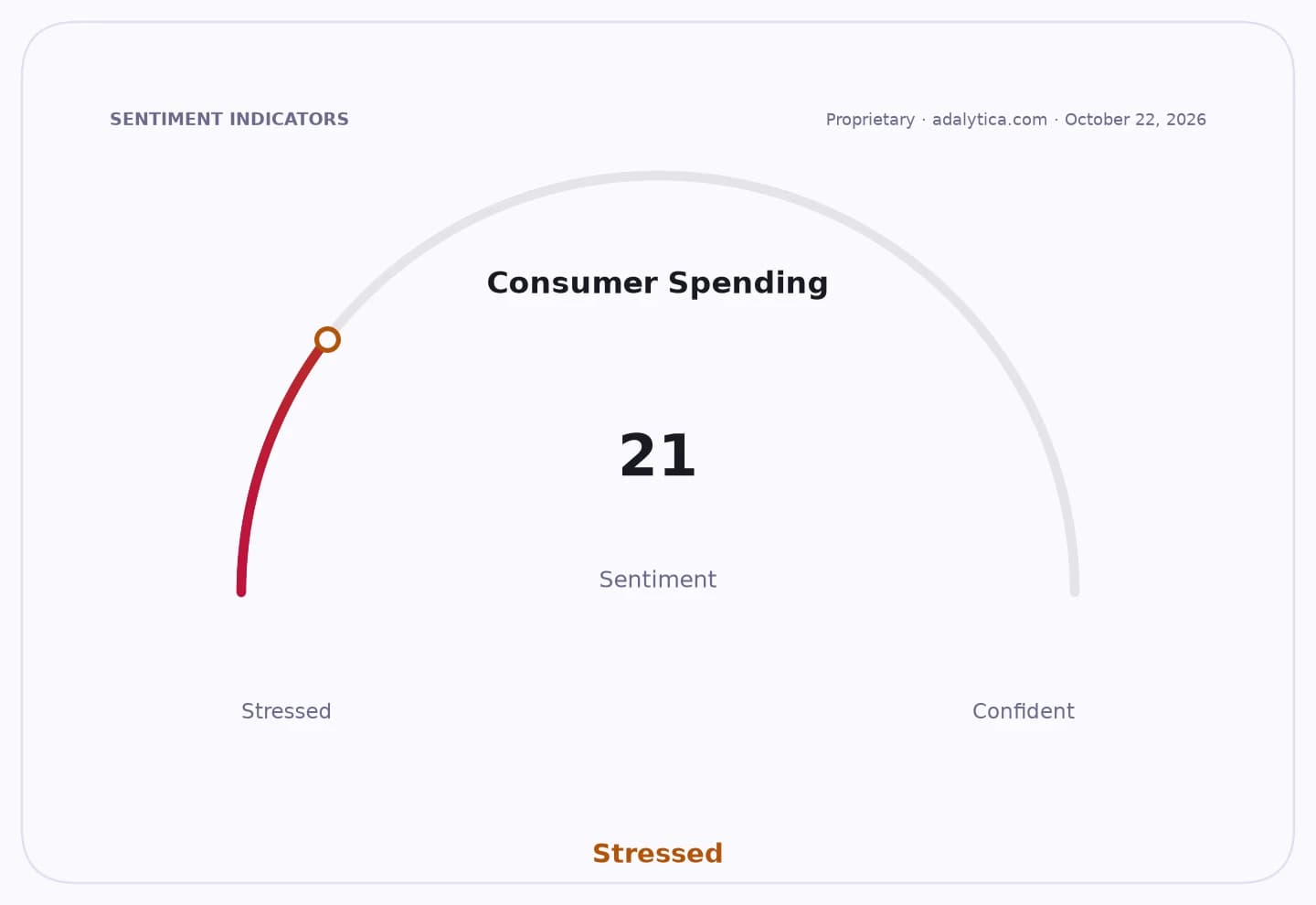
Consumer Spending
The maker of Tide, Crest and other household brands posted revenue of $23.28 billion, up 4% and ahead of analysts’ estimate of $22.80 billion, while adjusted earnings of $2 a share also topped expectations. Net income was little changed at $4.73 billion, or $1.97 a share, from $4.75 billion, or $1.95 a share, a year earlier.
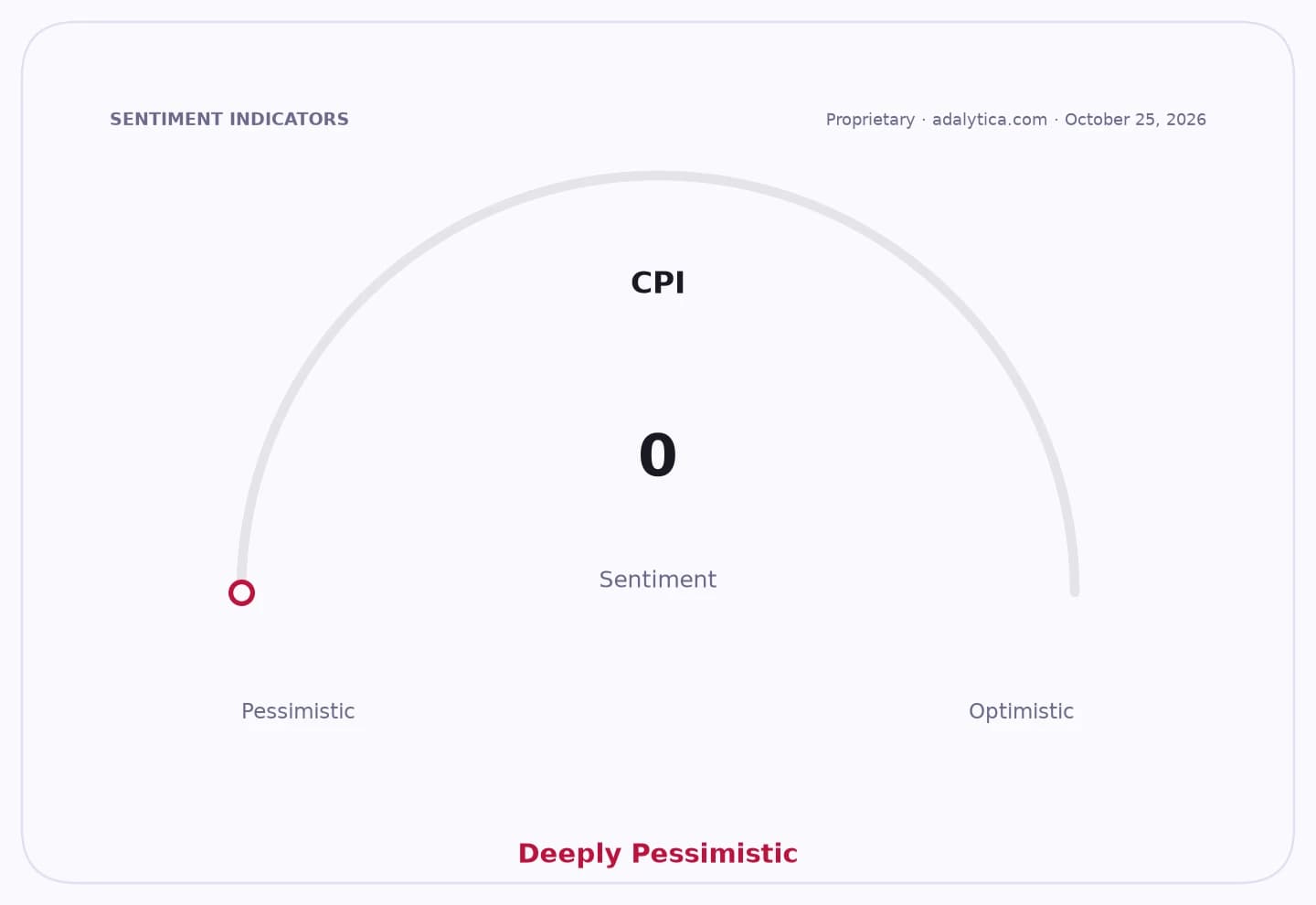
Sentiment Indicators
P&G said higher prices gave a small lift to sales, with beauty, grooming and fabric and home care among the strongest categories. That helped offset a jump in commodity costs tied to elevated oil prices, a reminder that transportation and input inflation is still working through the consumer-packaged-goods sector even as shoppers keep buying essentials.
The company raised its outlook for commodity costs to $1.4 billion after tax from $1 billion previously, and lifted its full-year sales growth forecast to 2% to 4% from 1% to 3%. The wider sales range partly reflects the Thorne Healthtech acquisition, which closed Oct. 1, but the update still signals management confidence that volume and pricing can hold up despite the higher cost burden.
For investors, the key is margin durability. Procter & Gamble is one of the sector’s most closely watched gauges of consumer demand, pricing power and supply-chain pressure, and its ability to beat estimates while absorbing cost inflation suggests staples names can still defend earnings in a volatile fuel environment. The stock’s recent run-up also leaves expectations elevated, putting attention on whether pricing gains can keep pace with freight and commodity bills.
Chief Executive and Chair Shailesh Jejurikar said the company expects ongoing geopolitical and economic challenges, but said the strong start keeps P&G on track to deliver within guidance. The next test will be whether fuel volatility and broader inflation keep pushing up costs faster than the company can pass them on.
| Entity | Gains | Losses |
|---|---|---|
| Procter & Gamble | ▲Sales growth; guidance boost | ▼Higher fuel and commodity costs |
| Consumers | ▲Stable supply of essentials | ▼More price increases |
| Investors in staples | ▲Resilient earnings visibility | ▼Margin pressure risk |
| Logistics and fuel suppliers | ▲Higher pricing passthrough | ▼Consumers and shippers facing added costs |