Industrial production is inching higher, job openings are stabilizing, and the economy is being pushed to grow by doing more with less.
Productivity Gains Favor Efficient Growth Leaders

That is the real story behind the latest productivity push: when traditional macro levers are less powerful, governments and companies have to lean harder on efficiency, innovation and better use of capital. For investors, that matters because productivity is what ultimately decides whether growth is durable, inflation stays contained and corporate profits can keep compounding.
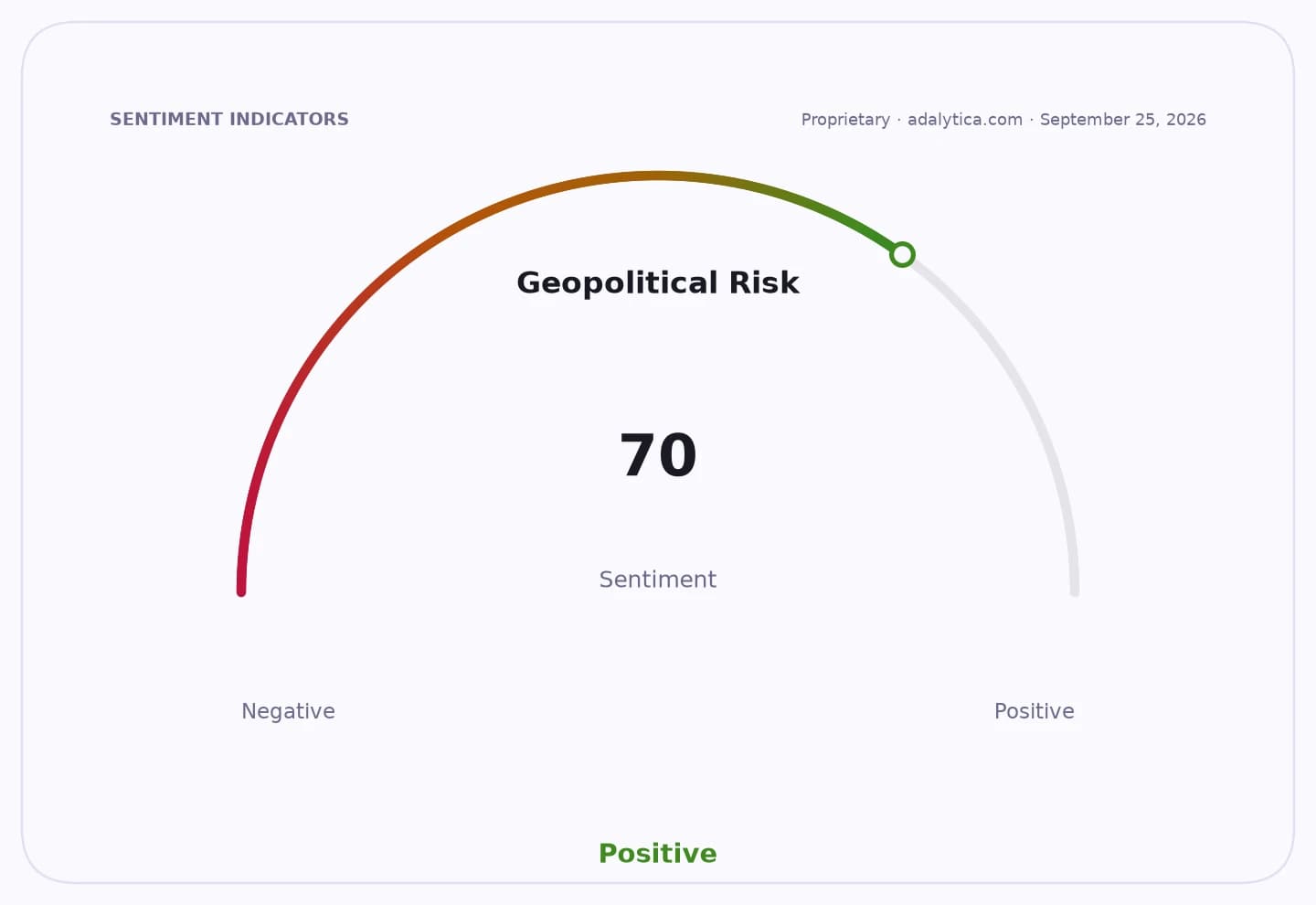
Sentiment IndicatorsⓘProprietary · adalytica.com · July 21, 2026
This is a snapshot — live sentiment, awareness and momentum for 130+ markets update continuously in the dashboard.Open AlphaPulse
U.S. industrial output, tracked by the industrial production index, is projected to rise to 102.94 in July from 102.64 in June, a modest gain but one that extends a recovery from the post-pandemic wobble. At the same time, job openings are forecast around 7,656,900 in June, still far below the 2021 peak but high enough to suggest employers are not freezing hiring. The unemployment rate is expected to edge down to 4.18% in July from 4.2% in June, reinforcing the picture of a labor market that is slowing only gradually, not cracking.
That combination is important economically because it says the expansion is increasingly being shaped by productivity rather than by a simple surge in labor demand. When businesses can produce more with the same or fewer workers, they protect margins, absorb wage pressure and make it easier for central banks to avoid reacting to every pickup in activity. In other words, productivity is the quiet force that can turn a fragile growth cycle into a resilient one.
You can see that theme in the company and policy examples feeding the broader narrative. Local authorities in Da Nang are pressing businesses to modernize production models and improve green competitiveness, while the Ministry of Finance is still talking up double-digit growth targets and around 4.5% inflation control. That is the tightrope many economies are now walking: growth is wanted, but inflation is not. The only credible way to square that circle is to raise output per worker and lift efficiency across factories, logistics and services.
Corporate filings point in the same direction. Microsoft’s productivity and business processes segment showed revenue growth, Apple is still spending heavily on research and development, Caterpillar is benefiting from infrastructure and data-center spending, and industrial players such as Deere are leaning on multi-year operating models designed to wring more productivity out of their businesses. Even Maurel & Prom and PANEL are examples of companies trying to expand output or target new demand pockets, which is exactly what a productivity-led cycle looks like in practice.
For investors, the message is straightforward: productivity winners tend to be the companies that can expand earnings without needing a red-hot economy. That is why software, automation, industrials, semiconductors, logistics and energy-efficiency names often look better when growth is scarce and every basis point of margin matters. They are not just riding the cycle — they are helping redefine it.
The market backdrop supports that view, even if it has been volatile. The S&P 500 proxy SPY has climbed well above its 200-day moving average, a sign the long-term trend remains constructive, while the U.S. dollar has also been highly active as traders reprice growth, inflation and policy expectations. Near term, the technical swings show investors are still debating how much good news is already priced in. Over a 3- to 10-year horizon, though, the bigger question is which businesses can turn productivity gains into durable free cash flow.
That is where patience matters. Productivity stories are rarely explosive in a single quarter, but they can be game-changing over a full cycle. Companies that automate, digitize and standardize effectively often earn wider moats, steadier margins and better returns on capital. For long-term investors, that makes them worth watching, and in many cases worth holding through the noise.
| Entity | Gains | Losses |
|---|---|---|
| Productivity-focused companies | ▲Higher margins, better cash flow | ▼Higher execution pressure |
| Workers in stable labor markets | ▲More secure jobs | ▼Slower wage-firehose growth |
| Consumers | ▲Better goods and services | ▼Less easy stimulus-led demand |
| Margin-heavy competitors | ▲Share gains from efficiency | ▼Share loss from slower rivals |