A Quebec publisher has severed ties with a prize-winning debut novelist after saying metadata analysis found evidence that artificial intelligence was used in the book’s creation, a dispute that underscores how quickly AI is becoming a trust issue for the entire publishing industry.
Quebec Publisher Drops Orélien Over AI Allegations
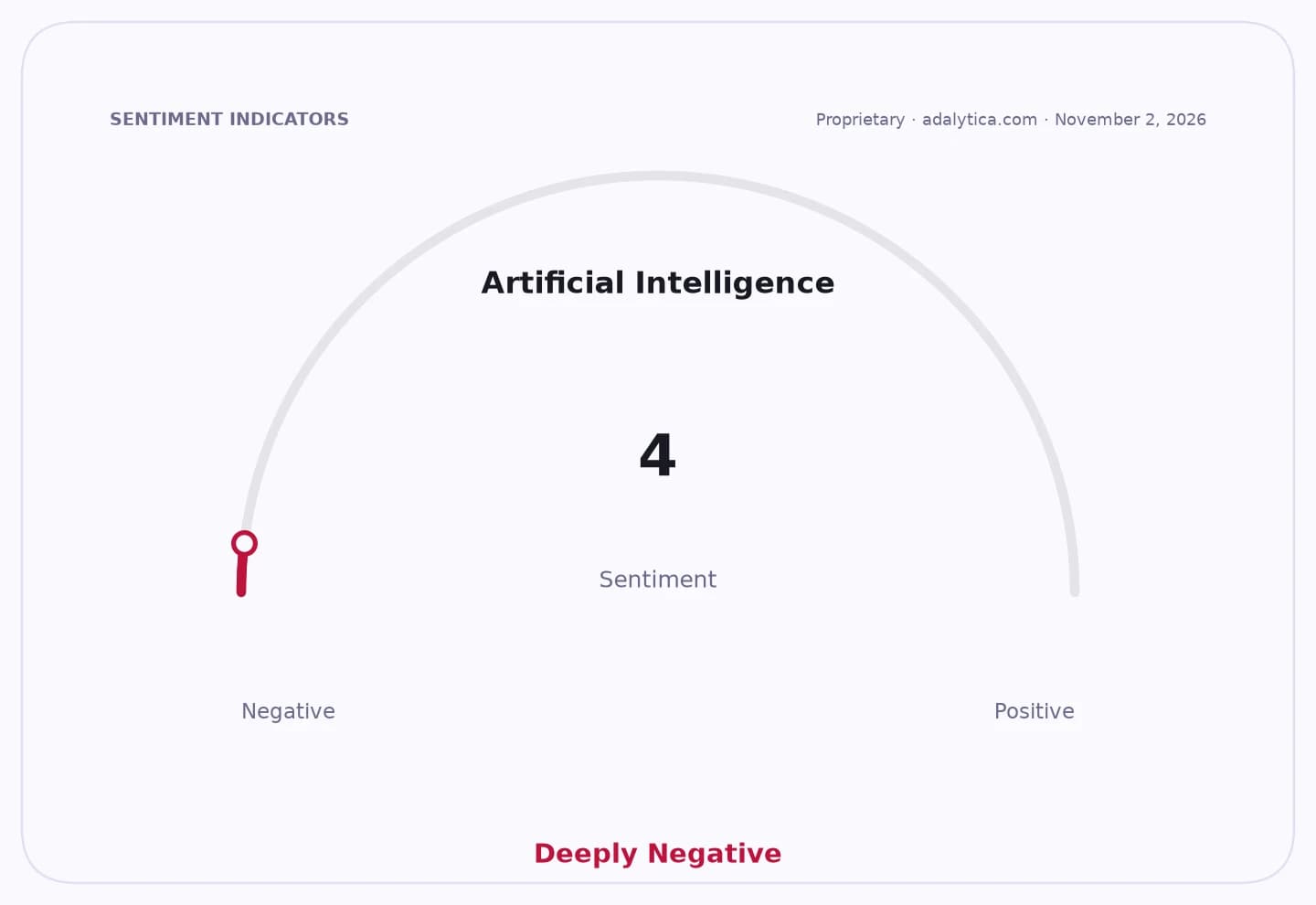
Artificial Intelligence
For investors, the immediate business question is less about one novel than about the economics of authenticity. Publishers sell credibility as much as books, and that credibility supports long-lived revenue streams from print runs, reprints, award recognition and foreign rights. When a house concludes it cannot stand behind an author’s work, the fallout can be commercial as well as reputational.
Sentiment Indicators
Les Éditions du Boréal said it will not reprint Thélyson Orélien’s “C’était ça ou mourir” and will not publish more books by him after its own review, along with an external analysis of manuscript versions, turned up “AI markers.” The publisher said it does not know the full extent of AI involvement and may never have a definitive answer, but said the episode raises a “fundamental question” about trust between authors and publishers.
That matters because the industry is already wrestling with how to police machine-assisted writing without choking off legitimate uses of AI for research, editing or drafting support. Orélien has denied using AI to write the novel, saying he finished the first draft years before the controversy surfaced and used AI only for research. Still, the book was pulled from the running for France’s Prix Goncourt after earlier winning the Prix du Roman Fnac and earning other nominations.
The commercial stakes are real. A book that is strong enough to win awards and attract a new printing can become a meaningful asset for a publisher, especially when it has momentum in bookstores, translation markets and prize circuits. Once that momentum is interrupted, however, the economics reverse fast: promotional spending gets suspended, future print demand becomes harder to forecast and the publisher has to decide whether the title remains salable or becomes a liability.
The bigger long-term issue is that this is not just a literary scandal; it is part of the broader re-pricing of AI risk across content businesses. Whether the medium is books, journalism, research or online media, institutions are going to demand clearer disclosure rules, better provenance checks and stronger contracts around authorship. That creates costs, but it may also create opportunities for firms that can verify originality, track document history or provide compliance tools for creators and publishers.
For investors in publishing-adjacent names, the lesson is that AI is not only a productivity story. It is also a governance story. Companies that help content producers prove authenticity may see demand rise, while those that depend on audience trust will have to spend more to protect it. Boréal’s decision is a reminder that in the age of AI, the value of a brand can hinge on something as simple as who — or what — wrote the first draft.
| Entity | Gains | Losses |
|---|---|---|
| Publishers | ▲Stronger provenance standards | ▼Higher compliance costs |
| Authors using AI transparently | ▲Clearer rules | ▼Less ambiguity |
| Boréal | ▲Defends brand trust | ▼Loses a successful title |
| Orélien | ▲None from ruling | ▼Reputational damage |