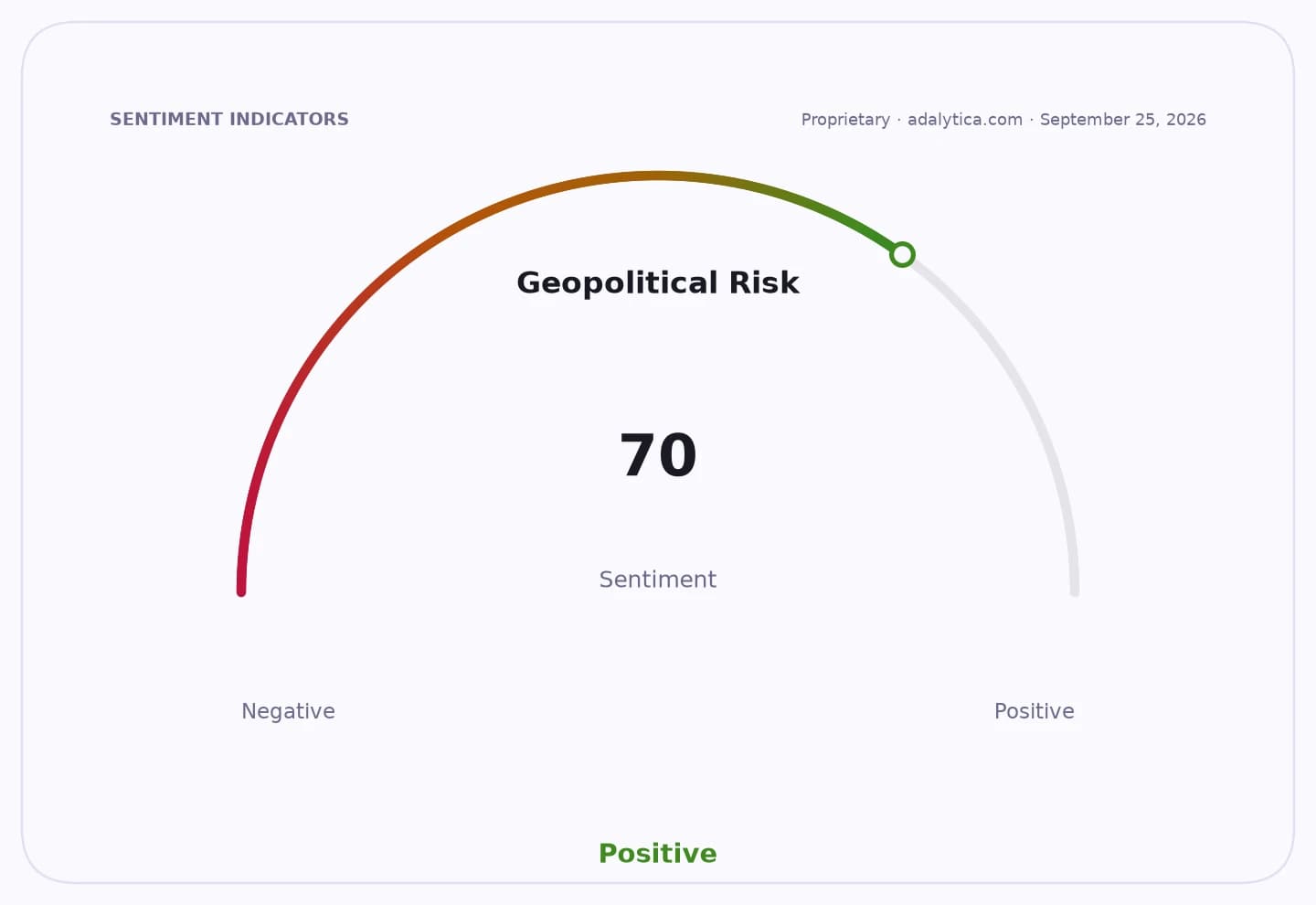
New Zealand’s inflation pressure is proving stickier than the Reserve Bank of New Zealand wants, with its sectoral factor model showing annual inflation rising 2.7% in the second quarter and keeping the case for tighter policy alive.
RBNZ Inflation Stays Sticky, Supporting NZD

The reading matters because it suggests price pressures are not fading fast enough for the RBNZ to comfortably pivot, even as policymakers try to cool demand without choking growth. For investors, that keeps the path for borrowing costs, the New Zealand dollar and rate-sensitive equities tied to upcoming inflation prints and the central bank’s next move.
Sentiment IndicatorsⓘProprietary · adalytica.com · July 21, 2026
This is a snapshot — live sentiment, awareness and momentum for 130+ markets update continuously in the dashboard.Open AlphaPulse
The sectoral measure is one of the RBNZ’s internal gauges for underlying inflation trends, and the latest result comes alongside broader signs that price growth is still elevated. New Zealand’s consumer inflation has remained above the central bank’s target band, while fuel costs and imported price pressures have continued to filter through to households and businesses.
That backdrop leaves the RBNZ with limited room to ease policy quickly. Markets are likely to interpret the higher sectoral factor reading as a signal that policy rates may need to stay restrictive for longer, or even rise further if inflation expectations stop cooling.
The New Zealand dollar has already shown sensitivity to the inflation outlook, and conventional technical indicators on NZD/USD suggest the currency remains firm near recent levels, with the pair trading around 0.59 and holding near its 50-day and 200-day moving averages. That leaves the currency exposed to any surprise in the next inflation data or shift in RBNZ guidance.
Broader market signals are also consistent with a still-cautious rates backdrop. U.S. Treasury bond sentiment remains weak, reinforcing the global sensitivity to inflation and policy risk, while traders will now focus on whether the RBNZ’s next inflation release confirms this quarter’s pickup or forces another policy response.
The key test is whether the sectoral factor rise proves temporary or marks a more persistent inflation pulse. If the next round of data stays hot, rate-cut expectations in New Zealand will likely be pushed further out, with implications for mortgage costs, domestic demand and the pace of economic growth.
| Entity | Gains | Losses |
|---|---|---|
| RBNZ hawks | ▲Stronger case for tight policy | ▼Little room to cut rates |
| NZD bulls | ▲Higher-rate support for currency | ▼Softer if inflation eases |
| Borrowers | ▲None | ▼Higher-for-longer interest costs |
| Importers/consumers | ▲None | ▼Higher fuel and living costs |