Karlos Vémola’s luxury-property portfolio — including high-end houses and 21 apartments — lands in a housing market that is still drawing capital, even as affordability strains and inflation pressures keep the sector politically sensitive.
Real Estate Momentum Stretches as Housing Costs Bite
The reason it matters is that residential real estate is not just a lifestyle story; it is a capital-allocation story. When a celebrity-owned portfolio stretches across multiple homes and two dozen apartments, it underscores how property remains a preferred store of wealth, particularly in markets where buyers still see upside from rents, scarcity and long-run price appreciation.
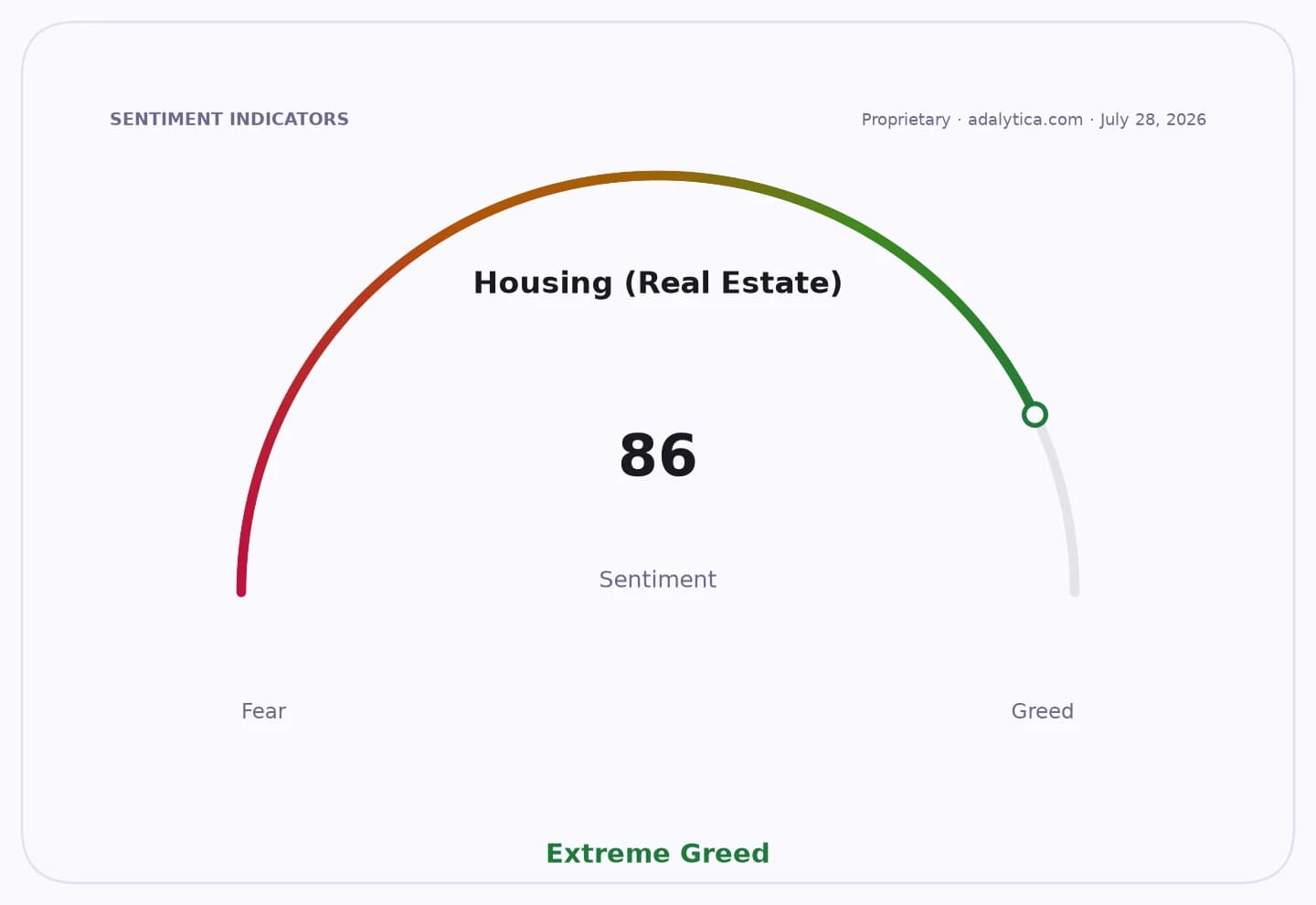
Sentiment IndicatorsⓘProprietary · adalytica.com · July 28, 2026
This is a snapshot — live sentiment, awareness and momentum for 130+ markets update continuously in the dashboard.Open AlphaPulse

That backdrop is being reinforced by broader housing-market signals. The Vanguard Real Estate ETF, VNQ, has climbed to 101.12 from 85.60 on Aug. 18, with the 50-day moving average at 96.89 and the 200-day at 91.55, showing sustained momentum in listed real estate. The iShares U.S. Real Estate ETF, IYR, has risen to 107.43 from 92.20 over the same span, while REZ, which tracks residential REITs, has advanced to 98.94 from 82.63. All three are trading well above their longer-term moving averages, a sign investors are willing to pay up for real-estate exposure again.
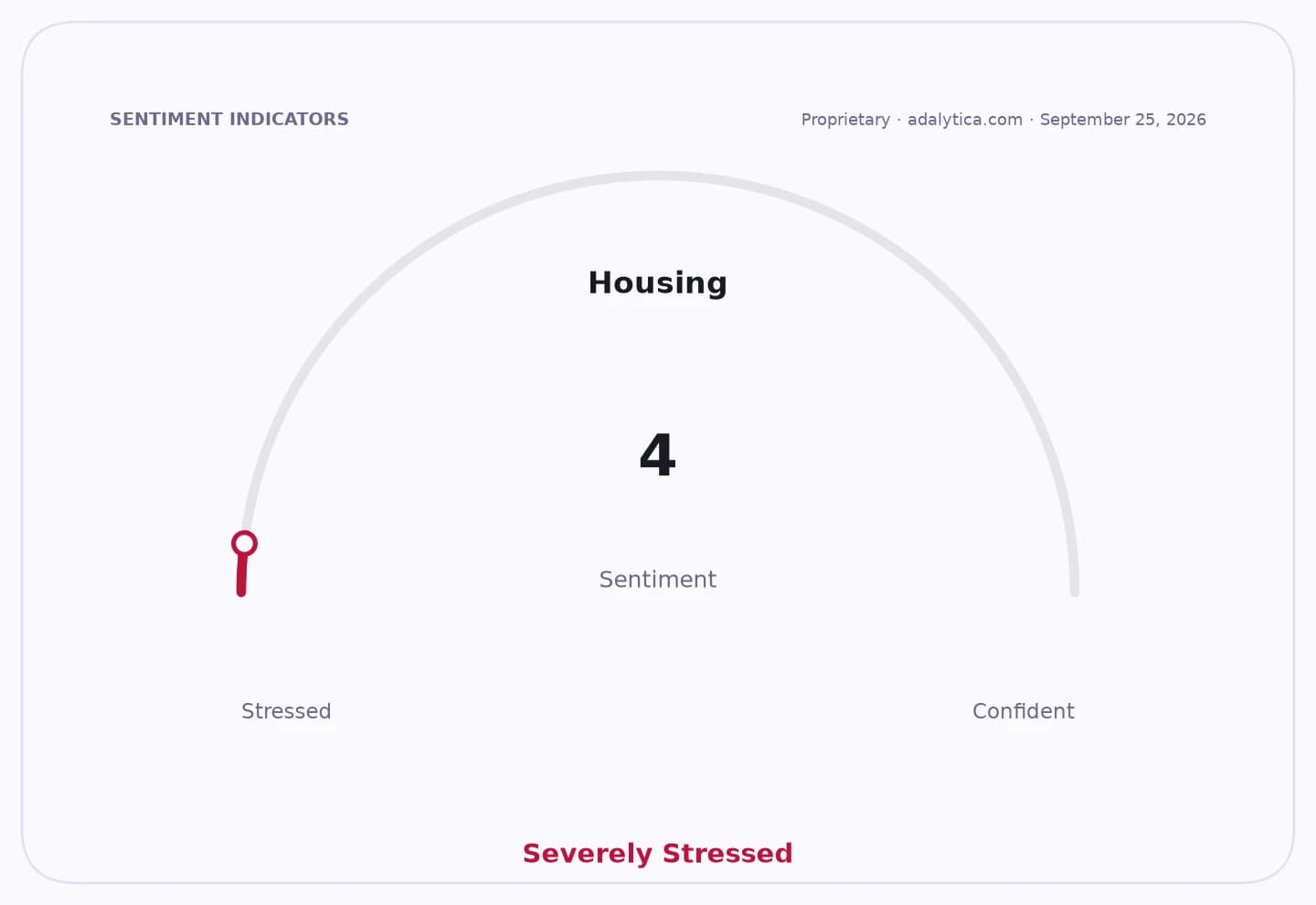
Sentiment data points the same way. Adalytica’s Housing Fear & Greed Index for XHB sits at 86, labeled “Extreme Greed,” while housing and rent inflation sentiment remains deep in “Extreme Fear.” That split suggests investors are warming to property assets even as households still feel squeezed by costs, a combination that often supports owners and landlords more than first-time buyers.
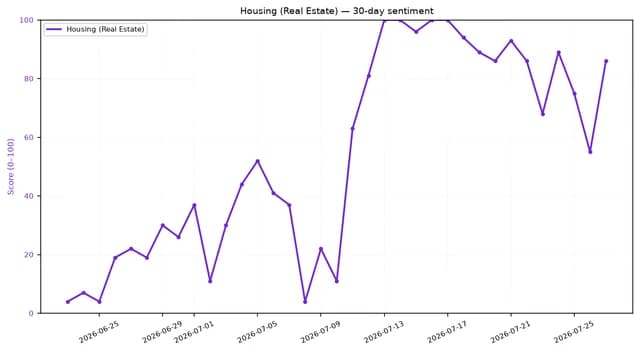
For investors, the key question is whether the current appetite for real estate is sustainable or already stretched. VNQ’s RSI reading of 76.3 and IYR’s 75.6 both indicate overbought conditions by conventional technical measures, while REZ’s 68.3 is nearing the same zone. That does not signal an immediate reversal, but it does suggest that any disappointment in rates, rents or transaction volumes could trigger a pullback.
The story also fits a broader policy and macro backdrop. Housing support measures, including a recent 1.082 billion-riyal deposit into beneficiaries’ accounts under a housing program, show governments are still propping up demand in a sector central to household wealth and social stability. At the same time, Treasury-market signals remain active, keeping rate expectations in play for real-estate valuations.
For Vémola’s property empire, the implication is straightforward: luxury homes and rental apartments remain valuable assets as long as financing conditions stay manageable and demand holds. For listed real-estate investors, the next catalyst is likely to be the direction of interest rates and any fresh data on rent growth, home affordability and housing policy support.
| Entity | Gains | Losses |
|---|---|---|
| Property owners | ▲Higher asset values | ▼Affordability backlash |
| Residential REITs | ▲Stronger investor demand | ▼Rate-sensitive valuations |
| First-time buyers | ▲Policy support | ▼Higher prices and rents |
| Short sellers | ▲Lower if rally continues | ▼Momentum-driven losses |