REITs are back in favor as investors chase income, but the sector’s appeal still hinges on whether Treasury yields and policy rates can settle low enough to make those payouts competitive.
REITs Rally as Yields Shape Income Appeal

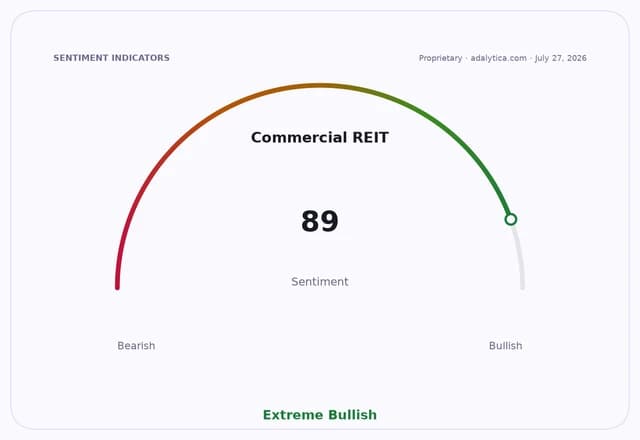
The clearest signal is in the market itself. The Vanguard Real Estate ETF has climbed to about 100.54, near its recent highs, while data tagged by Adalytica.com show commercial REIT sentiment at “Extreme Greed” and awareness at 98. That is a strong momentum backdrop for a sector that typically benefits when investors believe bond yields have peaked and dividend streams will once again look attractive on a relative basis.
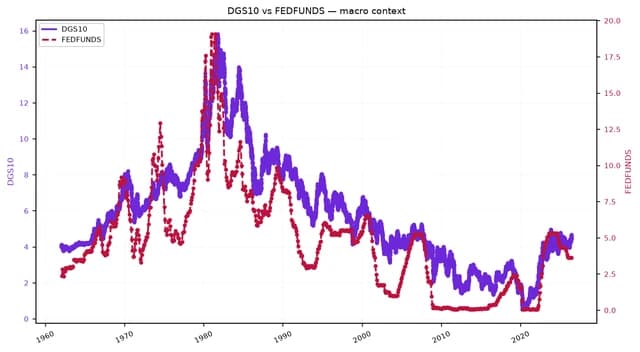
That is why Auerbach’s point that most REIT investors buy for income matters more than it sounds. Income is the sector’s core equity story, and in practice it is a duration trade disguised as a yield trade. If 10-year Treasury yields remain around 4.7%, as market data imply, and the federal funds rate sits near 3.6%, REIT payouts have to clear a higher hurdle than they did in the low-rate era. The investment case improves when investors believe rates are stable or drifting lower; it weakens quickly if inflation or policy keeps real borrowing costs elevated.
The bond market is not offering a clean green light. Treasury-bond sentiment tracked by Adalytica.com is still in “Fear,” even after a recent rebound in the signal, suggesting the market remains cautious about duration risk. At the same time, the 10-year yield forecast edges up to 4.738%, underscoring that rate relief is not yet fully priced. For REITs, that matters because financing costs feed directly into property returns, while higher discount rates pressure valuations even when fundamentals are solid.
That tension helps explain the split within the sector. Realty Income, the dividend-heavy staple that many investors own specifically for cash returns, has outperformed at around 65.50, while Prologis has advanced to about 147.26 on the strength of industrial property demand and scale. The broader REIT ETF has also stayed above both its 50-day and 200-day moving averages, with momentum indicators still constructive. But technical strength does not eliminate the macro question: whether investors are buying income because yields are genuinely attractive, or because they expect a Federal Reserve easing cycle that has yet to fully arrive.
The recent corporate backdrop reinforces that the industry is still adapting to a more selective capital market. Asset sales and consolidation across the REIT universe point to a sector trying to sharpen balance sheets, improve portfolio quality and protect dividend capacity. That is exactly the sort of behavior investors tend to reward when financing is tighter and capital discipline matters more than asset growth.
For investors, the message is straightforward. REITs can keep working as income vehicles if inflation stays contained, rates drift lower and credit remains available. The bull case is a softer bond market and steadier dividend spreads; the bear case is a persistently high cost of capital that compresses multiples and limits growth. The next catalyst is likely to be macro, not micro: another move in Treasury yields, followed by confirmation that rental income and distributions can still outrun them.
| Entity | Gains | Losses |
|---|---|---|
| REIT income investors | ▲Dividend yield | ▼Price upside if rates rise |
| Bondholders | ▲Higher carry appeal | ▼Capital losses from rate swings |
| REIT operators | ▲Easier refinancing if yields fall | ▼Margin pressure if borrowing stays expensive |
| Growth REITs | ▲Lower discount rates | ▼Value if cap rates stay elevated |