Remote work is no longer being judged only on convenience; it is increasingly being tested against the economics of productivity, office demand and labor-market discipline.
Remote Work Debate Bolsters Office Reopening Bets
That is why the GMO representative’s comment that “productivity doesn’t increase” when employees work from home matters beyond the usual culture-war framing. The argument goes to the heart of how companies allocate labor, how much office space they need and whether the post-pandemic normalization of hybrid work has already reached its limit.
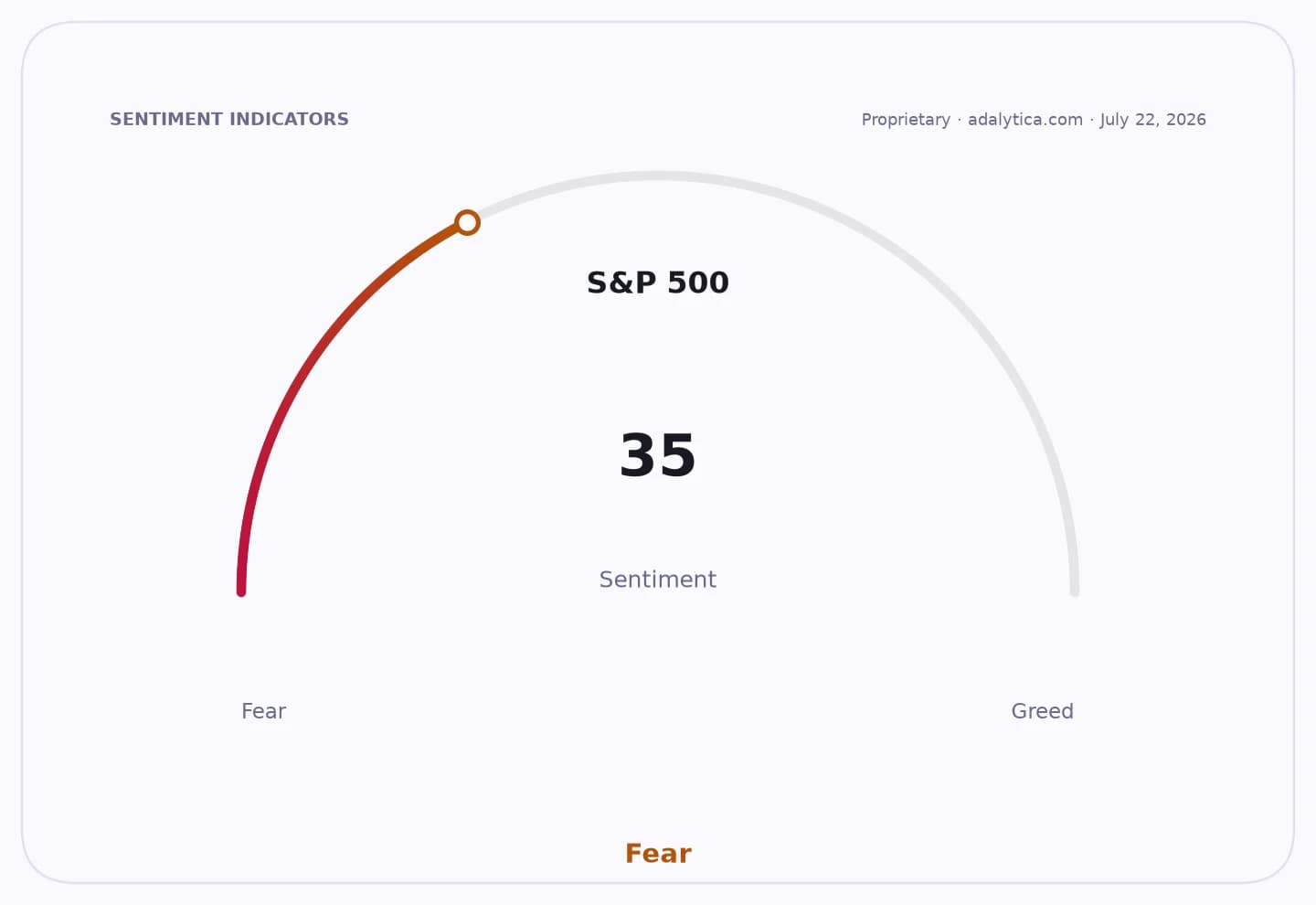
Sentiment IndicatorsⓘProprietary · adalytica.com · July 22, 2026
This is a snapshot — live sentiment, awareness and momentum for 130+ markets update continuously in the dashboard.Open AlphaPulse
The broader backdrop is a U.S. labor market that is cooling but not cracking. The unemployment rate is forecast at 4.18% for July, down from 4.2% in June and well below recessionary levels. That means employers still have room to push on attendance and output without immediately risking a hiring shock. At the same time, the 10-year Treasury yield around 4.58% keeps financing costs elevated, reinforcing pressure on firms to justify every square foot, every salary dollar and every incremental productivity gain.
For office landlords, that debate is not abstract. It is central to whether utilization improves enough to stabilize occupancy and cash flow. CBRE and JLL, two of the biggest commercial real estate intermediaries, have seen their shares recover from earlier-year weakness, but both remain below their peaks and below or near long-term trend levels on a technical basis. CBRE closed at $138.27 on July 21, below its 200-day moving average of $148.38, while JLL finished at $324.44, just above its 200-day average of $316.47. That pattern suggests investors are still demanding proof that office demand has truly turned.
The office market data point in the same direction. U.S. housing starts are still volatile, but the more relevant signal here is that corporate real estate activity remains uneven rather than fully healed. In the office sector, landlords continue to describe leasing as dependent on companies filling vacant space and renewing near-term expirations, not on a broad-based return to pre-pandemic desk density. Boston Properties, one of the bellwethers for premier office assets, has told investors that leasing vacant space and covering upcoming expirations will drive occupancy gains. That is consistent with a market where the winners are top-tier, amenity-rich buildings and the losers are older, less flexible stock.
The bull case for a stronger office return is straightforward. If management teams conclude, as GMO’s representative suggested, that remote work does not lift productivity in a durable way, they may lean harder on in-person attendance, especially for collaboration, mentoring and supervision. That would support demand for quality office space, benefit brokers such as CBRE and JLL, and improve pricing power for landlords with modern buildings in major cities.
The bear case is that the labor market and corporate behavior still favor flexibility. Even if productivity gains from home working are limited, employers may keep hybrid arrangements because they help with retention, reduce real estate costs and appeal to workers. That caps any rebound in office utilization and leaves landlords competing for a smaller pool of tenants willing to pay for premium space.
Investors should read the productivity debate as a leading indicator for commercial real estate, not just a workplace philosophy dispute. If companies swing back toward mandated attendance, it would reinforce the rebound already visible in office-services shares and support selected landlords. If they do not, the office market will remain bifurcated, with capital continuing to flow to trophy assets while the rest of the sector struggles to regain pre-pandemic relevance.
| Entity | Gains | Losses |
|---|---|---|
| Office landlords with premium buildings | ▲Higher occupancy, stronger rents | ▼Older suburban office stock |
| CBRE and JLL | ▲More leasing and advisory demand | ▼Prolonged remote/hybrid normalization |
| Employers pushing return-to-office | ▲More direct oversight | ▼Workers valuing flexibility |
| Remote workers | ▲Convenience and flexibility | ▼Leverage in attendance debates |