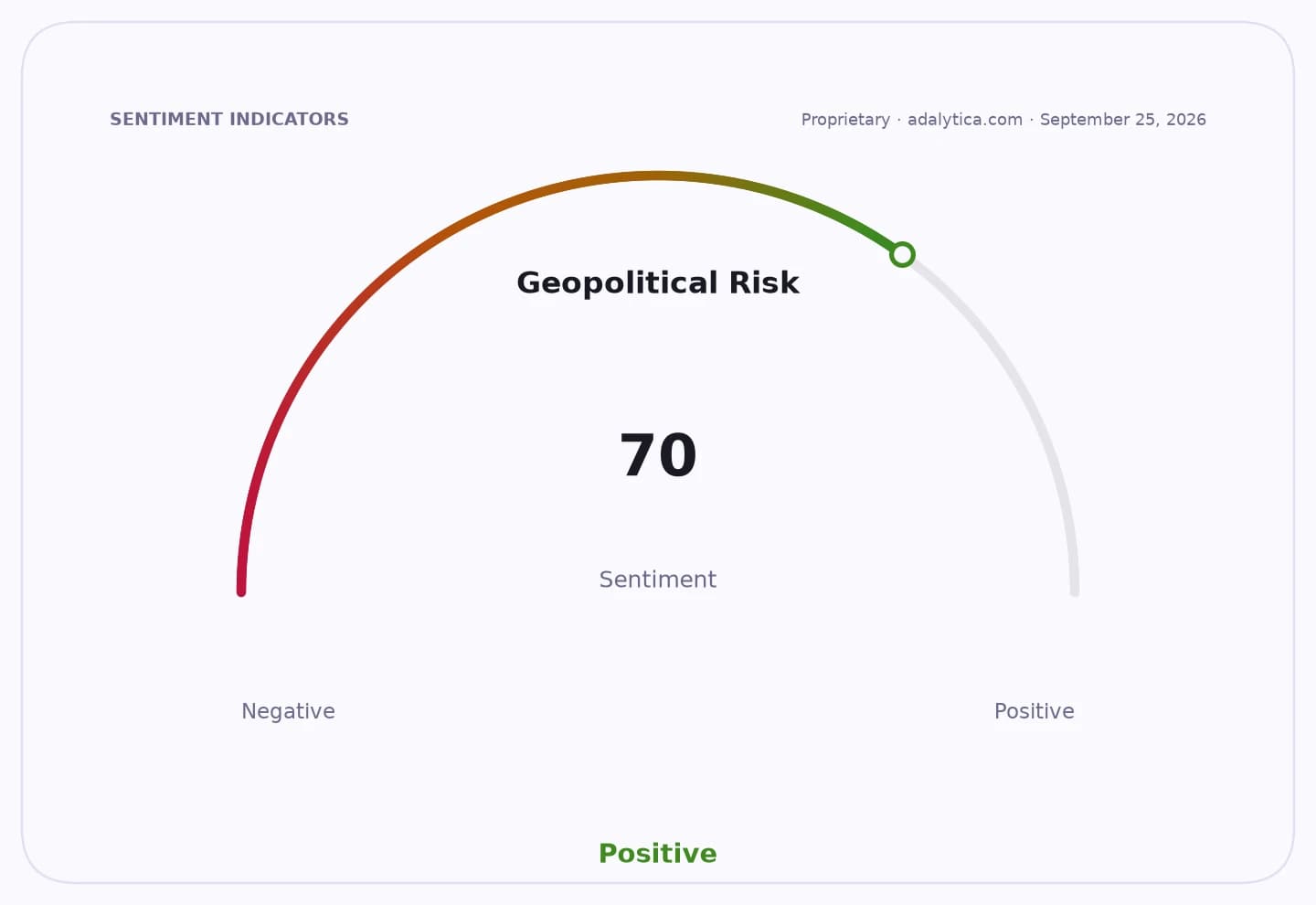
We have learned from the pandemic, inflation, war and now Donald Trump that the most valuable economic asset is resilience.
Resilience Theme Drives Cautious Market Positioning

That is the big lesson hiding inside this market: growth is still growing, unemployment remains low by historical standards, and the S&P 500 is wobbling far less because the economy is collapsing than because investors are being forced to price in a world that stays unpredictable for longer. For long-term investors, that matters more than any one headline. It says the U.S. economy has become durable enough to absorb repeated shocks, but it also says the market is being asked to discount a higher-risk, higher-uncertainty regime.
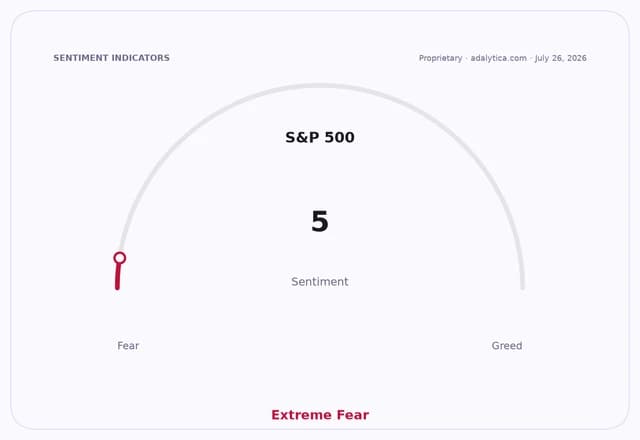
Sentiment IndicatorsⓘProprietary · adalytica.com · July 26, 2026
This is a snapshot — live sentiment, awareness and momentum for 130+ markets update continuously in the dashboard.Open AlphaPulse

The numbers back that up. U.S. unemployment is forecast at 4.18% for July, near a level that would have looked enviable in most cycles, while GDP is still projected to rise to about 32.36 trillion dollars in the latest estimate. That combination — solid output, modest joblessness, but persistent policy and geopolitical noise — is exactly what has kept investors rotating between risk-on optimism and safety trades rather than making a clean bet on either outcome.
You can see the tug of war in markets. The S&P 500, tracked by SPY, is still far above its spring lows, but it has slipped from recent highs and now sits below its 50-day moving average. Standard technical indicators show the ETF’s RSI has cooled to 39.1, a sign momentum has faded, while MACD has rolled over. That doesn’t read like panic; it reads like caution. In plain English, investors are no longer paying any price for certainty.
UNRATE vs GDP — macro contextadalytica.com
Explore this data interactively — full history, time series and cross-market comparisons.Open AlphaPulse
The bond market is telling a similar story. The 10-year Treasury yield has climbed to a forecast 4.749%, a level that matters because it raises the discount rate on future earnings and puts pressure on richly valued stocks. Higher yields can reflect stronger growth, but they also tell you investors are demanding more compensation to hold longer-dated assets in a world shaped by tariff risk, inflation scares and shifting trade policy.
The U.S. dollar is flashing its own warning. Adalytica trade signals put dollar sentiment at “Extreme Fear,” while the currency ETF proxy has fallen sharply from earlier highs. That suggests investors are increasingly willing to hedge away from dollar strength, a move that can help multinational U.S. companies but also reflects a broader search for alternatives when policy credibility feels less stable than it used to.
For investors, the practical takeaway is simple: this is not a market where you want to build a portfolio around one perfect macro call. Resilience is the theme, not certainty. Companies with pricing power, strong free cash flow, and the ability to operate through higher rates, tariff shifts, and geopolitical shocks deserve a premium. So do diversified portfolios that can absorb volatility without forcing you to sell at the wrong time.
That is why the most important investing move now may be patience. The best businesses will not need the world to calm down this quarter or even this year. They will keep compounding through cycles, and that is exactly what you want to own when the lesson from crisis after crisis is that stability itself has become scarce. Worth watching, and worth holding for the long term.
| Entity | Gains | Losses |
|---|---|---|
| Resilient companies | ▲Pricing power | ▼Weak balance sheets |
| Long-term investors | ▲Better entry points | ▼Short-term traders |
| U.S. exporters | ▲Softer dollar | ▼Importers |
| Treasury buyers | ▲Higher yields | ▼Rate-sensitive stocks |