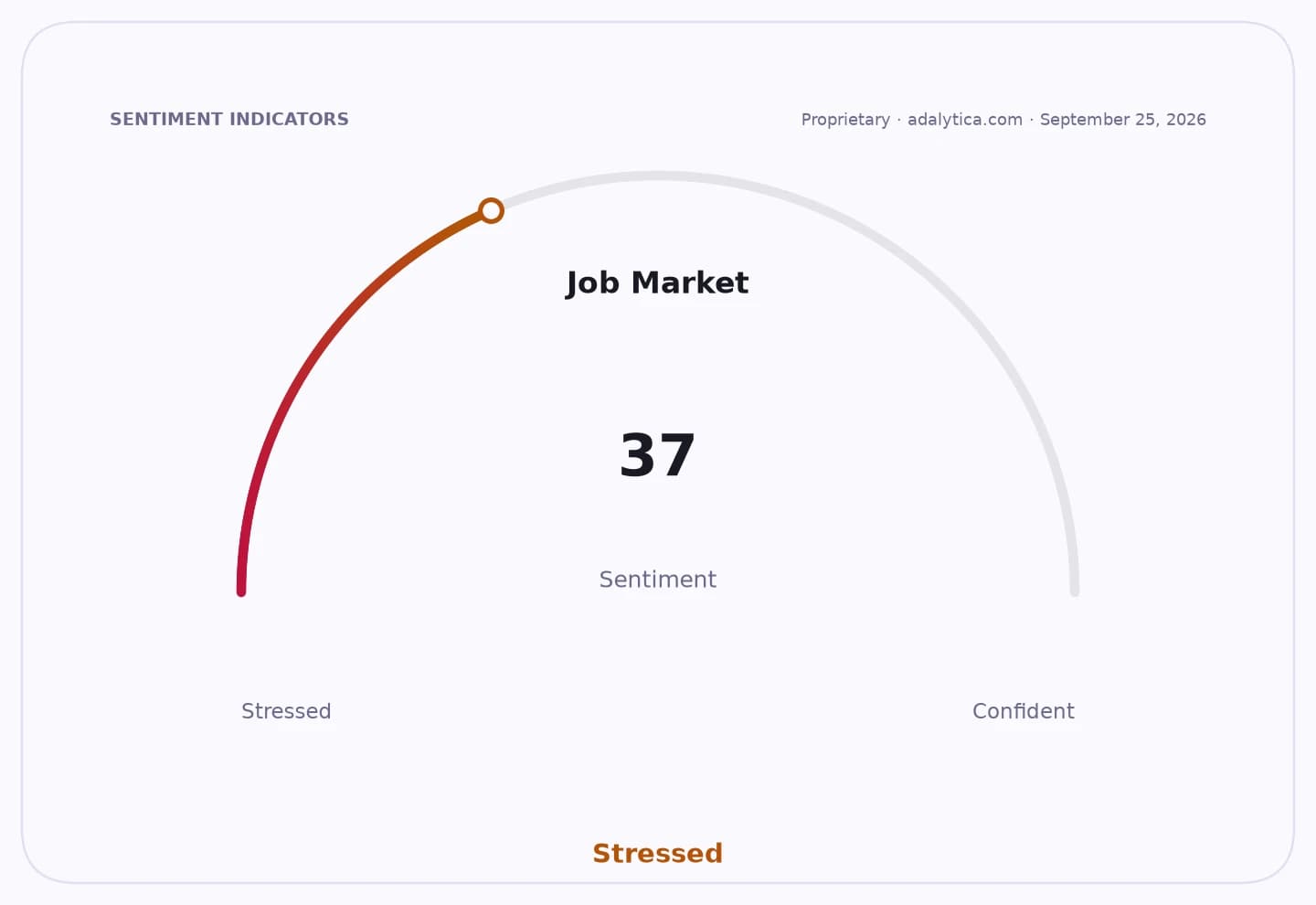
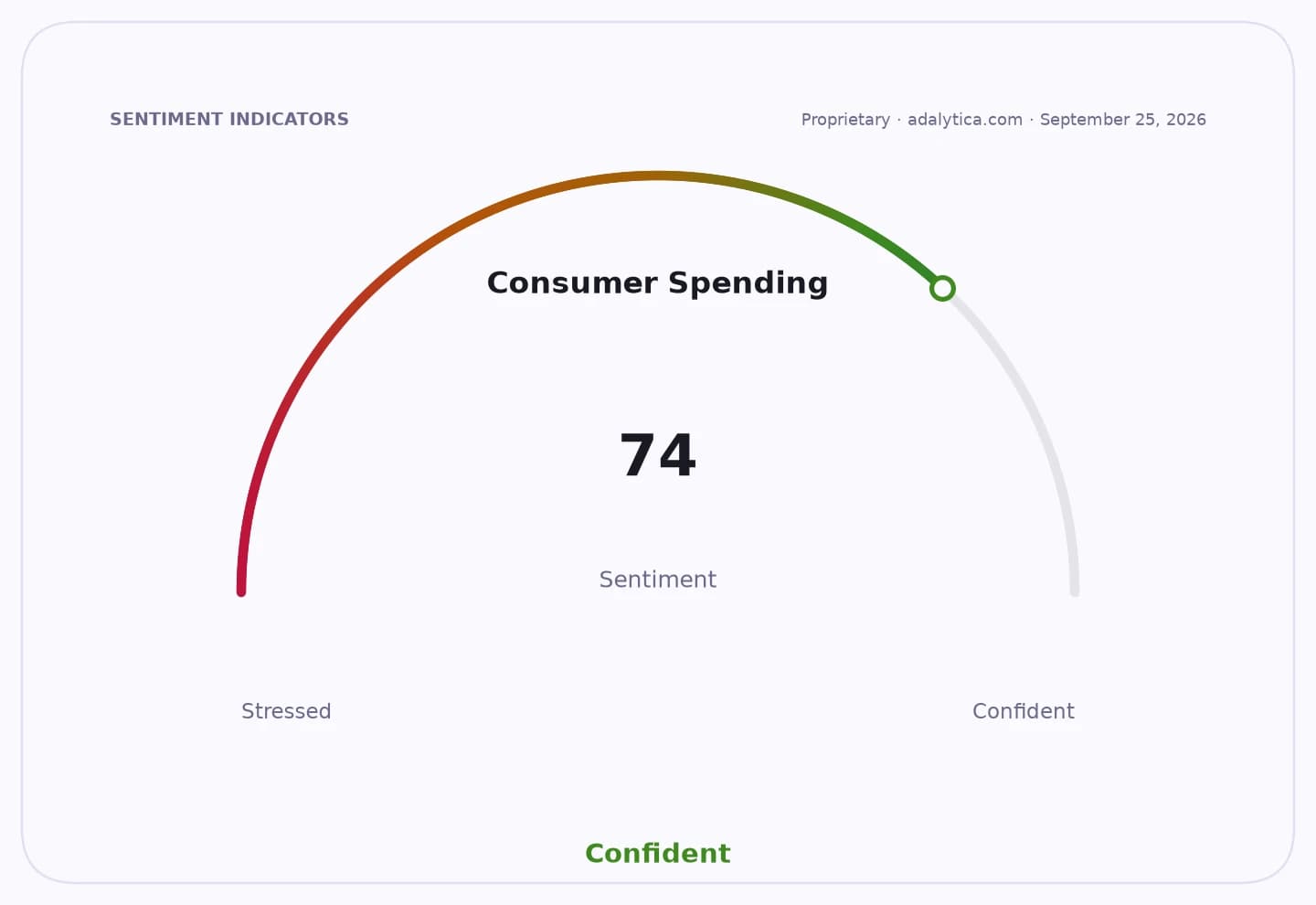
Guests are still spending, but they are doing so more carefully, and that shift is beginning to show up in restaurant sales, earnings and share prices across the sector.
Restaurant spending slows in June to $666.1 billion
New fiscal data point to a consumer that is no longer in the free-spending mode that supported restaurant chains through much of the post-pandemic recovery. Retail spending tied to restaurants is still rising, but the pace has moderated sharply, while sentiment gauges on consumer confidence and retail goods spending have turned weaker, suggesting households are becoming more selective about where and how often they eat out.
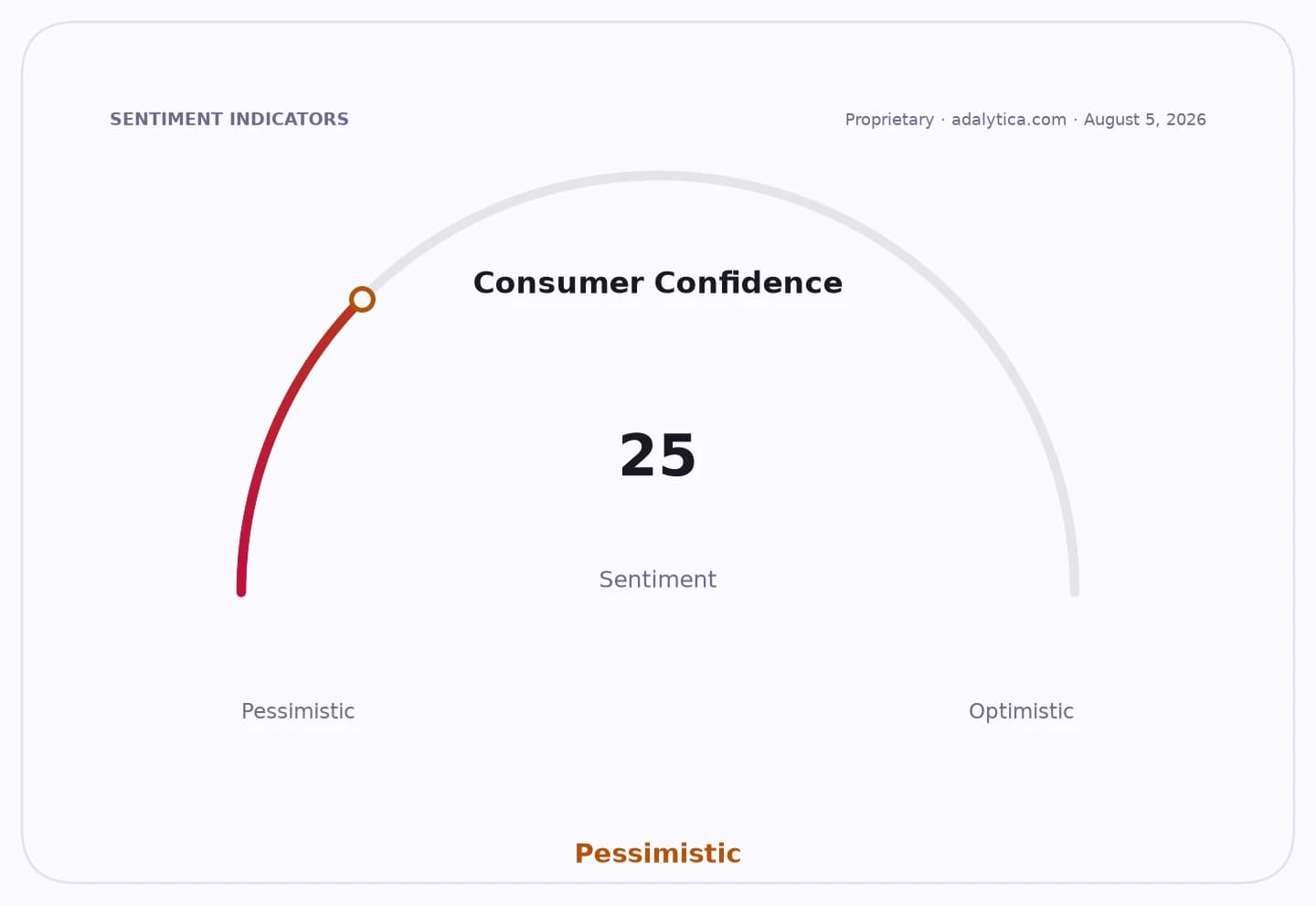
Sentiment IndicatorsⓘProprietary · adalytica.com · August 5, 2026
This is a snapshot — live sentiment, awareness and momentum for 130+ markets update continuously in the dashboard.Open AlphaPulse
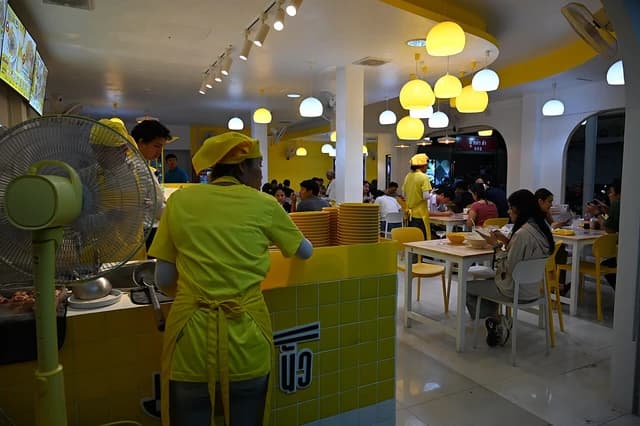
The most recent reading on restaurant and food-service spending shows monthly growth of just 0.24% in June, up to 666.1 billion from 664.4 billion in May, with a forecast for only a 1.32% rise in July to 674.8 billion. That is a far cry from the stronger bursts of growth seen earlier in the cycle, when monthly gains were running at 5% to 10% and more.
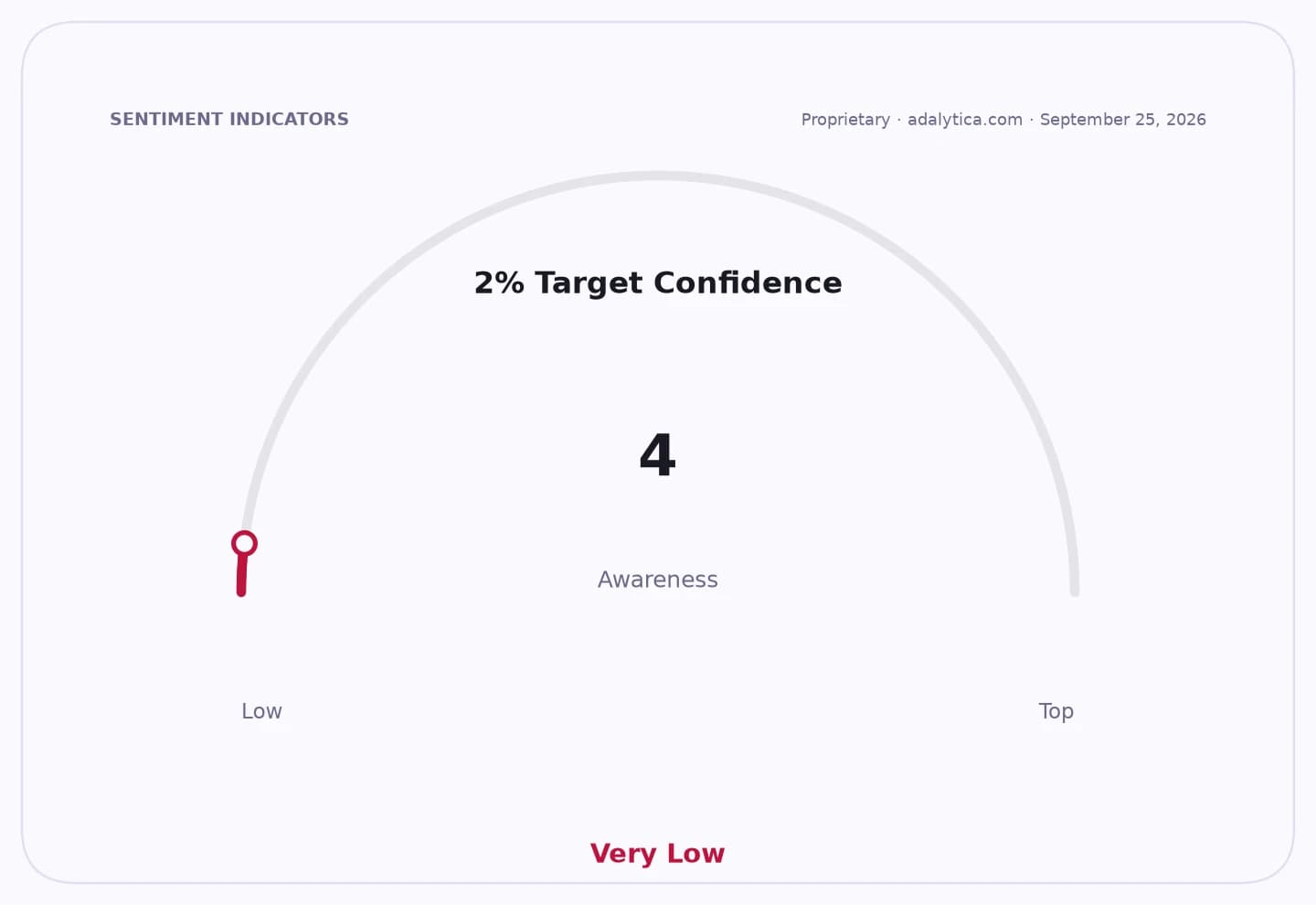
The backdrop is a labor market that remains intact, with unemployment at 4.2% in June and seen easing to 4.18% in July, but a consumer that is clearly more cautious. Adalytica’s Consumer Confidence Recession Sentiment gauge sits at 25, or “Fear,” while its Retail Goods Spending Sentiment is at 4, or “Extreme Fear,” a sign that shoppers are prioritizing necessities and trimming discretionary purchases.
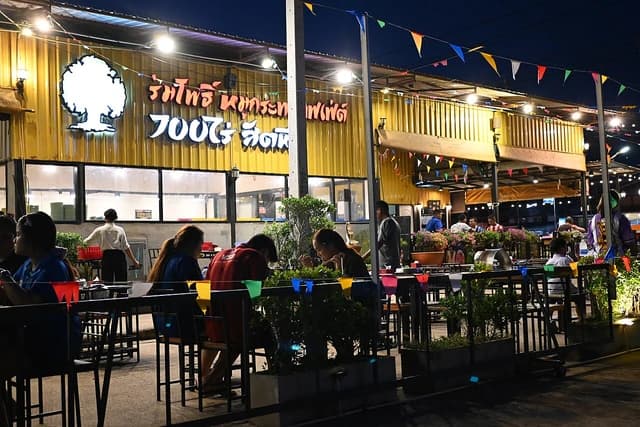
For restaurants, that mix is awkward. It is enough demand to keep traffic flowing, but not enough pricing power to fully offset higher costs or weaker check sizes. That puts pressure on full-service and premium casual chains in particular, while value-focused operators are better positioned to capture trade-down spending.
The market is already reflecting that divide. McDonald’s shares are trading below their 200-day moving average after a sharp pullback from February highs, with the stock at $268.34 on Aug. 4 versus $336.88 in late February. Chipotle has also been volatile, slipping to $33.82 on Aug. 4 after a strong July rally, while Domino’s has outperformed, closing at $367.63 on Aug. 4, close to its recent highs and above both its 50-day and 200-day moving averages.
The broader message is that restaurant earnings this season are less about a simple recovery in demand and more about a split consumer. Chains that can win value-conscious diners, protect margins and keep traffic from sliding are likely to fare best, while operators dependent on robust discretionary spending may find the next few quarters harder to manage.
With July spending still only expected to show modest growth and consumer confidence sentiment deeply subdued, investors will be watching upcoming earnings, menu pricing and traffic trends for signs that cautious dining behavior is becoming the new normal.
| Entity | Gains | Losses |
|---|---|---|
| Value-focused chains | ▲Trade-down traffic | ▼Less pricing pressure |
| Premium casual restaurants | ▲— | ▼Softer check averages |
| McDonald’s | ▲Defensive demand | ▼Stock still below 200-day average |
| Chipotle | ▲— | ▼Volatile sentiment-sensitive trading |