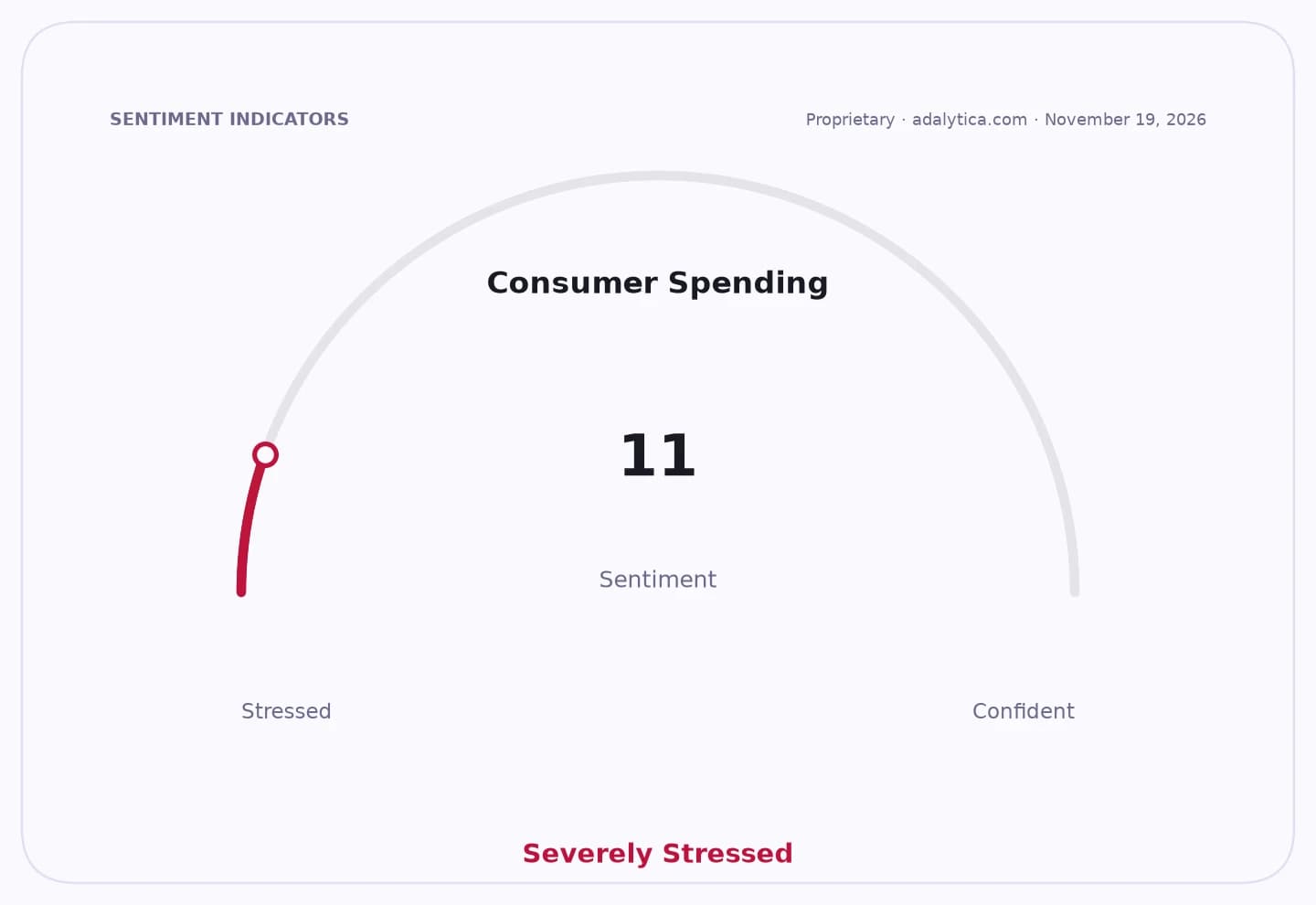
Americans are pulling back from restaurant meals, and that matters because it shows inflation is still biting where consumers feel it most: everyday spending. The shift is not a small behavioral blip. It is a direct warning that higher menu prices and household budget pressure are forcing diners to trade down, visit less often and cut discretionary spending across the restaurant industry.
Restaurant traffic weakens as consumers cut dining out
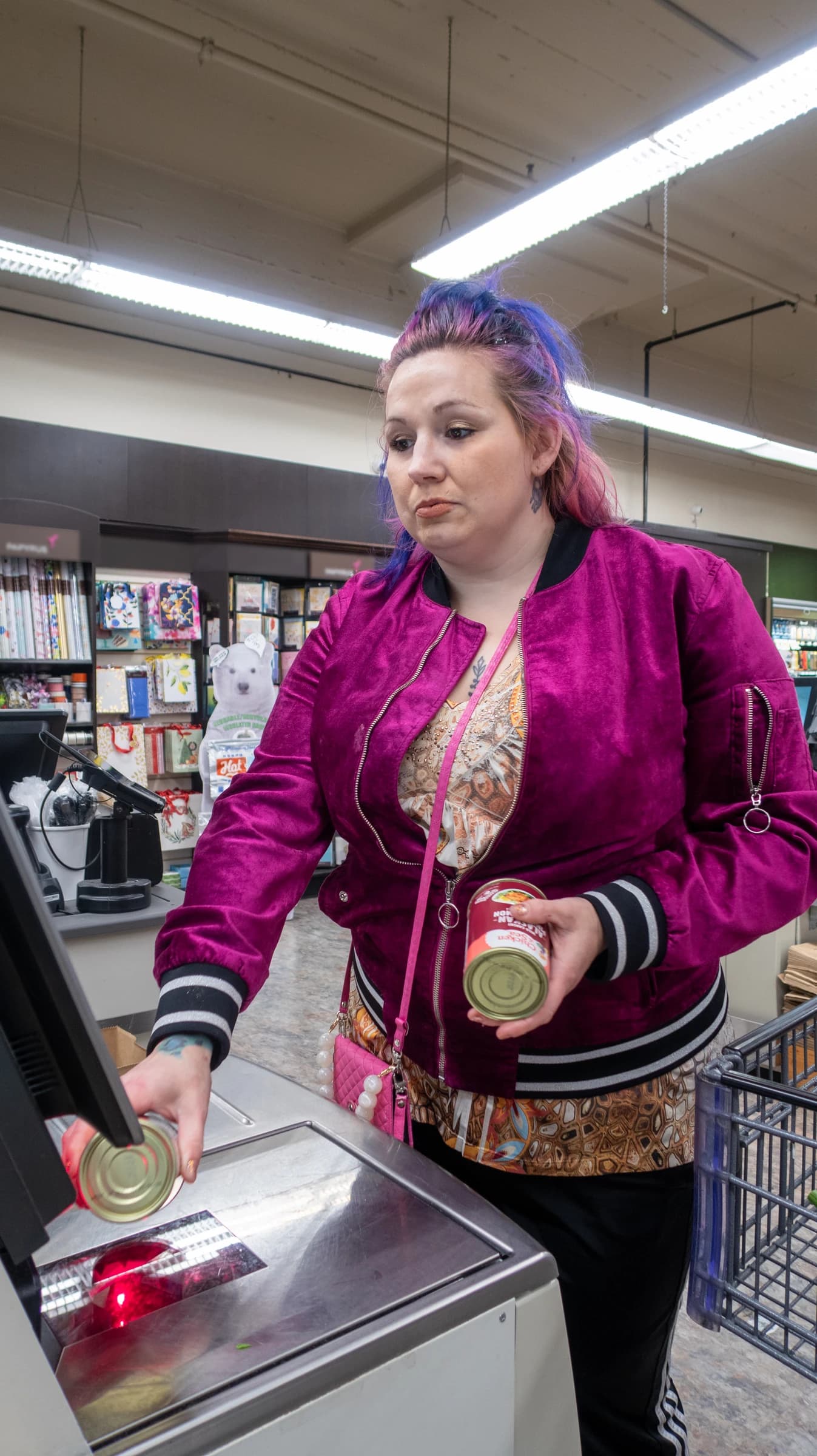
The clearest sign is in the frequency of eating out. Gallup says 39% of U.S. adults now dine at restaurants at least weekly, down from 53% in 2019 and the lowest reading since it began tracking the habit in 2018. The bigger change is in intensity, not total abandonment: the share who eat at restaurants only a few times a year or less has doubled to 20% from 10% in 2019. That is a meaningful demand shift for a sector that depends on repeat visits and steady traffic.
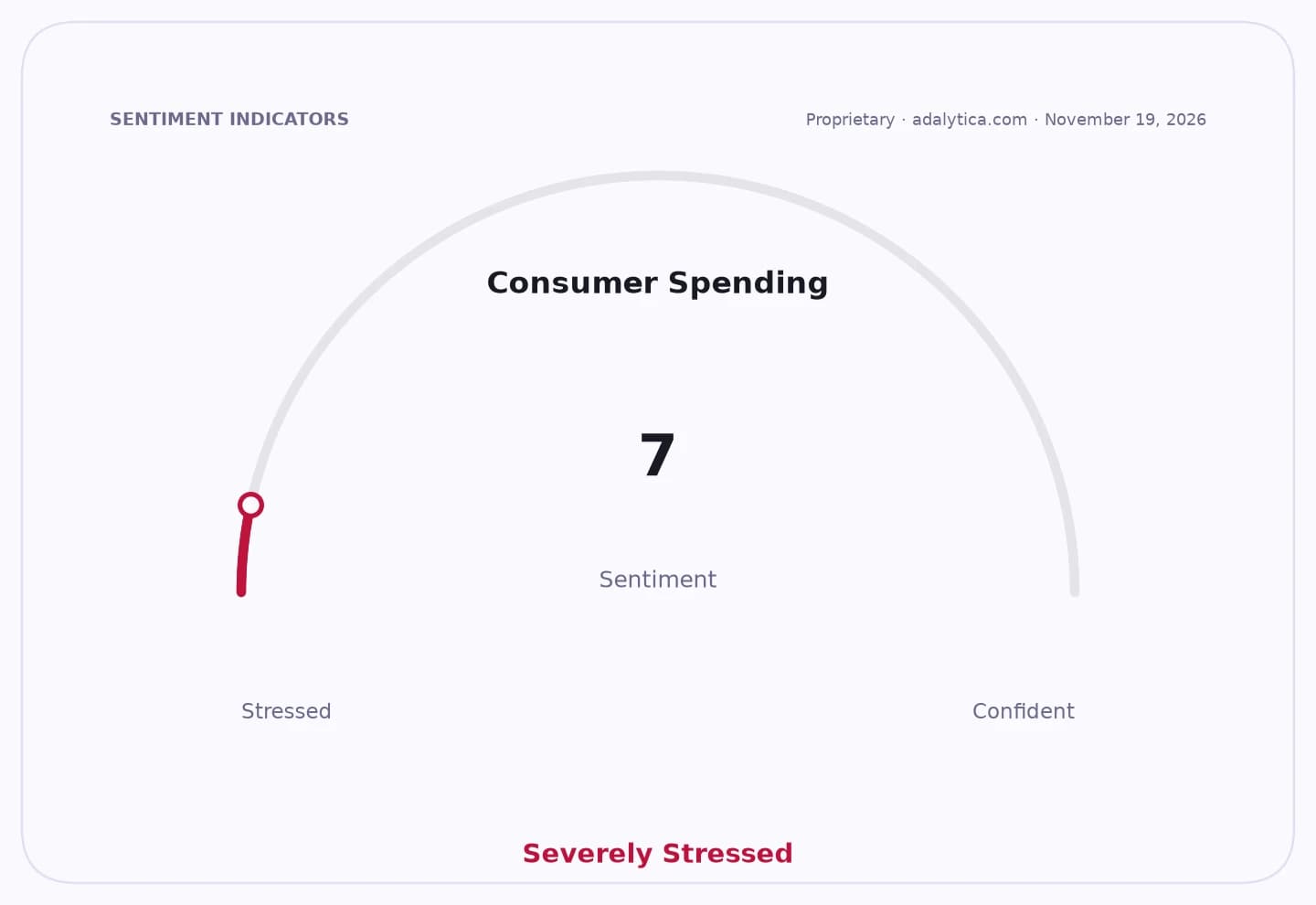
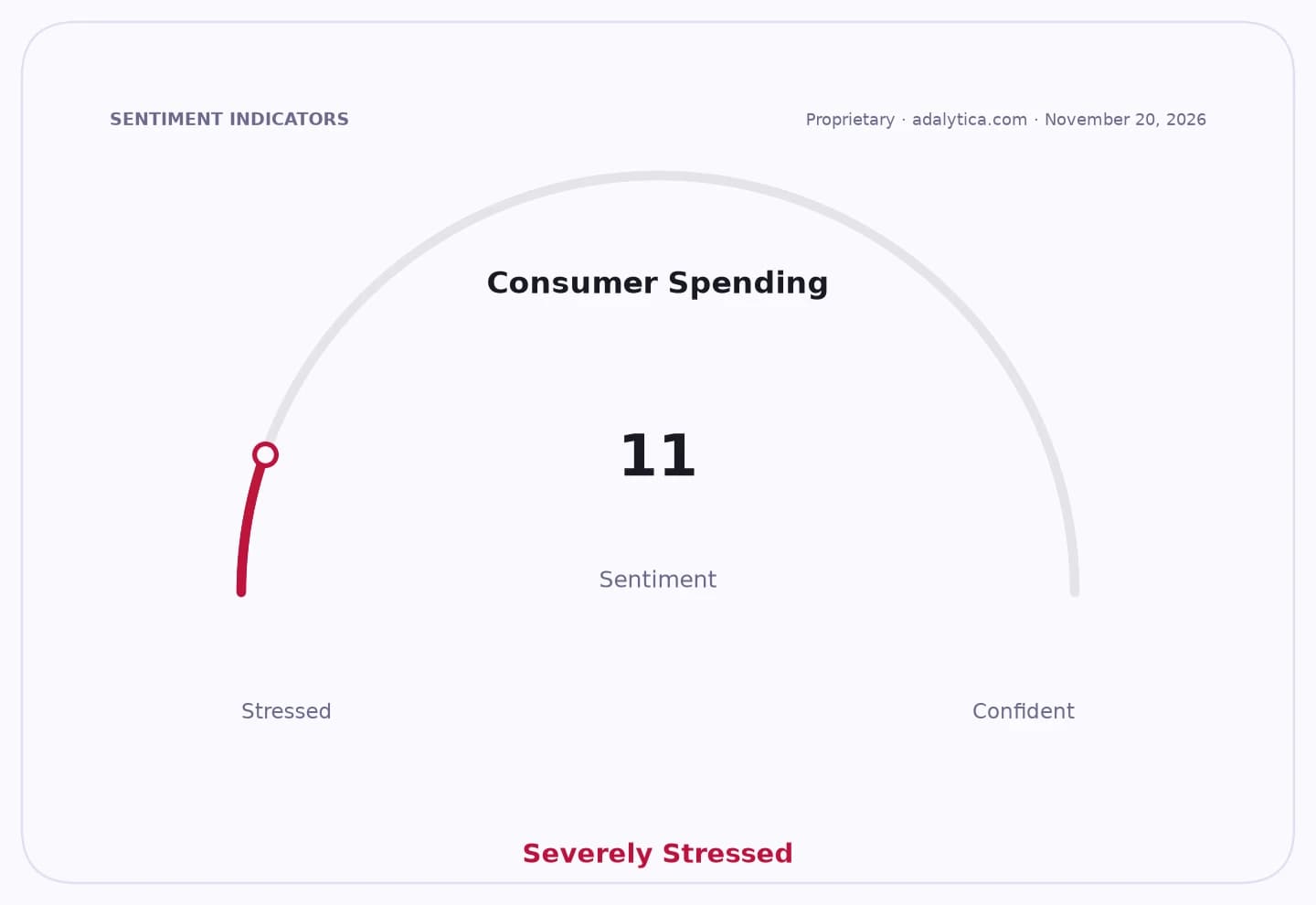
Sentiment Indicators
Consumer Spending
What makes this economically important is that it lines up with broader evidence that consumers are feeling the squeeze from inflation even as overall price growth has moderated from its peaks. Restaurant prices are still high enough to alter behavior, with consumers choosing cheaper establishments, ordering less and leaning harder on discounts. A Boston Consulting Group survey earlier this year found 32% of restaurant buyers had reduced spending in the prior six months, rising to 40% among lower-income households and 37% among Gen Z diners. Datassential’s July survey showed 49% had cut back on restaurant meals in the previous month, the highest in more than a year.
The industry is seeing the same thing in its own numbers. The National Restaurant Association found 43% of consumers said affording restaurant dining had been somewhat or very difficult over the past six months, while 45% reported spending less at full-service restaurants and 42% cut spending at fast-food and takeout channels. Even diners who still go out are changing behavior: 40% are using more discounts, 36% are shifting to cheaper restaurants and 34% are ordering fewer extras such as desserts and beverages.
For investors, this is a margin story as much as a traffic story. When consumers resist price increases, restaurants are forced to choose between protecting traffic and protecting profitability. That pressure is showing up in earnings and share performance across the sector. Darden Restaurants, parent of Olive Garden and LongHorn Steakhouse, has been volatile this year, with the stock around $225.74 after trading as high as $239.22 this week. Texas Roadhouse has also been choppy, with the stock falling to $178.05 on Nov. 20 from a recent peak above $213. That kind of price action reflects a market wrestling with whether operators can keep passing through food and labor inflation without losing the value-conscious customer.
The challenge is especially acute because restaurants cannot control the macro backdrop. Grocery and rent pressures still weigh on budgets, and restaurant chains are also dealing with commodity and wage inflation of their own. Texas Roadhouse said in its latest filing that beef-driven commodity inflation remained a key cost pressure, even as higher average checks provided some offset. In other words, operators are already raising prices just to defend margins, and that is exactly what is pushing some customers back.
That tension creates a clear investment framework. The market tends to punish the obvious casualties first — casual dining, traffic-sensitive chains and any concept that relies on premium check growth without strong brand loyalty. But the better long-term setup may belong to the names with pricing power, value positioning and scale in everyday occasions. Investors should keep an eye on companies that can capture the trade-down customer without destroying unit economics, while avoiding those most exposed to fading restaurant frequency.
The bigger read-through is that consumers are still under strain, even if inflation headlines have cooled from the worst of the cycle. If dining out is becoming less of a weekly habit, that tells you discretionary demand is fragile. For the next leg of the consumer trade, the winners will be the restaurant concepts and foodservice suppliers that can win on value, not just price hikes.
| Entity | Gains | Losses |
|---|---|---|
| Value-focused chains | ▲Trade-down traffic | ▼Lower-ticket peers |
| Discount and promo-driven restaurants | ▲Budget-conscious diners | ▼Full-price menus |
| Restaurant suppliers | ▲Stable volume from value channels | ▼Traffic-sensitive operators |
| Casual dining operators | ▲Higher checks, if demand holds | ▼Fewer visits and margin pressure |