U.S. reliance on China for critical minerals, drug inputs and other supply-chain chokepoints should be reduced as Washington prepares for another high-stakes meeting between President Donald Trump and President Xi Jinping, Republican Senator Pete Ricketts said, framing the relationship as a long-term competition rather than a path to detente.
Ricketts Urges Less U.S. Reliance on China
That message matters because it points to a policy line that could shape trade talks, export controls, defense ties and corporate sourcing decisions well beyond the summit itself. For investors, the risk is that even if the leaders strike a tactical deal, Washington’s strategic push to diversify away from China remains intact and could keep pressure on sectors tied to cross-border manufacturing, semiconductors, pharmaceuticals and critical minerals.
Sentiment IndicatorsⓘProprietary · adalytica.com · September 17, 2026
This is a snapshot — live sentiment, awareness and momentum for 130+ markets update continuously in the dashboard.Open AlphaPulse
Ricketts, who chairs the Senate Foreign Relations subcommittee on East Asia, the Pacific and international cybersecurity policy, said the U.S. should not become a “hostage” to supply chains dependent on China, citing key minerals and pharmaceutical precursors. He argued Beijing is also trying to reduce its own dependence on U.S. technology and food imports, making decoupling pressures a two-way race.
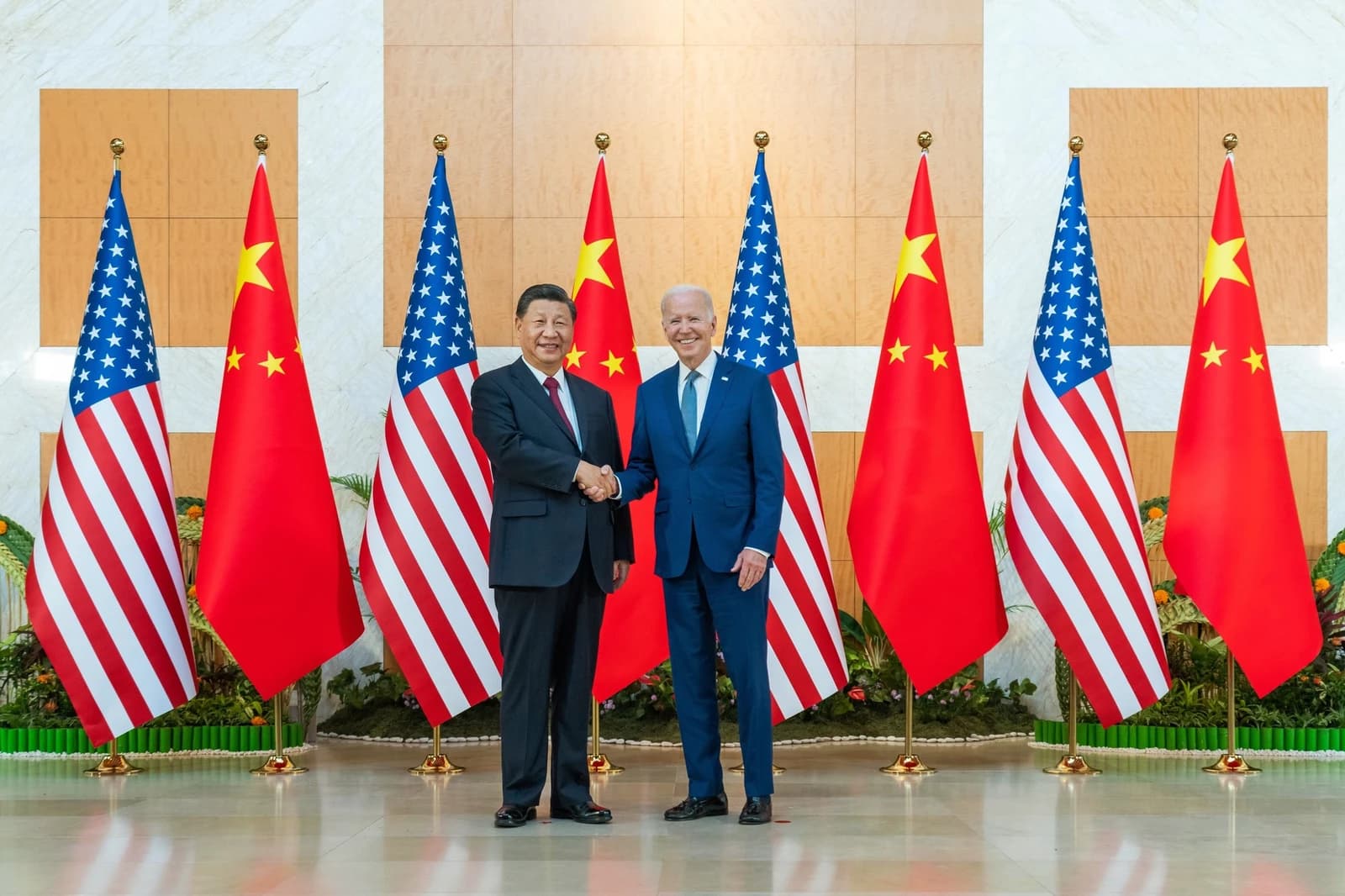
The Nebraska senator’s comments come days before Trump is expected to host Xi for a Sept. 24 summit in Washington, where trade, agriculture, technology and Taiwan are likely to dominate. Trump has said the meeting will follow his first-term return visit to Beijing in May, underscoring how quickly the bilateral relationship has moved from broad cooperation to managed confrontation.
US-China Relations — 30-day sentimentadalytica.com
Explore this data interactively — full history, time series and cross-market comparisons.Open AlphaPulse
Taiwan remains the most immediate flashpoint. Ricketts said Washington should make clear its position has not changed and that it will not tolerate any use of force to alter Taiwan’s status quo. He also pressed the administration to speed delivery of already approved weapons to Taipei, saying deterrence depends on getting pledged systems to the island rather than treating arms sales as bargaining chips.
That stance carries market relevance because Taiwan sits at the center of the global chip supply chain, with Taiwan Semiconductor Manufacturing Co. supplying advanced semiconductors to Apple, Nvidia and a wide range of U.S. technology companies. Any escalation around Taiwan would ripple through chip supply, hardware production and defense spending, while also increasing the value of supply-chain diversification efforts already under way in the U.S., Japan and allied markets.
Technically, TSMC shares have held above their 50-day moving average, while Apple and Nvidia remain above both their 50-day and 200-day averages, suggesting investors are still willing to own the AI and hardware complex despite geopolitical overhangs. But the broader Adalytica U.S.-China relations gauge has turned more cautious, with sentiment at 41 and a 59-point drop over seven days, reflecting rising market sensitivity to any sign of renewed friction.
Ricketts stopped short of calling for full decoupling, saying war between the U.S. and China would be catastrophic. He also backed keeping direct channels open between Trump and Xi, arguing personal diplomacy can lower the odds of miscalculation even as both countries compete more openly on technology, trade and military posture.
The immediate test will be whether the summit produces any practical commitments on agriculture, market access or crisis management, or whether it simply confirms that Washington is settling in for a prolonged strategic rivalry that investors will need to price into supply chains, defense budgets and China-exposed earnings.
| Entity | Gains | Losses |
|---|---|---|
| U.S. defense and chip suppliers | ▲Higher spending, diversification demand | ▼Policy uncertainty remains |
| China-linked importers | ▲Short-term trade access if talks improve | ▼Supply-chain pressure rises |
| Taiwan and TSMC | ▲Stronger deterrence support | ▼Geopolitical risk stays elevated |
| Apple, Nvidia and hardware makers | ▲Incentive to diversify production | ▼Taiwan/China disruption risk |