Emerging-market investors are being reminded that asset protection is not a side issue — it is the main event — as a jump in U.S. Treasury yields and a steadier dollar tighten financial conditions just when global risk appetite is already fragile.
Rising U.S. Yields Pressure Emerging Markets

That matters because higher U.S. yields raise the hurdle rate for capital everywhere else. When the 10-year Treasury climbs to about 4.58%, as the market is now pricing, money tends to flow back toward the safety and income of the United States. For emerging markets, that means more pressure on currencies, tougher refinancing conditions and a higher cost of defending domestic assets. In other words, the competition for capital gets harsher precisely when investors are looking for shelter.
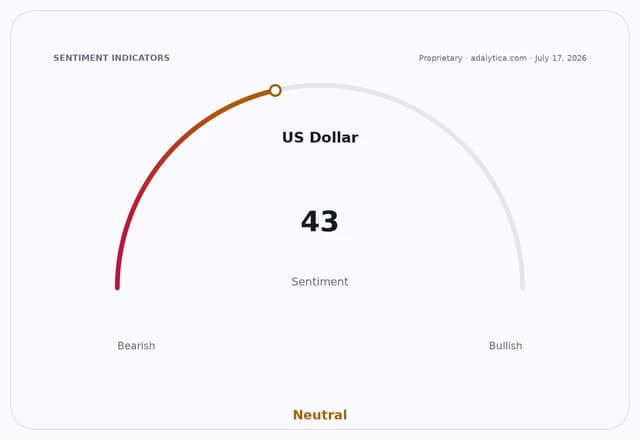
Sentiment IndicatorsⓘProprietary · adalytica.com · July 17, 2026
This is a snapshot — live sentiment, awareness and momentum for 130+ markets update continuously in the dashboard.Open AlphaPulse
The clearest evidence is in the bond market. The ICE/BofA high-yield emerging-market debt spread has widened again to about 271 basis points, a sign that investors are still demanding a meaningful premium to own riskier sovereign and corporate paper. That is not a crisis level, but it is a warning that the easy money phase is over. Even a modest backup in U.S. yields can quickly translate into higher borrowing costs for governments and companies that already rely on foreign financing.
Equity markets are telling the same story. The iShares MSCI Emerging Markets ETF has slipped to about $64.19 after trading above $69 in June, and the move has been accompanied by weaker momentum on standard technical indicators such as the 50-day moving average, RSI readings and MACD. The ETF’s pullback is a reminder that emerging markets do not trade in isolation: they are highly sensitive to global growth fears, geopolitical shocks and shifts in the dollar.
This is where the narrative gets bigger than one day’s price action. With wars, tariff threats and uncertainty around the Federal Reserve’s next move all feeding volatility, asset protection has become a macroeconomic imperative for emerging markets. Countries with strong reserves, credible central banks and manageable external debt will be better positioned to absorb the shock. Those without them may be forced into pro-cyclical tightening, intervention or painful capital controls.
Investors should also pay attention to China, because it still sets the tone for the broader emerging-market complex. Adalytica’s China growth-target sentiment remains in extreme fear, even as awareness is at the maximum, underscoring how little confidence there is in the policy path. At the same time, Adalytica’s Chinese yuan trade signals show greed for the currency but fear around the broader backdrop, a mix that suggests market participants may be positioning for stabilization while remaining wary of the underlying economy.
For long-term investors, this is not a reason to abandon emerging markets. It is a reason to be selective. The best opportunities usually appear when fear is high and valuations are discounted, but only in places where policy makers can protect the currency, preserve liquidity and keep real economic growth intact. Broad, diversified exposure through an ETF can still make sense for patient investors, but the winners over the next several years are likely to be countries and companies that can defend their balance sheets rather than merely chase growth.
The message is simple: in emerging markets, asset protection is becoming as important as asset allocation. Investors may want to stay invested, but they should be choosy, diversified and willing to wait through volatility. That is often where the best compounding begins.
| Entity | Gains | Losses |
|---|---|---|
| U.S. Treasurys | ▲Safer yield appeal | ▼Emerging-market capital flows |
| EM sovereigns with strong reserves | ▲Lower refinancing risk | ▼Weak-currency borrowers |
| EM investors using broad ETFs | ▲Diversified exposure | ▼Concentrated country bets |
| China-policy stabilizers | ▲More confidence if credible | ▼Markets pricing extreme fear |




