ROHM is pushing its Solist-AI platform beyond a chip demonstration and into a broader industrial ecosystem, betting that factories and field equipment will pay for edge AI that can learn and infer on-device without cloud connectivity or network dependence.
ROHM Solist-AI expands into industrial edge AI
That matters because the fastest-growing industrial AI uses are often the hardest to support with cloud-based systems: remote sites, battery-powered devices, changing factory layouts and applications where latency, privacy and uptime all matter. By positioning Solist-AI as a platform for anomaly detection, people sensing and autonomous mobility, ROHM is trying to turn a niche AI microcontroller into a sellable system stack.
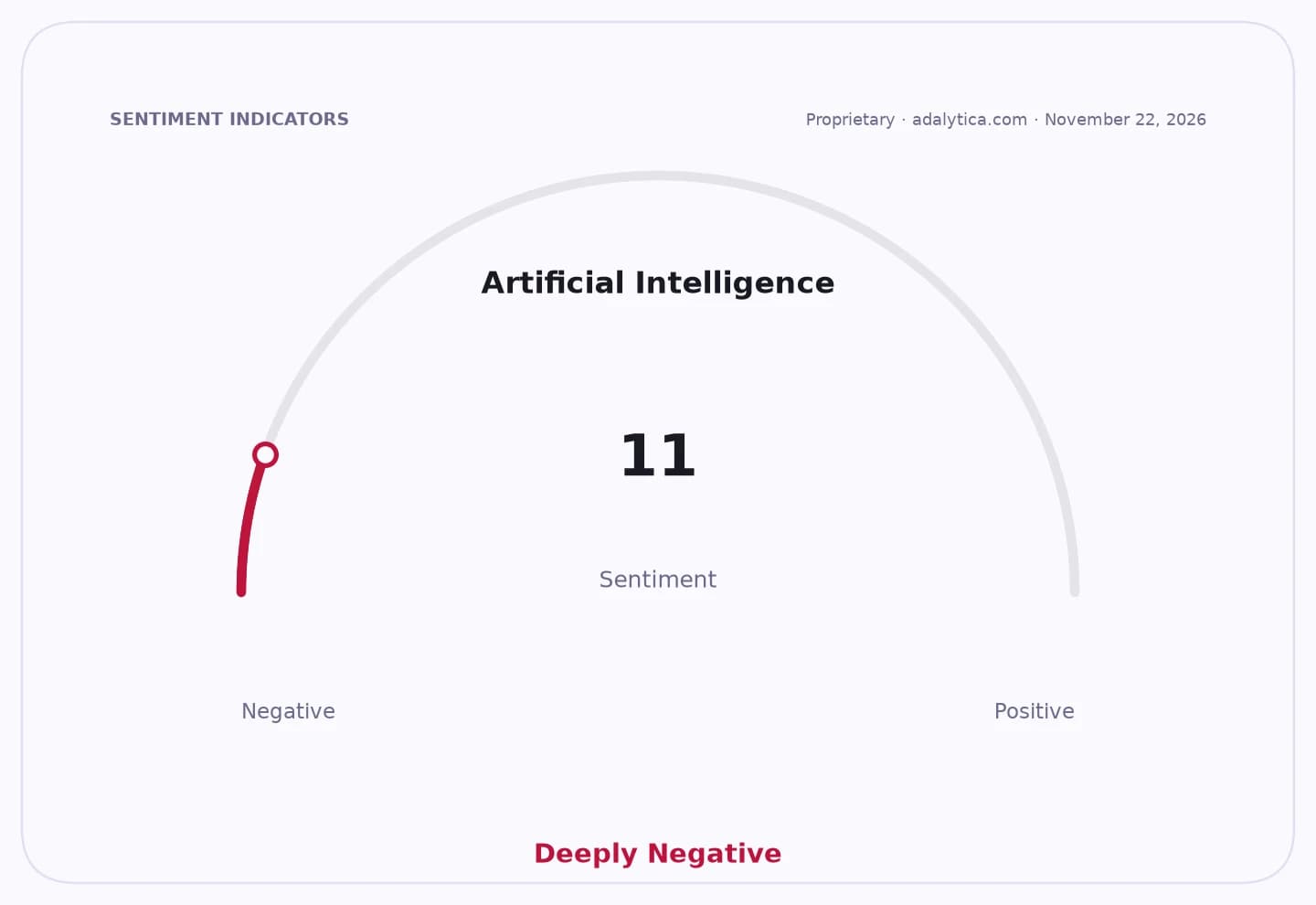
Sentiment Indicators
The company showcased the platform at EdgeTech+ 2026 in Yokohama, along with partner-built applications spanning motor vibration monitoring, infrared-based people detection and autonomous robots. ROHM said Solist-AI is built around its AxlCORE-ODL AI accelerator and utility software that lets devices learn normal conditions from field data, then flag unusual behavior in real time.
ROHM is also leaning on co-creation rather than trying to build every product itself. Partners including Data Techno, Braveridge, P-Bandotcom, Shinho Sangyo and Shockley are helping cover board design, communications, equipment development and commercialization, giving ROHM a route from proof of concept to deployment without shouldering the full systems burden.
The company used the event to highlight a seven-year-old development contest revived as the ROHM EDGE HACK CHALLENGE 2026. From 32 entries, five winners were shown at the booth, including a low-latency audio feedback suppression project that reacts in about 230 milliseconds, plus projects in touch sensing, farm equipment monitoring, electronic instruments and cooking.
For investors, the story is less about a trade-show demo than about whether ROHM can capture more value in edge AI as industrial customers seek lower-power, offline alternatives to cloud-heavy inference. The challenge is execution: ROHM will need its partner network to convert technical novelty into recurring design wins, while competing against larger semiconductor players and broader AI hardware ecosystems.
The stock has also been technically weak, with ROHCF trading at 19.6 in the latest available data, below its 50-day moving average of 27.89 and 200-day average of 26.49. Standard technical indicators also show the shares deep in oversold territory, with an RSI reading of 0.0 in the stale price series, underscoring how far the market has already discounted the name.
The next catalyst is whether ROHM can show that Solist-AI moves from exhibition-floor concept to volume industrial adoption, especially in predictive maintenance and robotics, where offline AI and low power consumption are likely to remain key buying criteria.
| Entity | Gains | Losses |
|---|---|---|
| ROHM | ▲More edge-AI use cases | ▼Higher execution burden |
| Industrial customers | ▲Offline, low-latency AI | ▼Dependence on new hardware |
| Ecosystem partners | ▲New co-creation business | ▼More integration complexity |
| Cloud AI rivals | ▲None | ▼Less role in factory inference |