A drone attack on an oil tanker inside Romanian territorial waters has pushed the Black Sea’s shipping security crisis into a new phase, raising the odds of higher freight costs, tighter insurance, and fresh pressure on oil and grain flows between Turkey, the Danube and Ukraine.
Romania Black Sea tanker drone attack raises shipping risk
The YARA J, a Comoros-flagged tanker carrying 17 crew members, was struck near the Romanian port of Sulina on the evening of Oct. 14, according to Romanian broadcaster Radio România Constanța. The vessel, which had come from Turkey and was waiting for weather conditions before transiting the channel, caught fire after the hit but the blaze was extinguished by the crew and no one was hurt. Romanian maritime union chief Adrian Mihălcioa said the attack appeared deliberate and aimed at a ship likely heading to Ukraine.
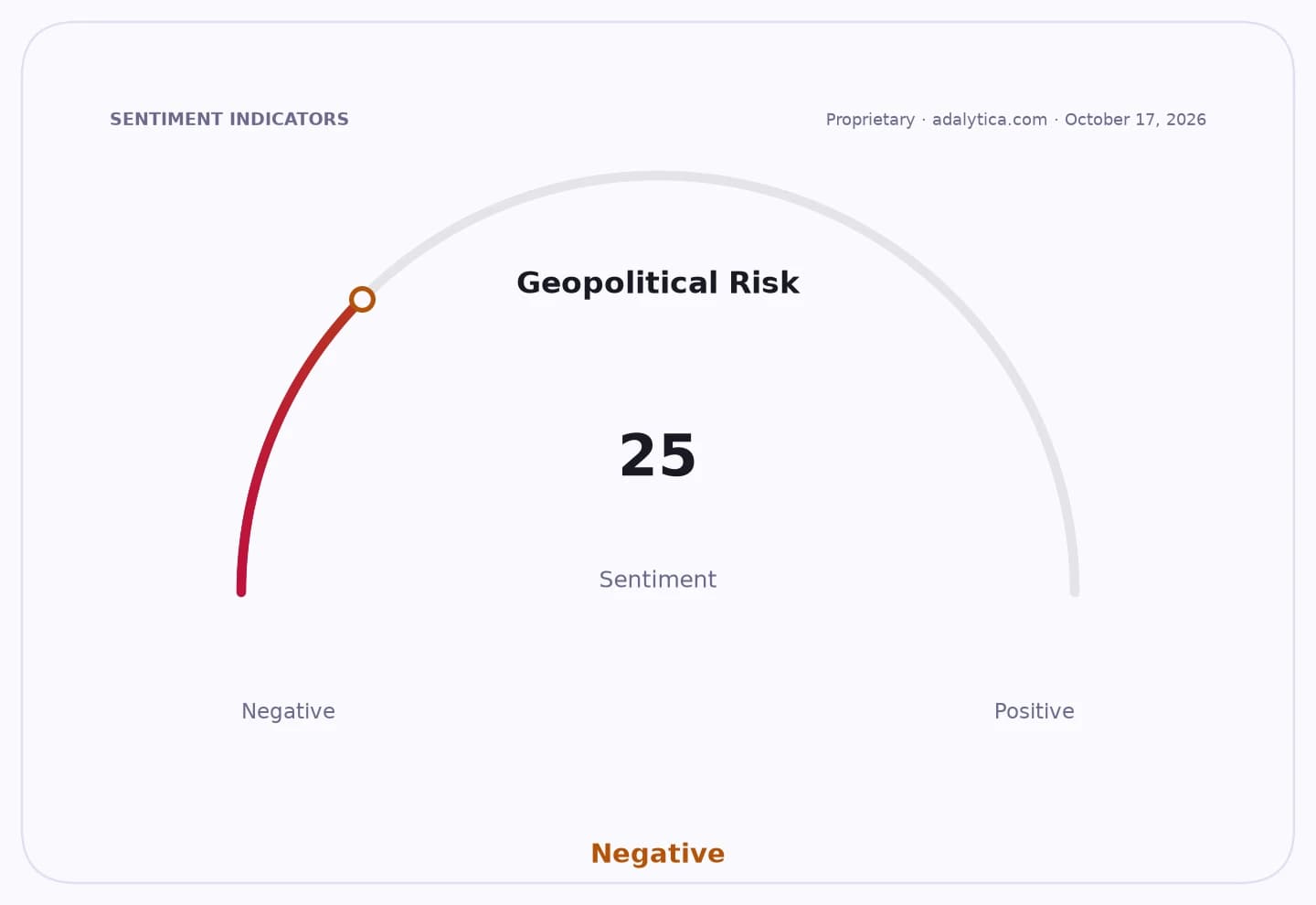
Sentiment IndicatorsⓘProprietary · adalytica.com · October 17, 2026
This is a snapshot — live sentiment, awareness and momentum for 130+ markets update continuously in the dashboard.Open AlphaPulse
What makes the incident economically important is not just the vessel itself, but the location. This was the first reported drone hit on a ship directly inside Romania’s territorial waters, moving the risk zone closer to a NATO and EU member state’s coastline. Attacks had previously been reported only in Romania’s exclusive economic zone. That matters for insurers and shipowners because each step outward in the danger perimeter broadens the set of routes that have to be priced for war risk, delays and possible evacuation or rerouting.
For the oil market, the immediate price impact is less about lost supply than about the premium attached to moving barrels through a more dangerous Black Sea corridor. The attack comes after a series of incidents in the region, including strikes on vessels near Bulgaria’s coast and on cargo ships in the western Black Sea, underscoring a pattern that can make even empty tankers and non-combat cargoes vulnerable. The result is a higher cost of doing business for tanker operators and charterers, particularly those serving Ukraine’s import and export needs through Romanian and Bulgarian waters.
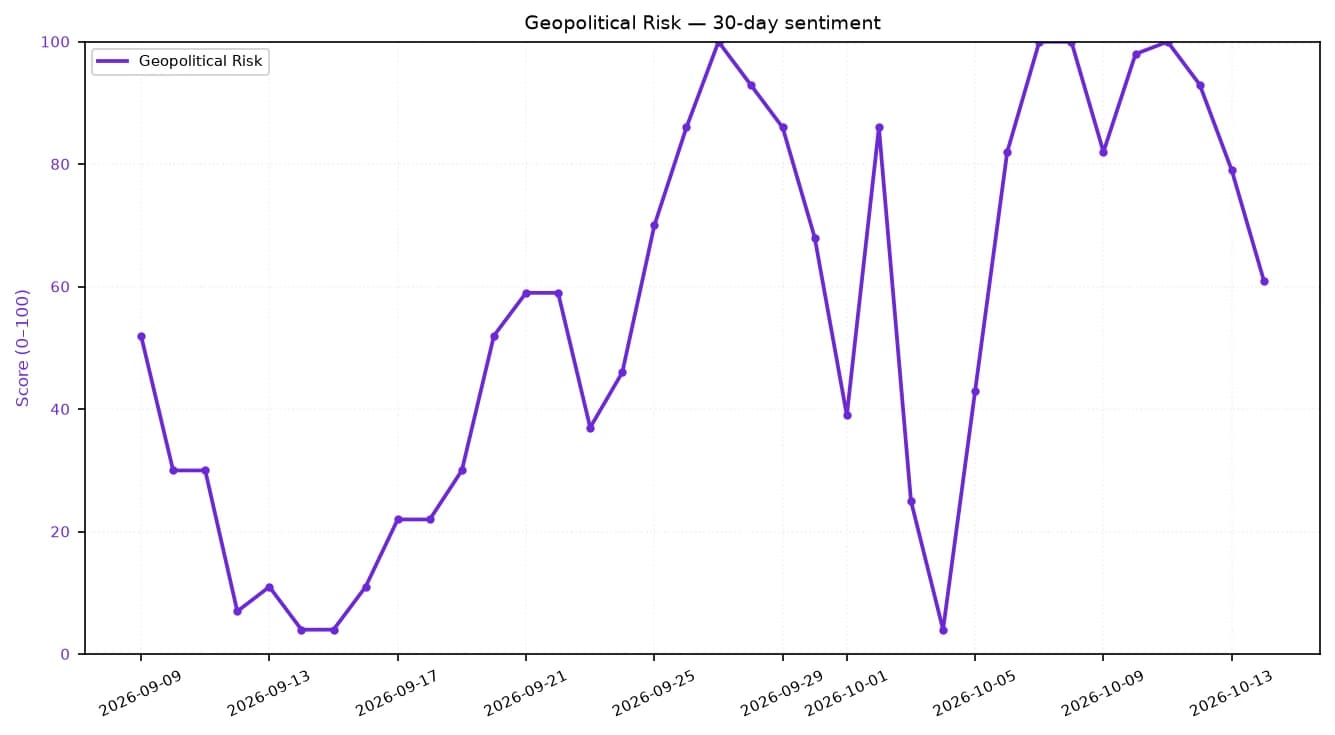
Geopolitical Risk — 30-day sentimentadalytica.com
Explore this data interactively — full history, time series and cross-market comparisons.Open AlphaPulse
Investors in energy and shipping are likely to read the episode as another reason to keep a geopolitical risk premium in crude and refined-product markets. USO, the United States Oil Fund, has climbed to 161.76 from 153.56 two sessions earlier, while the Energy Select Sector SPDR has also stayed firm, reflecting a market already pricing in supply uncertainty. Standard technical indicators on USO show the fund holding above its 50-day and 200-day moving averages, with relative strength readings still elevated, suggesting traders have not fully unwound the recent move. Oil-service stocks, tracked by OIH, remain above both key moving averages as well, indicating the broader energy complex continues to benefit from a firmer crude backdrop.
The geopolitical significance is broader still. Romanian officials had earlier reported airborne targets over the Black Sea, with at least two entering Romanian airspace and one lost on radar over the sea. Bulgaria has also reported attacks on vessels in its waters and blamed Russian drones in at least one case, while Ukraine says it has coordinated with regional partners on the incidents. The cumulative effect is a maritime security problem that is spreading along the western Black Sea rather than remaining confined to one corridor.
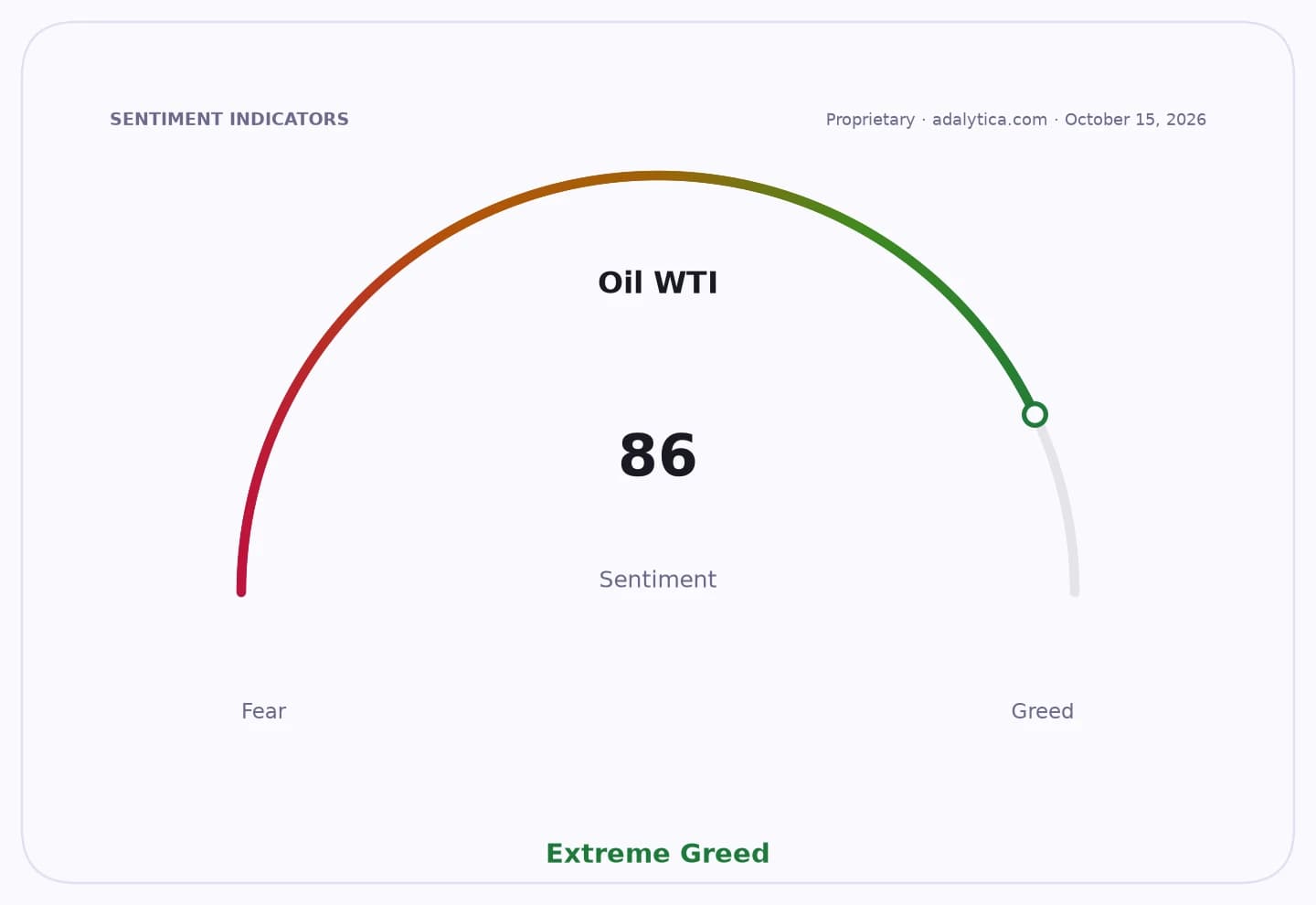
Adalytica’s Global Stability Sentiment gauge has dropped to 25, or “Fear,” with awareness at an “Extreme Fear” reading of 4, while its oil trade signal sits at 87, marked “Extreme Greed.” That combination reflects the market’s familiar pattern in conflict-driven energy shocks: elevated risk perception even as traders position for tighter supply and higher transport costs.
The near-term question is whether the attacks remain isolated acts of harassment or evolve into a sustained campaign against commercial shipping in and around Romania and Bulgaria. If they do, the economic damage would likely show up first in freight, insurance and port logistics, before filtering into regional trade, refinery margins and ultimately crude benchmarks.
| Entity | Gains | Losses |
|---|---|---|
| Oil producers | ▲Higher risk premium | ▼Potential demand destruction |
| Tanker operators | ▲Tighter charter rates | ▼War-risk and insurance costs |
| Ukraine-linked shippers | ▲Strategic urgency | ▼Route disruption |
| Coastal states in Black Sea | ▲Security focus | ▼Maritime trade stability |