Romania’s central bank governor is once again putting euro adoption back on the policy agenda, but the message from Bucharest is that the country is not yet ready to set a firm entry date. That matters because joining the euro would reshape Romania’s borrowing costs, investment flows and monetary sovereignty, while forcing a harder discipline on inflation, wages and public finances.
Romania euro adoption agenda stays without date

Mugur Isărescu’s comment that Romania has “no other alternative” underscores the strategic importance of euro entry for a fast-growing EU economy that still runs its own currency, the leu. For investors, the remark is less a near-term catalyst than a signal that the authorities see eventual accession as unavoidable, even if the economic prerequisites remain unmet.
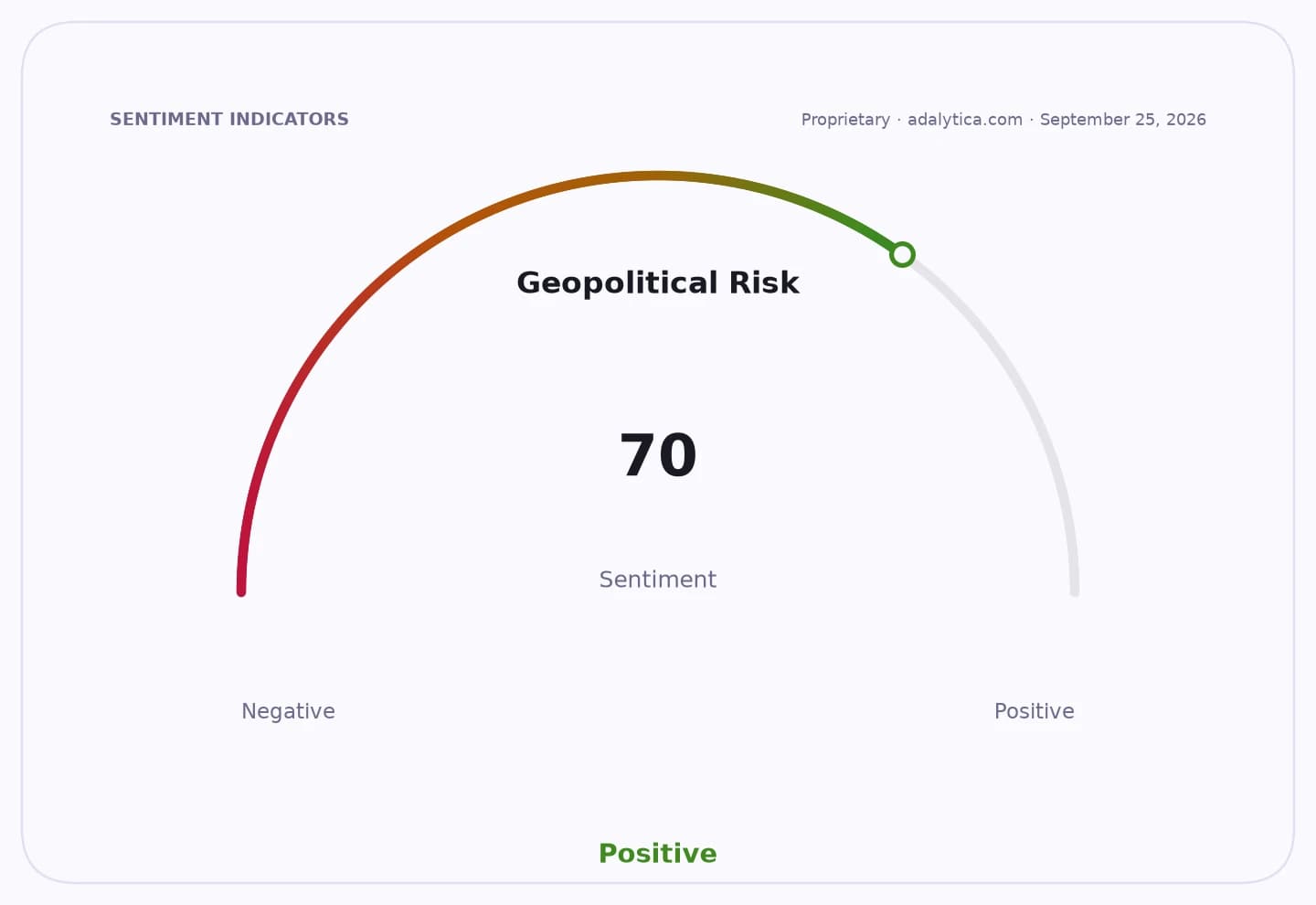
Sentiment IndicatorsⓘProprietary · adalytica.com · August 13, 2026
This is a snapshot — live sentiment, awareness and momentum for 130+ markets update continuously in the dashboard.Open AlphaPulse
The euro story is economically significant because it sits at the intersection of inflation convergence, fiscal policy and external financing. Romania has been one of the European Union’s more volatile macro stories in recent years, with persistent budget deficits and price pressures making it harder to satisfy the Maastricht criteria that govern euro membership. Adopting the single currency would reduce exchange-rate risk for importers, lenders and foreign investors, but it would also remove a key adjustment tool if growth slows or imbalances widen.
Markets are already leaning into the broader euro narrative. The single currency has traded around $1.15 in recent sessions, with the euro ETF FXE at about $106.40 and the Adalytica Euro Trade Signals gauge showing elevated sentiment and awareness. That does not mean Romania is close to joining the bloc; rather, it reflects a market that is attentive to the euro’s relative resilience against the dollar and to the policy backdrop in Europe more generally.
For Romania, the central issue is credibility. A public commitment to euro adoption can support expectations around reforms, inflation anchoring and fiscal restraint. But without a clear timetable, the pledge risks sounding aspirational rather than binding. That tension is familiar across central and eastern Europe, where governments often frame euro entry as a long-term anchor while postponing the painful adjustments needed to qualify.
Investors will watch whether Bucharest turns rhetoric into measurable progress on deficits, inflation and institutional convergence. If it does, Romanian assets could benefit from lower risk premia, deeper foreign inflows and a stronger case for long-duration capital. If not, the euro remains more a political destination than an economic milestone, and the leu stays central to Romania’s policy flexibility.
| Entity | Gains | Losses |
|---|---|---|
| Romanian exporters | ▲Easier access to euro-area trade | ▼Lose currency flexibility |
| Foreign investors | ▲Lower currency-risk if adoption advances | ▼Face policy-delay uncertainty |
| Romanian consumers | ▲Potentially lower inflation over time | ▼Short-term adjustment costs |
| Central bank autonomy | ▲More policy credibility | ▼Less independent monetary control |