Romania has almost erased the per-capita income gap with Poland since both countries’ EU paths converged two decades ago, but the wider economic contest still tilts toward Warsaw on trade, scale and external resilience.
Romania closes income gap with Poland

That is the key takeaway from the latest comparison of the two economies after Vasile Pușcaș, Romania’s chief EU negotiator in 2000-2004, argued that Bucharest and Warsaw were “shoulder to shoulder” at the end of accession talks. The statistics support part of that claim: in 2004, Poland’s GDP per capita at purchasing power parity was 51% of the EU average, versus 34% for Romania. By 2025, Romania had climbed to 78% and Poland to 81%, leaving a gap of just three percentage points.
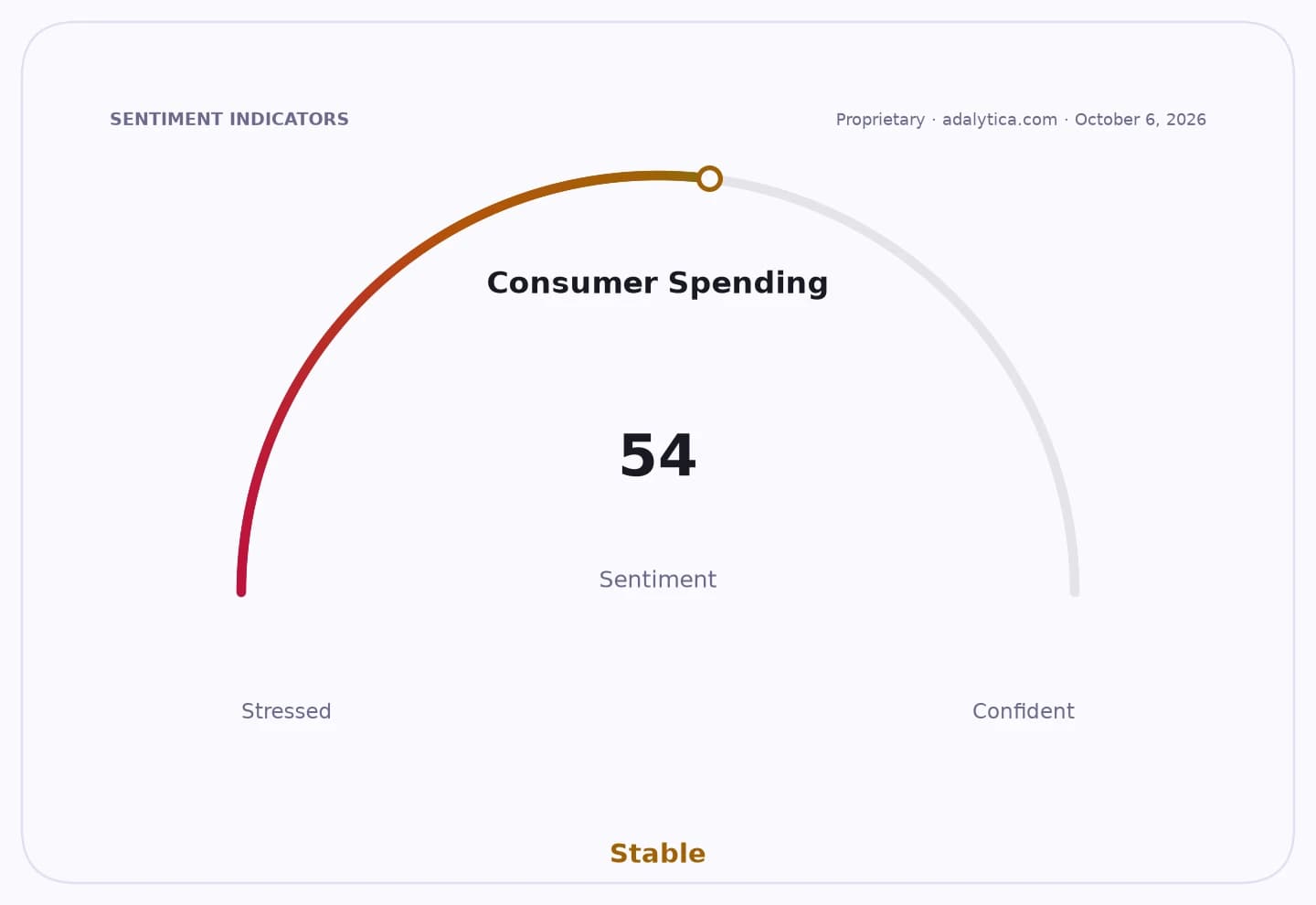
Sentiment IndicatorsⓘProprietary · adalytica.com · October 12, 2026
This is a snapshot — live sentiment, awareness and momentum for 130+ markets update continuously in the dashboard.Open AlphaPulse

For investors and policymakers, the significance is that Romania’s convergence story is real, but incomplete. Catch-up in living standards has been strong enough to narrow the historic gap, yet it has not translated into comparable economic depth. Poland’s economy is still more than twice the size of Romania’s, at just over $1.035 trillion versus about $429 billion in 2025, giving Warsaw a much broader domestic market, deeper capital base and greater room to absorb shocks.
The divergence is sharper in external accounts. Poland exported €368.6 billion of goods in 2025, nearly four times Romania’s €96.6 billion, even though its population is less than double. More importantly, Poland’s goods deficit was a modest €7.3 billion, while Romania’s reached €32.7 billion. In coverage terms, Polish exports paid for about 98% of imports, versus 74.7% for Romania. That difference matters because economies that export more and run smaller deficits generally rely less on foreign financing and can weather tighter global conditions more easily.
The pattern suggests that Romania’s EU membership has delivered broad welfare gains, but less of the industrial and trade upgrading that turns convergence into structural strength. Pușcaș’s estimate that Romania has used only 20%-30% of the opportunities opened by EU accession speaks to that unfinished transition: higher output per person, yes, but still a weaker production base, thinner export capacity and a more pronounced external imbalance than Poland.
For markets, that leaves a split verdict. Romania has become a stronger consumer story and a clearer convergence trade than it was 20 years ago. But Poland remains the more mature and less fragile economy, which helps explain why it tends to command greater investor confidence in periods of stress. The latest readings also imply that any further narrowing of the gap will depend less on headline growth and more on whether Romania can lift productivity, investment and exports faster than it has so far.
The next test is whether Bucharest can turn convergence in living standards into convergence in economic power. Without a more coherent industrial and export strategy, the statistics suggest Romania may keep closing the welfare gap with Poland while still lagging behind in the metrics that matter most to long-term investors.
| Entity | Gains | Losses |
|---|---|---|
| Romania | ▲Higher GDP per capita | ▼Larger trade deficit |
| Poland | ▲Bigger economy and exports | ▼Slower per-capita convergence |
| Investors in Romania | ▲Catch-up growth upside | ▼External-balance risk |
| Investors in Poland | ▲Economic scale and resilience | ▼Less room for rapid convergence |