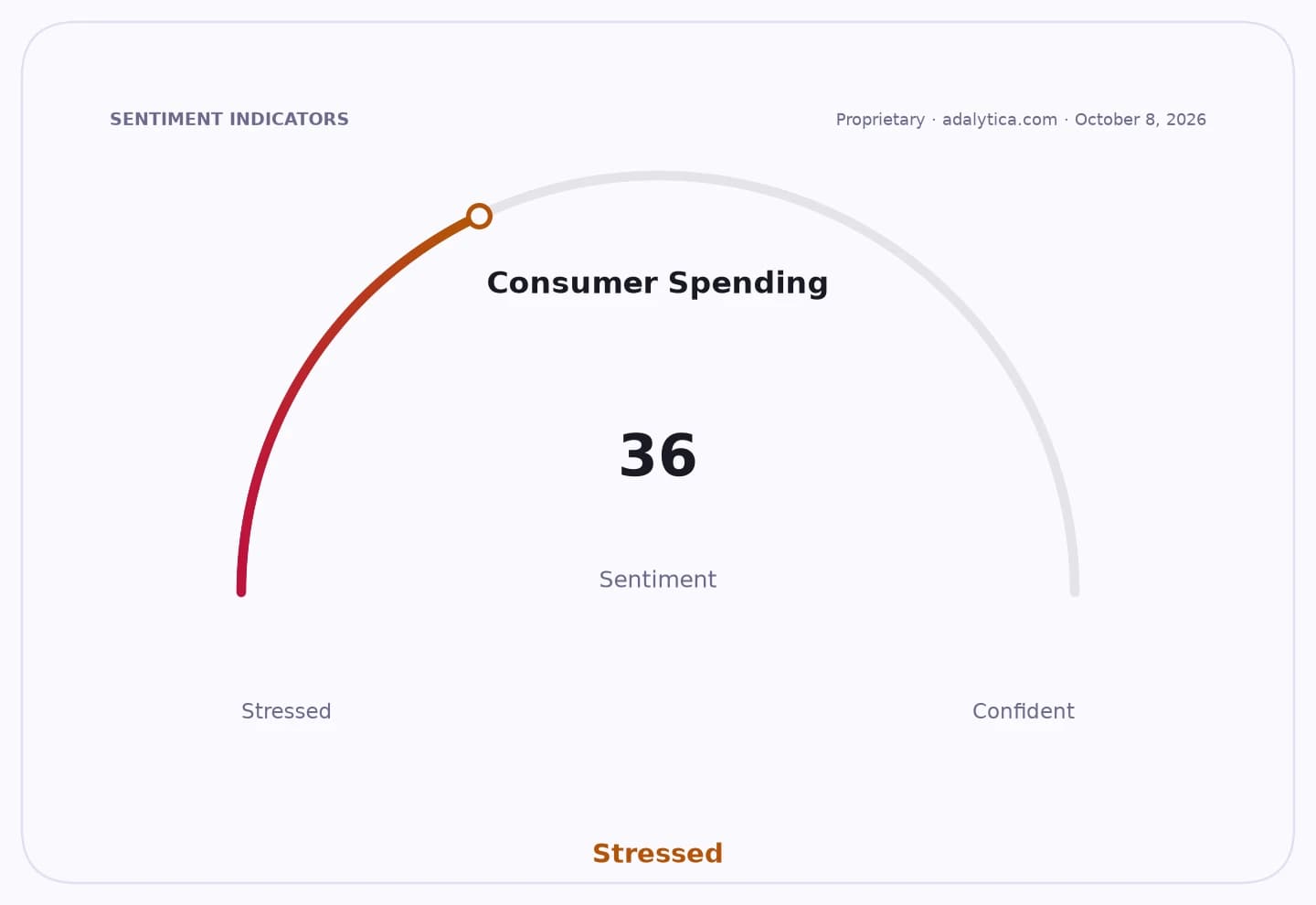
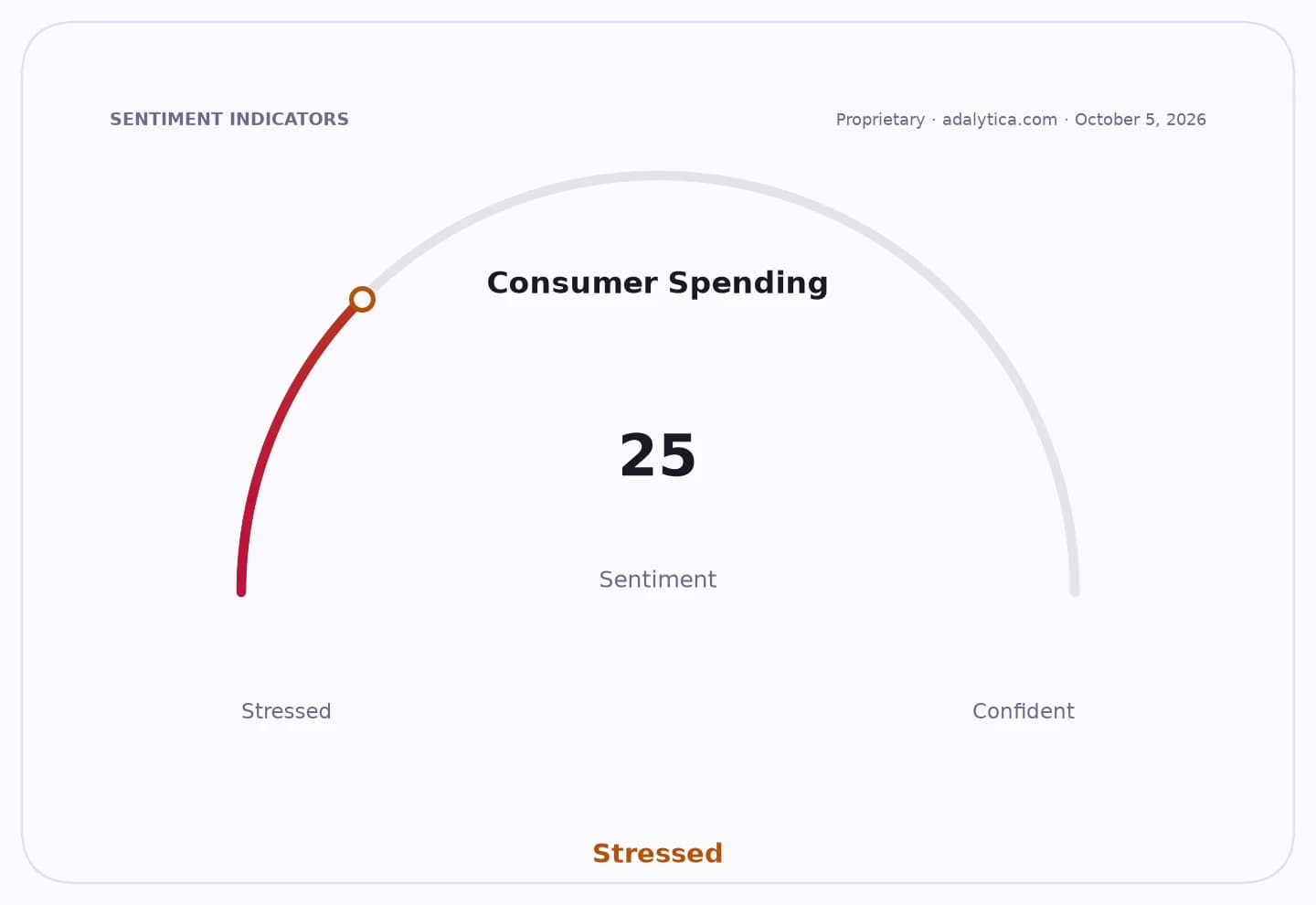
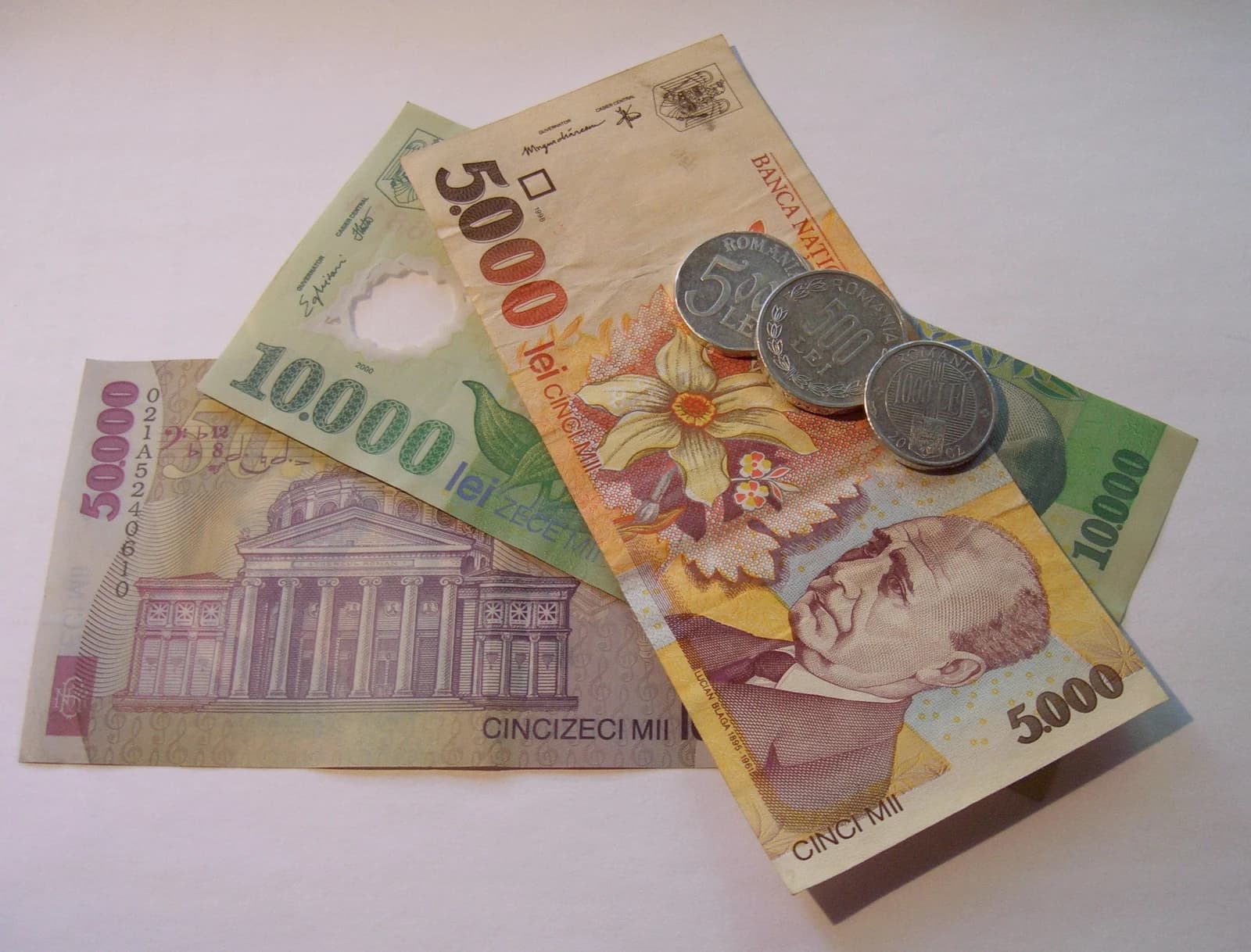
Romania’s consumer economy is losing steam, with retail sales down 5% in the first eight months of 2026, a clear warning sign that households are tightening spending and that one of the country’s key growth engines is under pressure.
Romania Retail Sales Fall 5% in Jan-Aug 2026
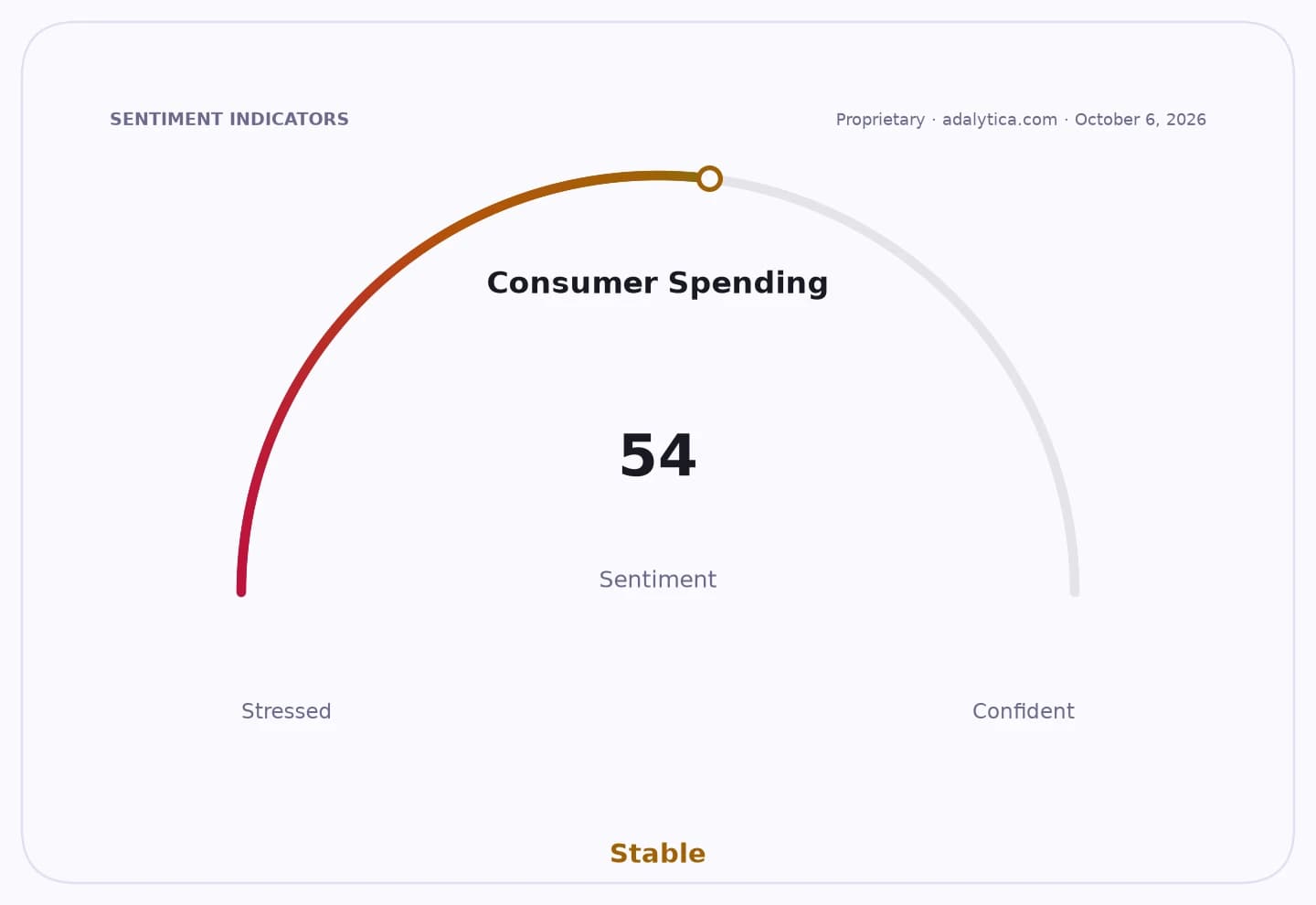
That matters because retail activity is a useful real-time read on wages, confidence and the broader pace of domestic demand. When people buy less at supermarkets, cut back on non-food items and drive less often, the slowdown quickly reaches companies that rely on Romanian consumers for revenue — from grocers and fuel retailers to importers, distributors and discretionary chains.
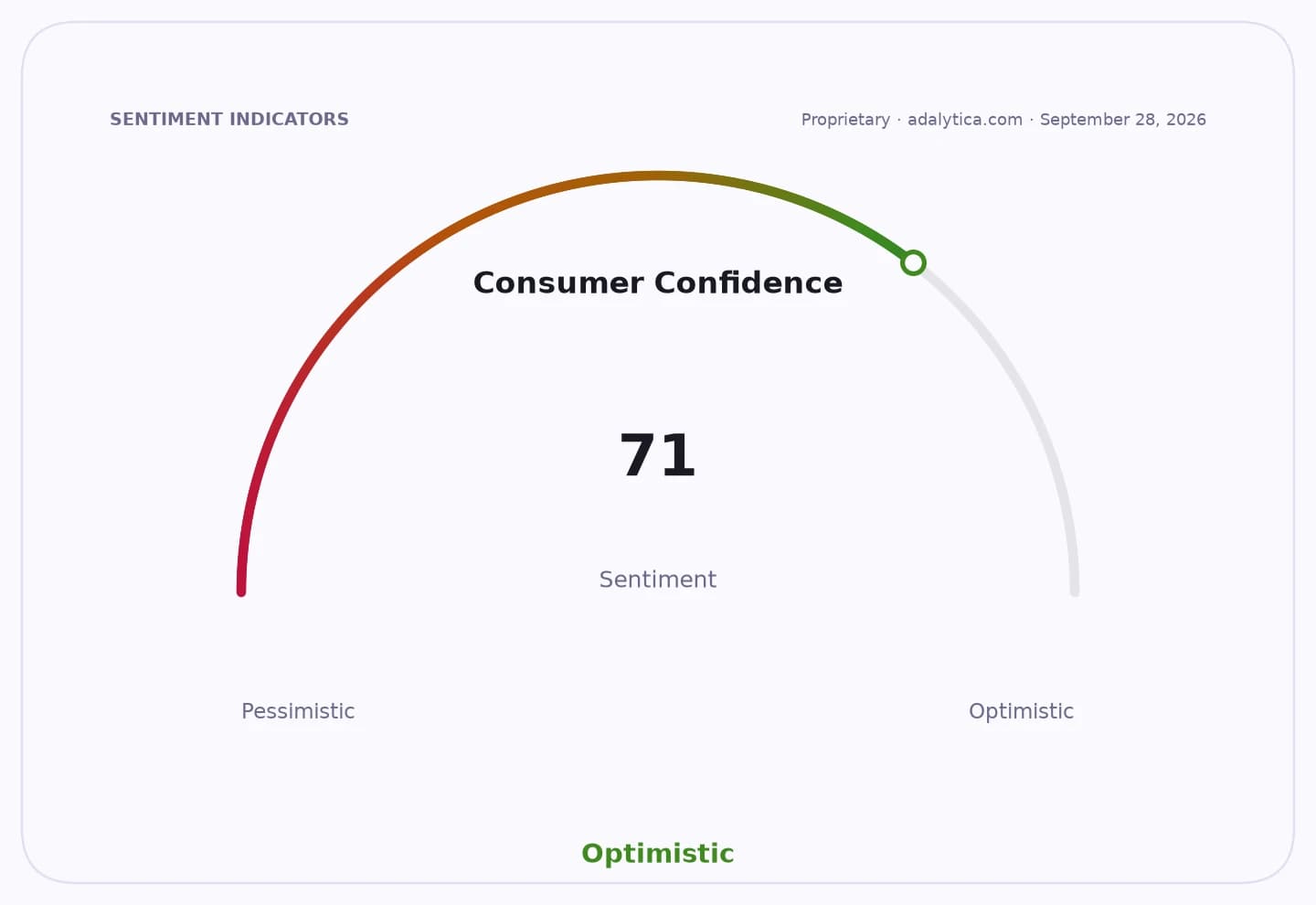
Sentiment IndicatorsⓘProprietary · adalytica.com · October 6, 2026
This is a snapshot — live sentiment, awareness and momentum for 130+ markets update continuously in the dashboard.Open AlphaPulse
The National Institute of Statistics said the decline in retail turnover was broad-based in January through August, with sales of non-food products down 6.1% and food, beverages and tobacco down 4.2% on a gross basis. Fuel sales also slipped 3.6%, matching the headline’s message that Romanians are being fed less at the pump as well as at the checkout.
The seasonally adjusted figure was little better, showing a 5.1% drop over the same period, which suggests this is not just a calendar quirk. Even August, which brought a modest monthly rebound, could not erase the weakness underneath. Sales rose 2.3% from July on an adjusted basis, but that came after a difficult summer and did little to change the larger picture of softer consumption.
For investors, the implications are straightforward. Slower retail growth usually means less pricing power, more pressure on margins and a tougher backdrop for listed companies tied to consumer spending. In Romania, that can ripple through everything from supermarkets and consumer-goods distributors to energy retailers and logistics firms. It also raises the risk that earnings estimates for domestic-demand names still have room to come down.
There is a silver lining: lower retail volumes can eventually ease inflationary pressure if demand cools enough, which could help the central bank later on. But for now, the more important story is that Romanian households appear cautious, and caution is not what you want to see when consumption is supposed to support growth.
Long-term investors should read this as a cyclical warning, not a thesis-breaker on Romania itself. Countries and companies with durable advantages can outlast weak quarters, but businesses exposed to discretionary spending may need patience. For now, the smarter move is to watch which retailers, fuel sellers and consumer-facing names can defend margins and which ones are simply riding a softer economy.
| Entity | Gains | Losses |
|---|---|---|
| Savers | ▲Less inflation pressure | ▼Slower economic momentum |
| Consumers | ▲Lower fuel and shopping pressure | ▼Weaker purchasing power |
| Defensive staples | ▲Stable demand | ▼Limited upside from weak volumes |
| Retailers and fuel sellers | ▲Small August rebound | ▼Lower sales and margins |