Romania remains the European Union’s most inflation-hit economy, and that keeps pressure on households, companies and policymakers even as price growth has eased from recent peaks.
Romania Inflation Stays High as Growth Slips

Consumer prices rose 8.2% from a year earlier, still nearly three times the EU average and enough to keep the National Bank of Romania in a defensive posture. The central bank left its key rate at 6.5% earlier this month, a reminder that inflation is still the bigger problem than weak growth.
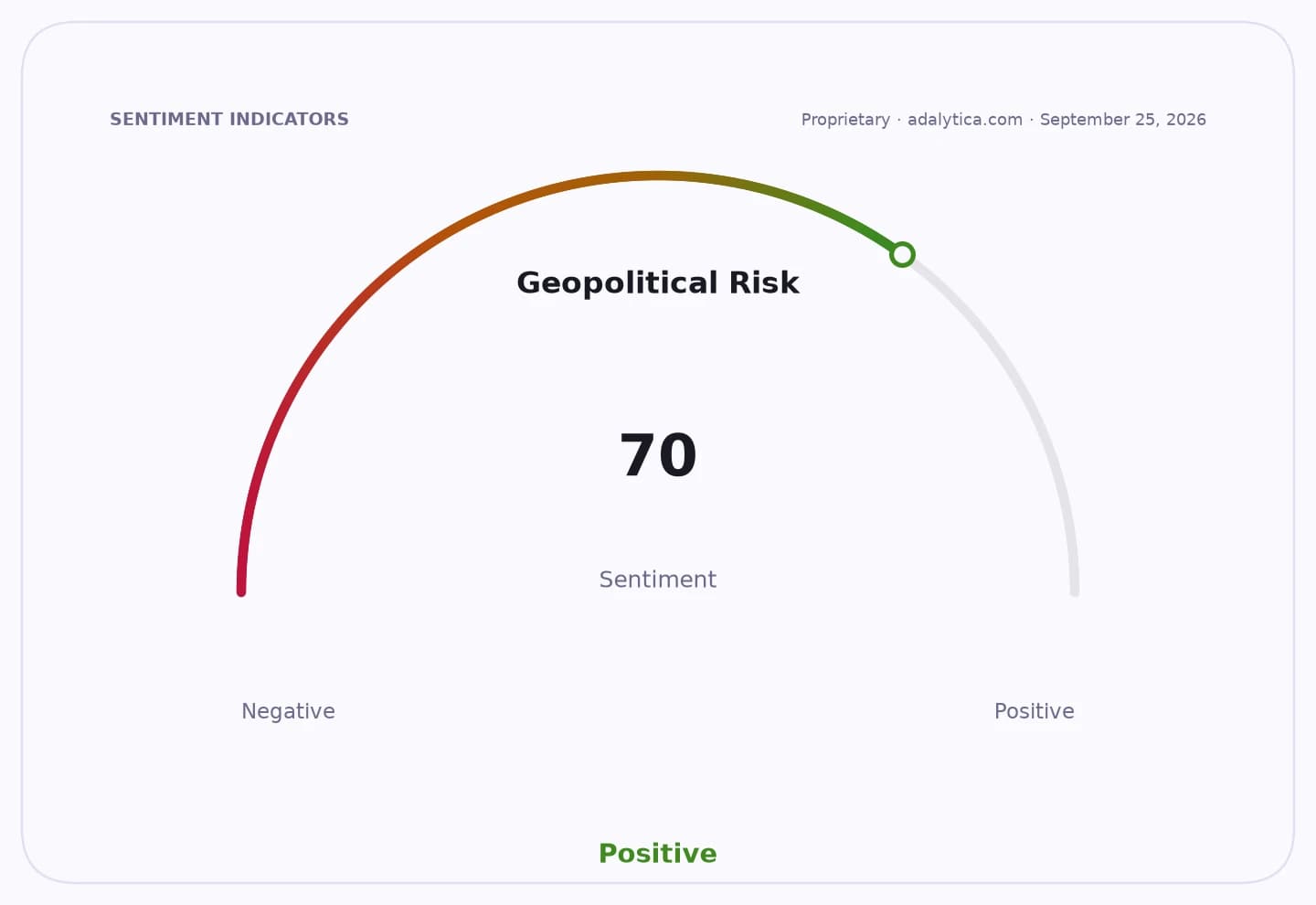
Sentiment IndicatorsⓘProprietary · adalytica.com · August 19, 2026
This is a snapshot — live sentiment, awareness and momentum for 130+ markets update continuously in the dashboard.Open AlphaPulse
That matters because persistent inflation erodes real wages, crimps spending and makes it harder for businesses to plan costs and investment. Romania is also trying to manage a softer economy — GDP contracted 0.4% year on year in the second quarter — so policymakers are stuck between slowing prices and avoiding a deeper downturn.
For investors, the message is straightforward: Romania is not yet a clean play on easing rates or a smooth recovery in domestic demand. High inflation usually means higher borrowing costs for longer, which can weigh on banks, consumer companies and rate-sensitive assets. It can also keep bond yields elevated and limit the upside for local equities unless price growth cools more convincingly.
The central bank says inflation should return to its target range by the end of 2027, but that is a long horizon for markets to wait. Until then, the investment case hinges less on quick monetary relief and more on whether Romania can restore price stability without sacrificing too much growth.
For long-term investors, this is a market worth watching, not chasing. The best opportunities usually come when inflation is clearly falling, policy is turning supportive and earnings can compound in a more predictable environment.
| Entity | Gains | Losses |
|---|---|---|
| Romanian savers in cash | ▲Higher nominal returns | ▼Inflation eats purchasing power |
| Romanian borrowers | ▲— | ▼Higher rates and tighter credit |
| Banks | ▲Wider lending margins | ▼More credit risk if growth weakens |
| Local consumers and retailers | ▲— | ▼Squeezed real incomes and spending |