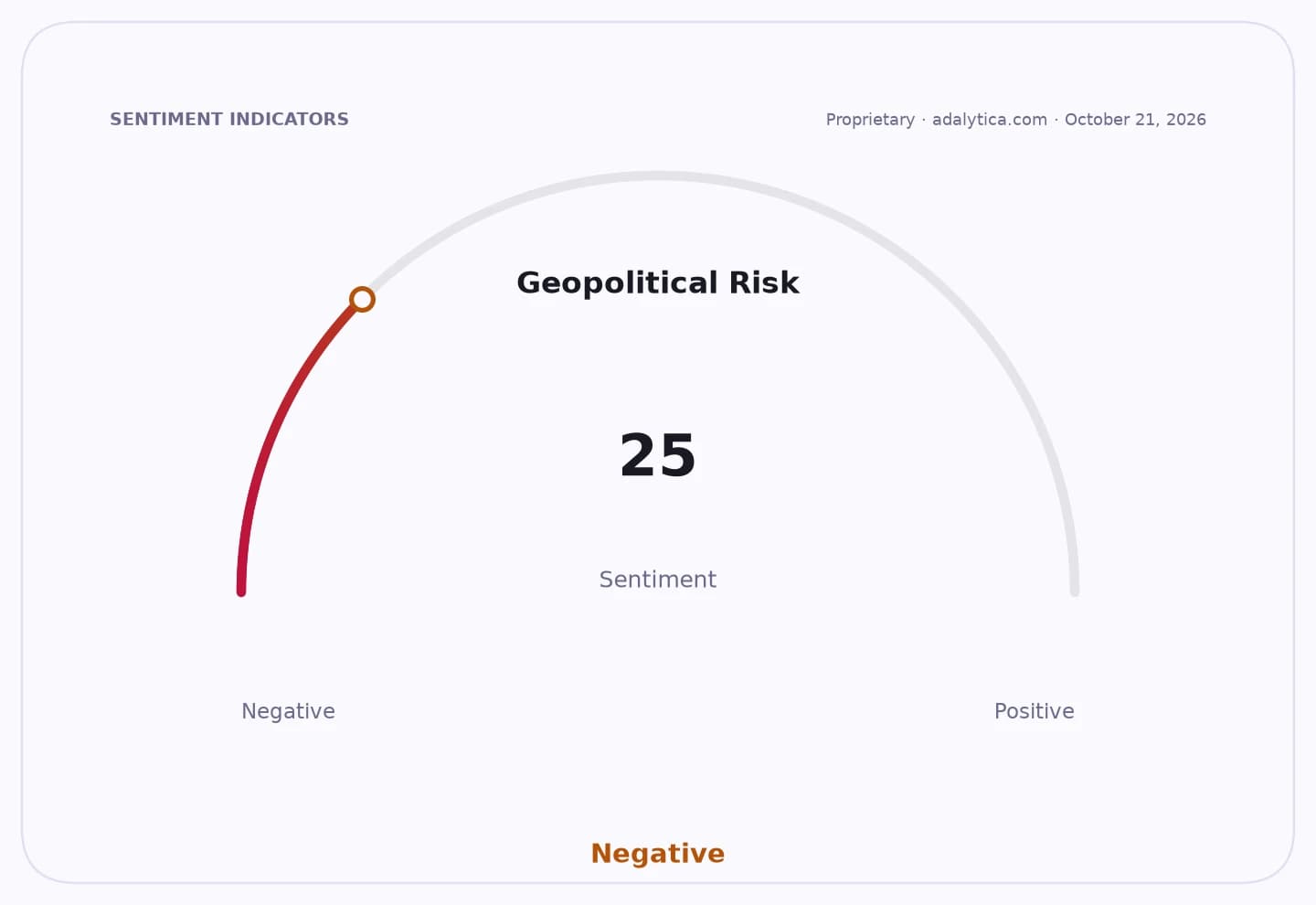
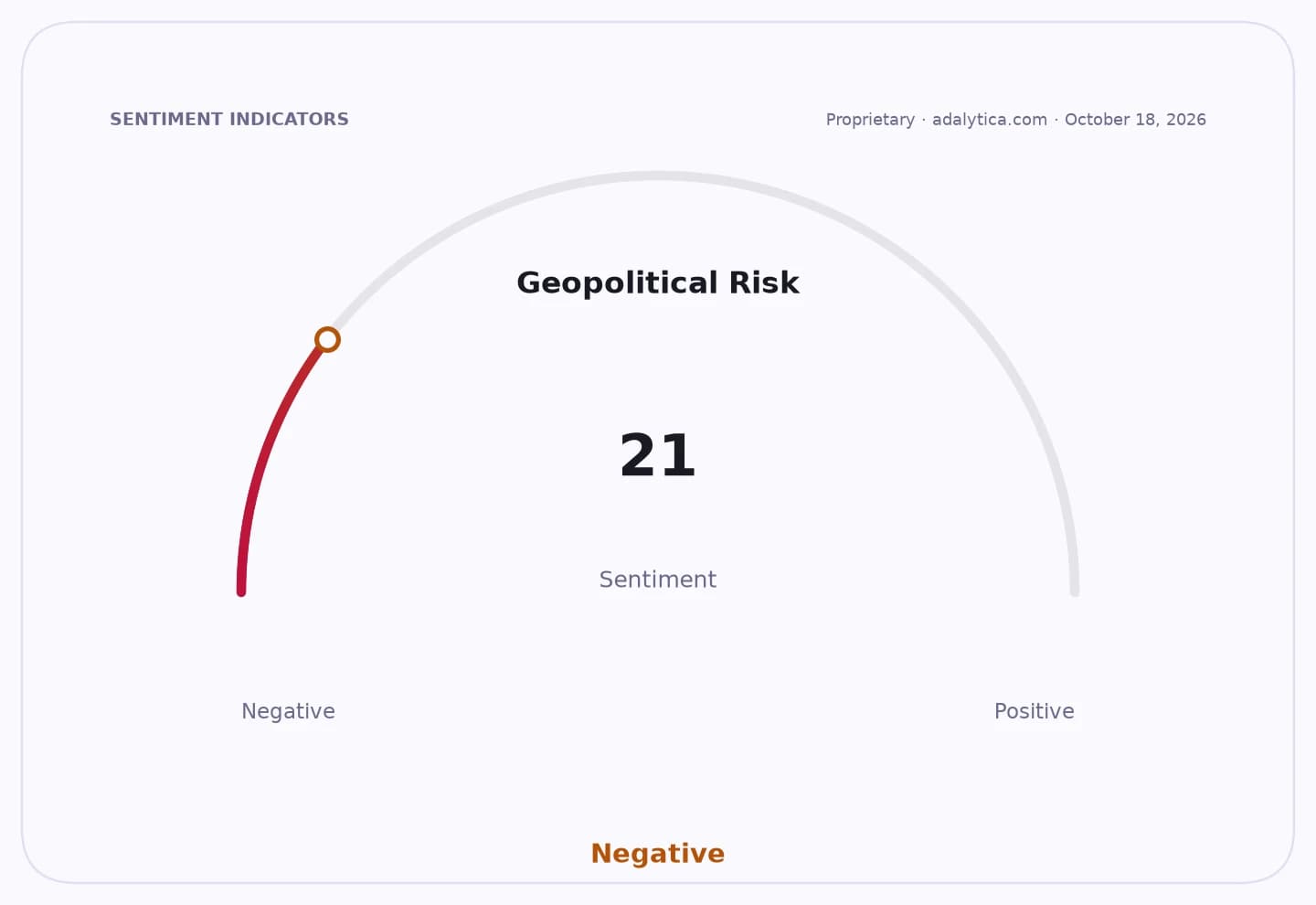
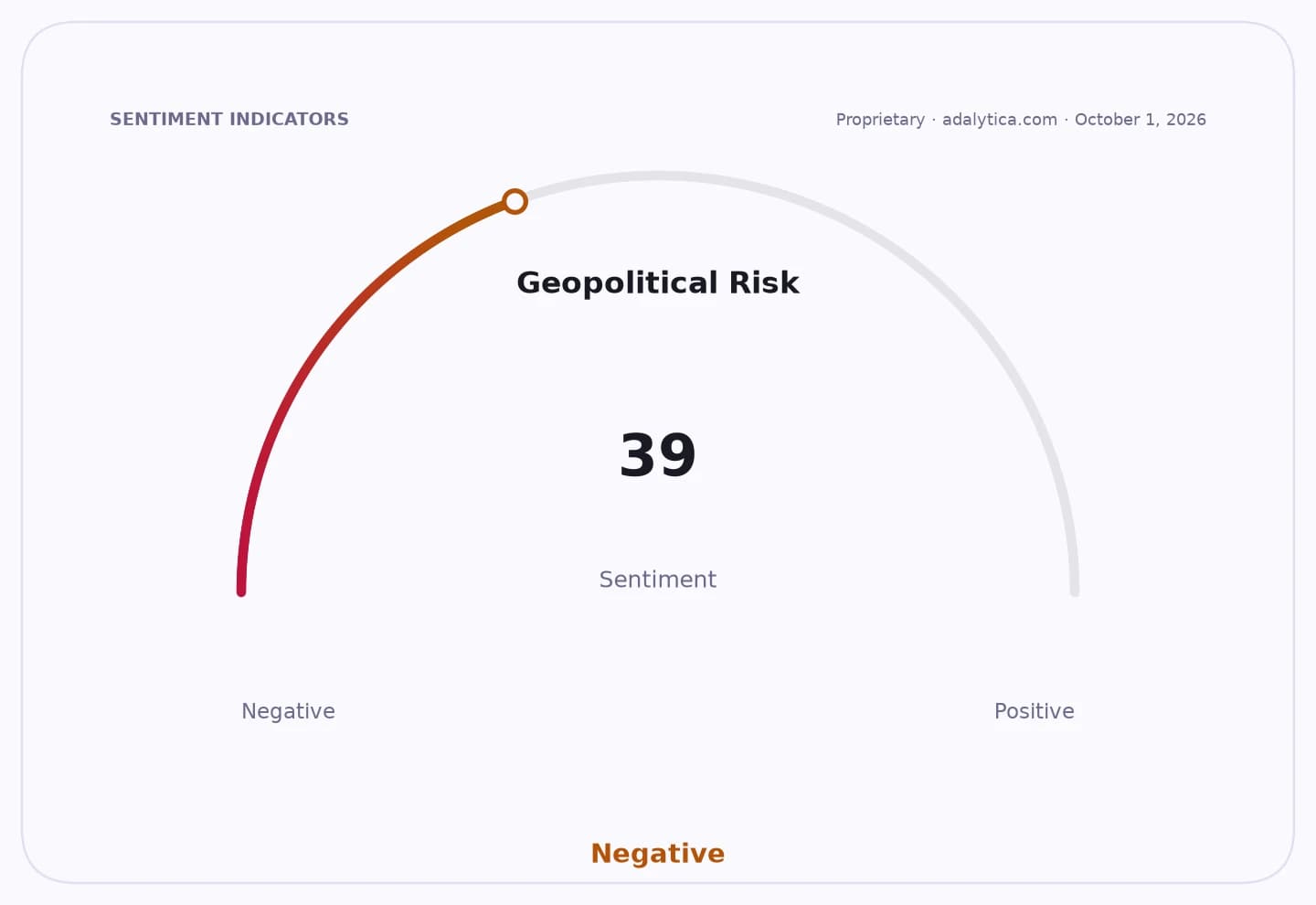
Belarus and Russia’s call for international talks to stop an arms race in space underscores a fast-escalating strategic contest that could keep defense and missile-defense spending elevated for years.
RTX, Northrop, Lockheed on space defense spending
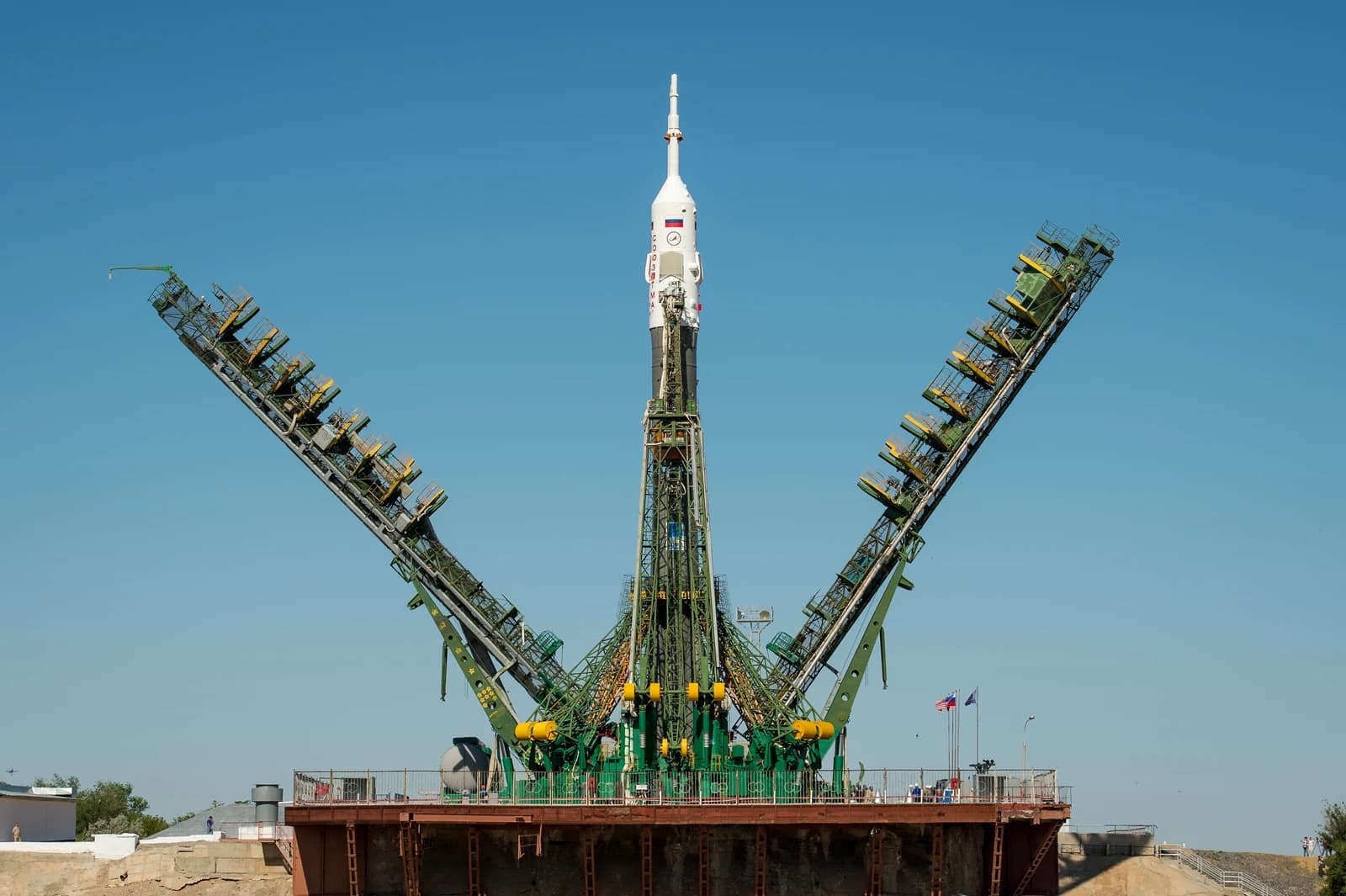
The immediate market message is not diplomatic theater but budget gravity: as major powers frame outer space as a future warfighting domain, governments are more likely to pour money into satellites, interceptors, command-and-control systems and space situational awareness. That is exactly the kind of long-cycle procurement backdrop that investors in defense primes have been paying up for, and the recent price action in Lockheed Martin, Northrop Grumman and RTX shows the market still sees geopolitical strain as a durable cash-flow driver.
Sentiment IndicatorsⓘProprietary · adalytica.com · October 10, 2026
This is a snapshot — live sentiment, awareness and momentum for 130+ markets update continuously in the dashboard.Open AlphaPulse
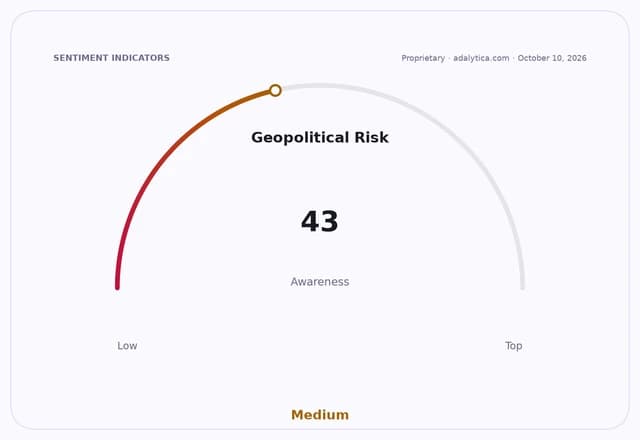
Moscow and Minsk said they oppose placing any weapons in space and warned against what they described as U.S. efforts to formalize military superiority in orbit, including Washington’s “Golden Dome” project, which they said would involve space-based interception capabilities. They also urged the start of binding multilateral negotiations to prevent the placement of weapons in space and called for a political commitment against first placing weapons there.
For investors, the significance is in the second-order effects. Once space is treated as a contested battlespace, the winners are not just the obvious missile-defense contractors but also the suppliers of sensors, guidance systems, resilient communications and launch infrastructure. That is the toll-road model the market underestimates: governments may debate treaties for years, but the capex on surveillance, tracking and interception tends to arrive first, and it rarely gets reversed.
Geopolitical Risk vs LMTadalytica.com
Explore this data interactively — full history, time series and cross-market comparisons.Open AlphaPulse
The equity tape reflects that logic. RTX has surged to 185.97 from 167.86 in late November and remains well above its 200-day moving average, while Northrop Grumman, despite a recent pullback to 480.72, has already logged a powerful run from this year’s lows. Lockheed Martin has also seen violent trading around the theme, even after its recent slide to 509.59 from above 670 earlier in the year, a reminder that the long-term secular bid for missile defense and aerospace remains intact even when momentum cools.
Adalytica’s Global Stability Sentiment gauge remains in “Greed” territory at 82, after touching 100 earlier this month, suggesting markets are still willing to pay for geopolitical optionality. That is important because the story is not about one statement from Belarus and Russia; it is about the broader normalization of space as a defense investment category. The more policymakers talk about preventing an arms race, the more capital gets allocated to systems designed to prevail if prevention fails.
The other angle investors should watch is regulatory and treaty risk. A serious multilateral framework could eventually restrain some categories of orbital weaponization, but in the near term that outcome looks distant. Until then, the thesis remains straightforward: space militarization is a secular tailwind for defense primes, and the market is still early in pricing the full supply chain behind it. If you want exposure, favor the companies selling the picks and shovels of space security, not the headlines about treaties.
| Entity | Gains | Losses |
|---|---|---|
| RTX | ▲missile-defense demand | ▼treaty-led restraint fears |
| Northrop Grumman | ▲space-security budgets | ▼investors trimming after rallies |
| Lockheed Martin | ▲Golden Dome-related spending | ▼valuation pressure from volatility |
| Belarus and Russia | ▲diplomatic leverage | ▼ability to shape defense spending |