The rupiah strengthened to 17,897 per dollar as lower oil prices and signs of easing geopolitical risk improved demand for Indonesian assets, with foreign exchange reserves seen as a key buffer behind the currency’s resilience.
Rupiah strengthens to 17,897 per dollar on lower oil
For Indonesia, the move matters because a firmer rupiah helps contain imported inflation, reduces pressure on the current account and gives policymakers more room to manage capital flows without leaning too heavily on interest rates. In an economy that still relies on energy imports and external financing, a steadier currency can quickly filter through to transport costs, corporate margins and household purchasing power.
Sentiment IndicatorsⓘProprietary · adalytica.com · August 7, 2026
This is a snapshot — live sentiment, awareness and momentum for 130+ markets update continuously in the dashboard.Open AlphaPulse
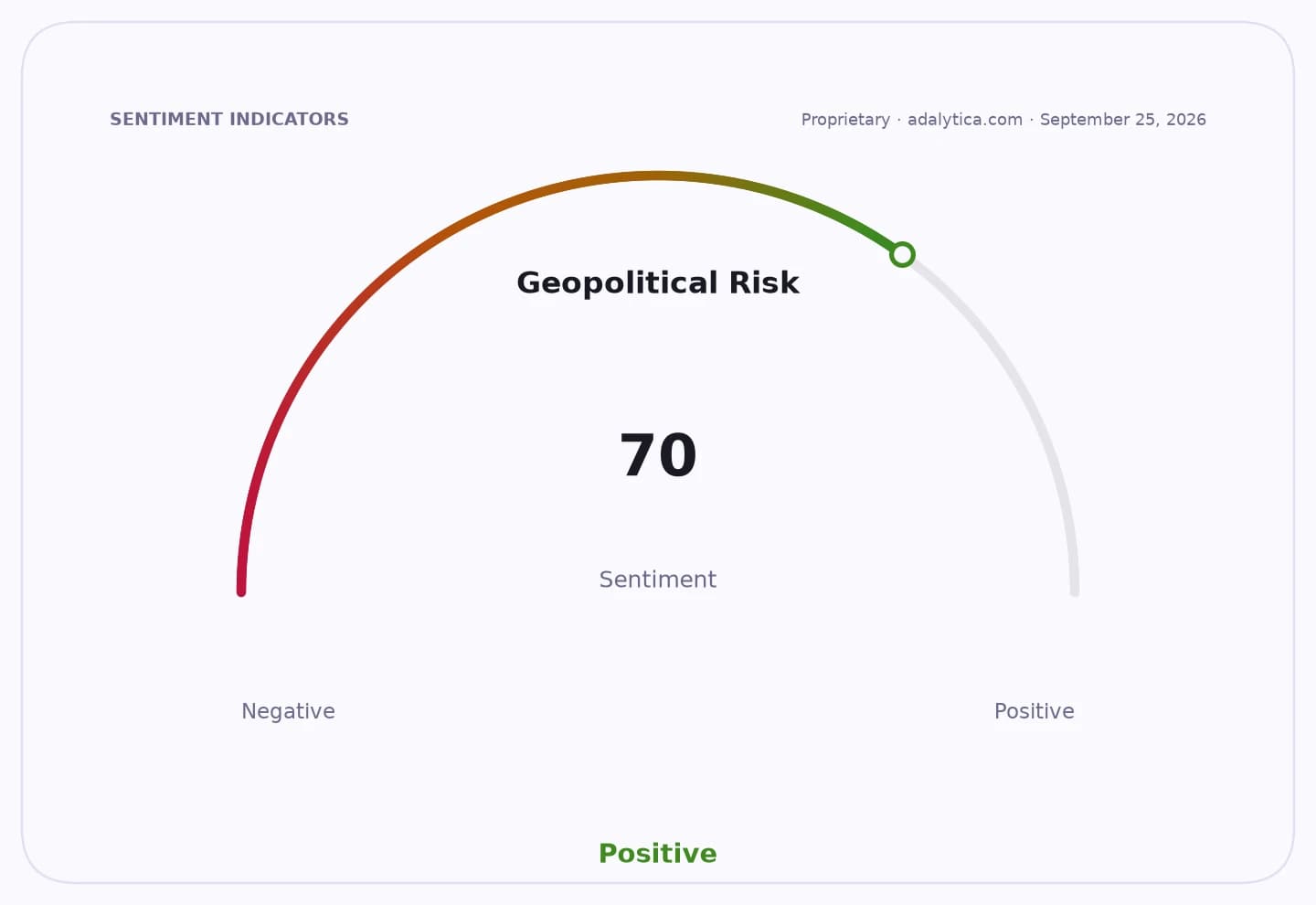
The day’s advance began with the rupiah opening at 17,905 and firming through the session as traders responded to prospects that the Strait of Hormuz disruption risk may be receding. That helped ease crude prices, removing one of the main external headwinds for the currency. The currency also stood out against some weaker regional peers, a sign that investors still see Indonesia as relatively insulated when global risk appetite improves.
Foreign exchange reserves are central to that view. A large reserve cushion can smooth market dislocations, support liquidity in periods of dollar strength and reassure investors that the central bank has room to defend orderly trading conditions if volatility picks up. That matters particularly when the dollar remains broadly firm globally and emerging-market currencies are competing for capital amid shifting US rate expectations.
Market positioning also reflects that tension. Adalytica’s US dollar trade signals showed extreme greed, suggesting the greenback remains crowded, while FX volatility signals were also elevated. Against that backdrop, the rupiah’s ability to appreciate hints that investors are willing to add selective exposure where fundamentals and policy backstops look credible.
US Treasury yields added to the crosscurrents, with the 10-year yield around 4.612% and the 2-year at 4.174% in forecast data, levels that keep the dollar supported but also leave room for swings if incoming US data shifts rate-cut expectations. For Indonesia, that means the rupiah’s near-term path will still hinge on whether external relief proves durable rather than temporary.
The key test now is whether softer oil and calmer geopolitics can outlast the next round of US macro data. If they do, the rupiah may keep drawing support from reserves, but any renewed jump in energy prices or dollar strength would quickly put the currency’s resilience back under scrutiny.
| Entity | Gains | Losses |
|---|---|---|
| Rupiah | ▲Lower import pressure | ▼Dollar buyers |
| Indonesia central bank | ▲Reserve buffer credibility | ▼FX intervention need |
| Indonesian importers | ▲Cheaper oil imports | ▼Exporters receiving dollars |
| Oil-sensitive emerging-market peers | ▲Reduced spillover risk | ▼Higher-crude economies |