Russia’s latest message to Europe and Ukraine is that pressure will not change the Kremlin’s course, even as the war drags on and the economic costs keep mounting. President Vladimir Putin said Russia “cannot be intimidated,” underscoring a hardening stance that matters far beyond the battlefield because it points to a prolonged conflict, continued sanctions risk and fresh volatility for energy, metals and defense markets.
Russia Says It Cannot Be Intimidated as War Continues
For investors, the significance is less about the rhetoric itself than what it implies: Moscow is still choosing resilience and escalation over compromise. That raises the odds of a longer disruption to trade routes, commodity flows and regional security spending, while keeping Europe locked into higher defense budgets and an expensive push to diversify energy supply. The longer the war persists, the more it reshapes capital allocation across sectors and geographies.
Sentiment IndicatorsⓘProprietary · adalytica.com · September 21, 2026
This is a snapshot — live sentiment, awareness and momentum for 130+ markets update continuously in the dashboard.Open AlphaPulse
The backdrop is a renewed Russian campaign intended to pressure Ukraine and its supporters, with European leaders describing recent strikes as an attempt to intimidate the region. Putin accused Kyiv of sabotaging peace efforts and tied the conflict to Russia’s domestic political unity, framing the war as something external powers cannot divide or coerce. That posture suggests the Kremlin sees strategic value in endurance, even if battlefield progress remains limited.
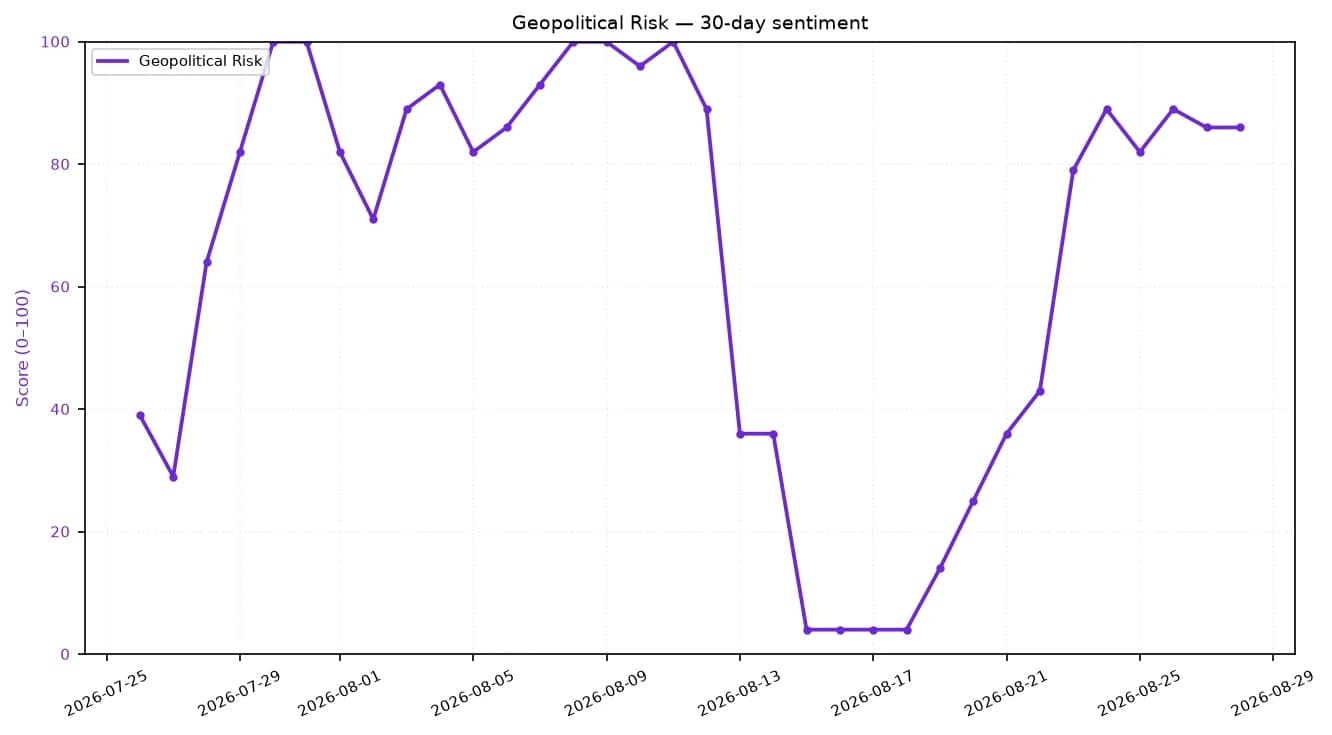
The market message is familiar: geopolitical defiance tends to keep risk premia elevated. Oil traders know how quickly supply fears can reprice the energy complex, and the data here show crude has remained highly sensitive to shocks. Energy equities have also been one of the cleaner ways for investors to express that higher-for-longer geopolitical backdrop, with the XLE energy ETF trading well above its 50-day and 200-day moving averages in recent sessions, a sign of persistent relative strength. Gold has been another beneficiary, with GLD holding above its long-term trend and the usual technical indicators showing a still-supported uptrend despite short-term swings.
Geopolitical Risk — 30-day sentimentadalytica.com
Explore this data interactively — full history, time series and cross-market comparisons.Open AlphaPulse
That is why Putin’s “cannot be intimidated” line matters economically: it is a statement of intent that keeps the world in a supply-risk environment. Europe must spend more on security, Russia must keep absorbing sanctions and war costs, and global investors must continue pricing in the chance of sudden moves in oil, gold, defense names and even transport and tourism assets tied to the region. On the other side, importers of energy and companies exposed to European stability lose the most from a conflict that refuses to fade.
For long-term investors, the lesson is not to trade every headline, but to understand the durable shifts that follow from them. A more militarized Europe, a more fragmented energy market and a more cautious global trade system can last for years, not weeks. If anything, that argues for patience, diversification and selective exposure to beneficiaries of higher security spending and commodity volatility. This is a story worth keeping on the watchlist.
| Entity | Gains | Losses |
|---|---|---|
| Russia / Kremlin | ▲Domestic unity narrative | ▼Sanctions relief |
| Europe / NATO | ▲Defense urgency | ▼Energy stability |
| Energy stocks / oil producers | ▲Higher risk premium | ▼Predictable supply |
| Gold / safe havens | ▲Flight-to-safety demand | ▼Calm geopolitics |