Putin’s warning in Vladivostok that demography is becoming a challenge for Russia goes to the heart of the country’s economic and geopolitical problem: a shrinking workforce is becoming a binding constraint on growth, military capacity and state finances.
Russia Demography Warns of Labor Squeeze
That matters because labor scarcity is no longer a distant social issue for Russia. It is an immediate macro headwind that can limit output, worsen inflationary pressure and force the Kremlin to lean harder on migration, pronatalist spending and state-directed investment to sustain growth. In a war economy already distorted by sanctions and military mobilization, every decline in working-age population raises the cost of keeping factories, infrastructure projects and the defense sector staffed.
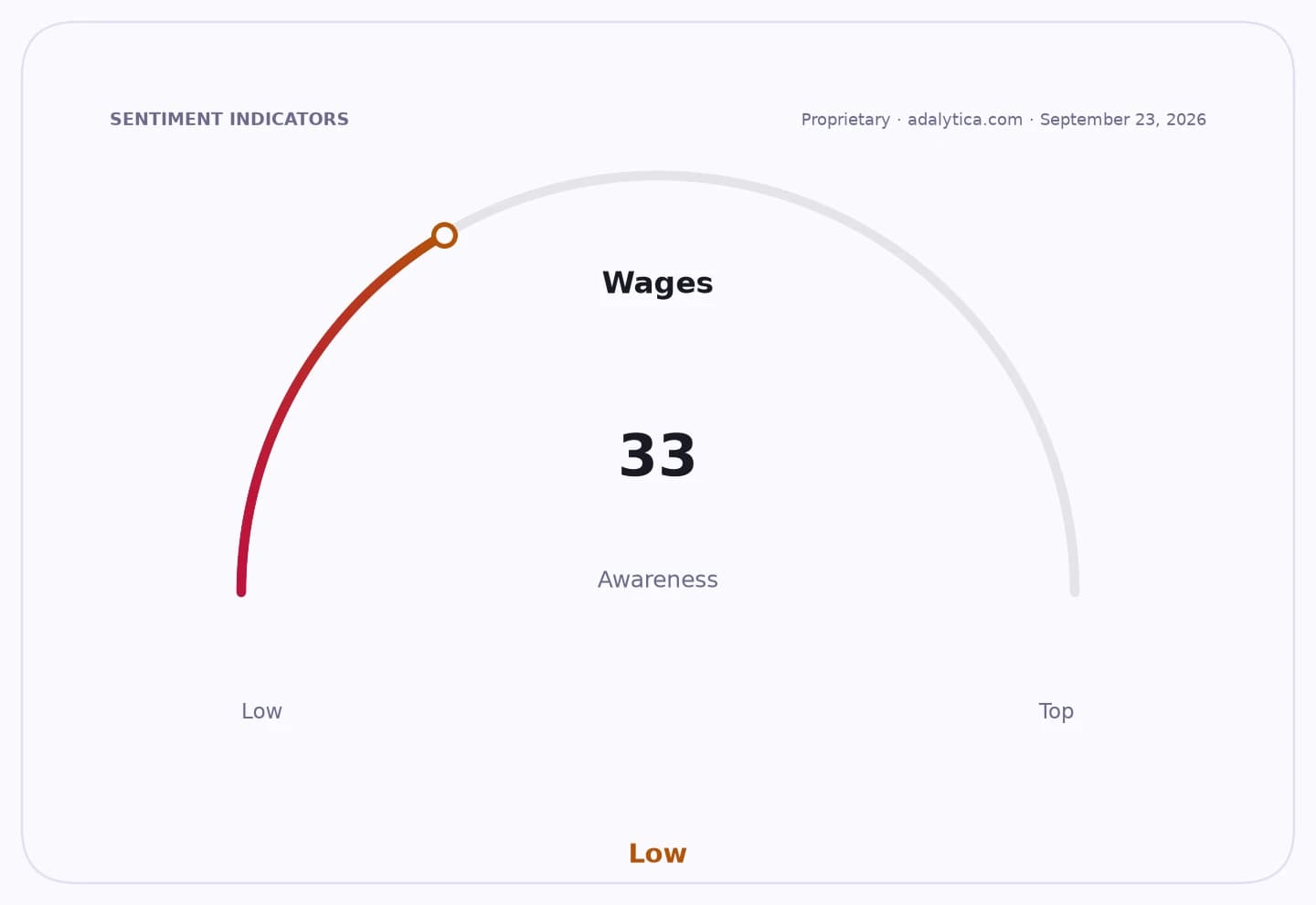
Sentiment IndicatorsⓘProprietary · adalytica.com · September 3, 2026
This is a snapshot — live sentiment, awareness and momentum for 130+ markets update continuously in the dashboard.Open AlphaPulse
The economic stakes are reinforced by the broader picture in the data. Russia’s unemployment rate has fallen to around 4.1% from 4.3% in May and is forecast at 4.09% in August, a level that signals an economy operating with very little spare labor. At the same time, output is still expanding, with GDP projected to rise to 32,902.1 in July from 32,486.1 in April, showing that demand for workers remains firm even as the pool of available workers tightens. That combination is not benign: it is the classic setup for wage pressure, bottlenecks and lower trend growth.
For investors, the message is less about a single data point than about the structural discount Russia faces. A tighter labor market can support pockets of nominal revenue growth for domestic employers, but it also raises costs and reduces the economy’s long-term capacity to compound. It deepens the reliance on capital-intensive, state-led and defense-linked sectors while making consumer-facing industries, logistics and services more vulnerable to labor shortages. The market’s real issue is not whether Russia can post another quarter of growth, but whether that growth can be sustained without ever-higher fiscal support.
The geopolitical dimension is just as important. Demographic decline does not just weaken the civilian economy; it limits the state’s strategic flexibility. A smaller, older population constrains the tax base, the conscription pool and the ability to absorb the social costs of prolonged conflict. That makes Putin’s remarks more than a domestic policy admission — they are a reminder that Russia’s war footing is colliding with a demographic ceiling the Kremlin cannot sanction away.
The investable takeaway is that demographic stress is now part of the Russia risk premium. Any assets tied to Russian growth, labor-intensive production or state capacity should be priced with a lower long-term growth assumption and higher policy intervention risk. The asymmetric opportunity is not in chasing a short-term rebound, but in recognizing that Russia’s labor squeeze is a multi-year drag that will shape the country’s economic trajectory long after the headlines fade.
| Entity | Gains | Losses |
|---|---|---|
| Russian state | ▲More urgency for policy action | ▼Higher fiscal and labor costs |
| Defense sector | ▲Priority in labor allocation | ▼Scarcer workers and rising wages |
| Domestic employers | ▲Tighter labor discipline | ▼Higher hiring costs |
| Long-term investors in Russia | ▲Potential policy-driven spending | ▼Structural growth discount |