Russia says it has prepared a “painful” response to any seizure of its assets in the European Union, sharpening the financial stakes around a sanctions fight that is already testing Europe’s unity and exposing investors to a wider geopolitical risk premium.
Russia Warns on EU Seizure of Frozen Assets
The warning matters because the EU has been weighing how to use frozen Russian state assets to support Ukraine, a move Moscow would almost certainly answer with countermeasures against Western holdings and businesses still tied to the Russian market. That raises the risk of retaliatory asset grabs, legal disputes and fresh pressure on European companies with exposure to Russia.
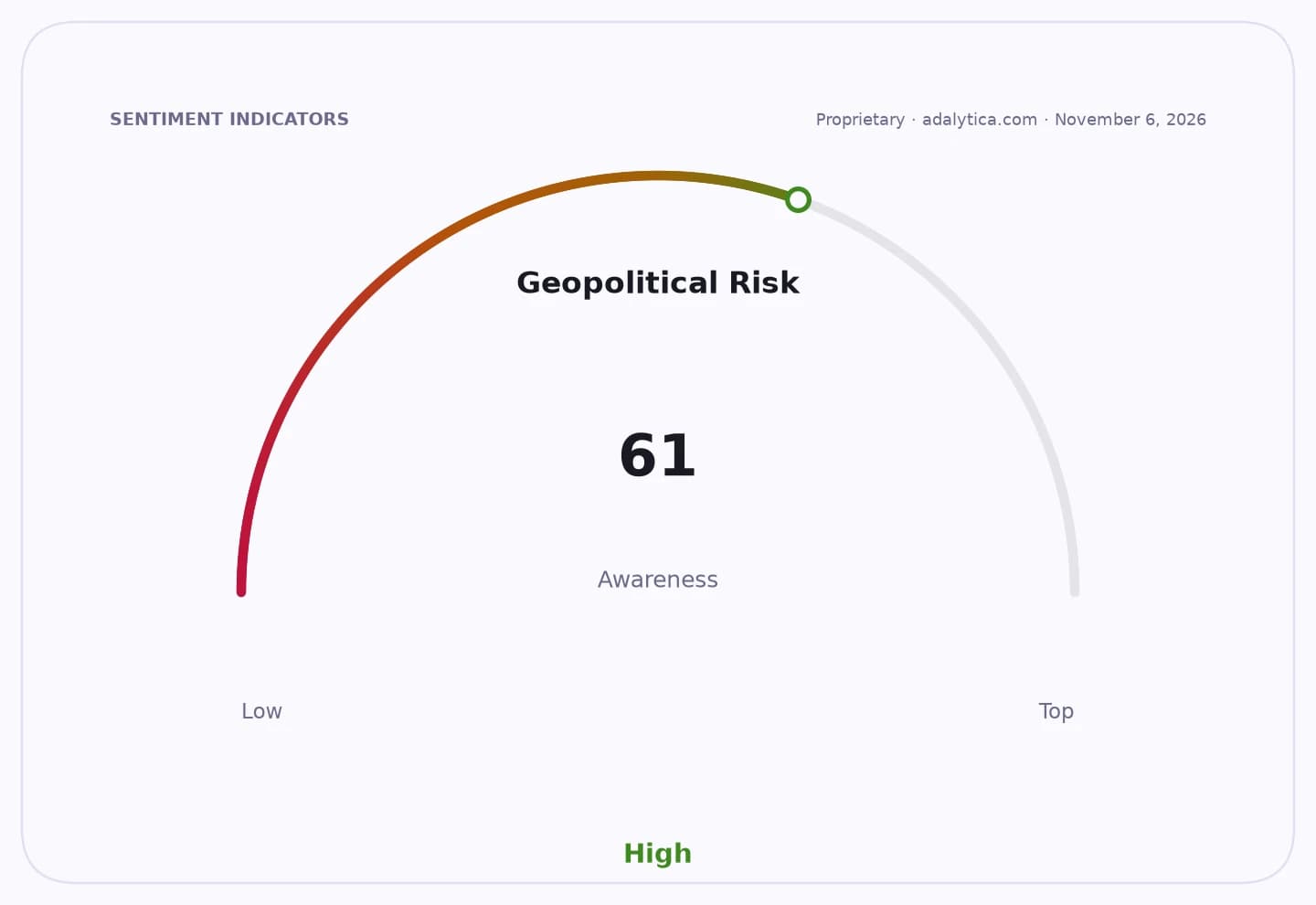
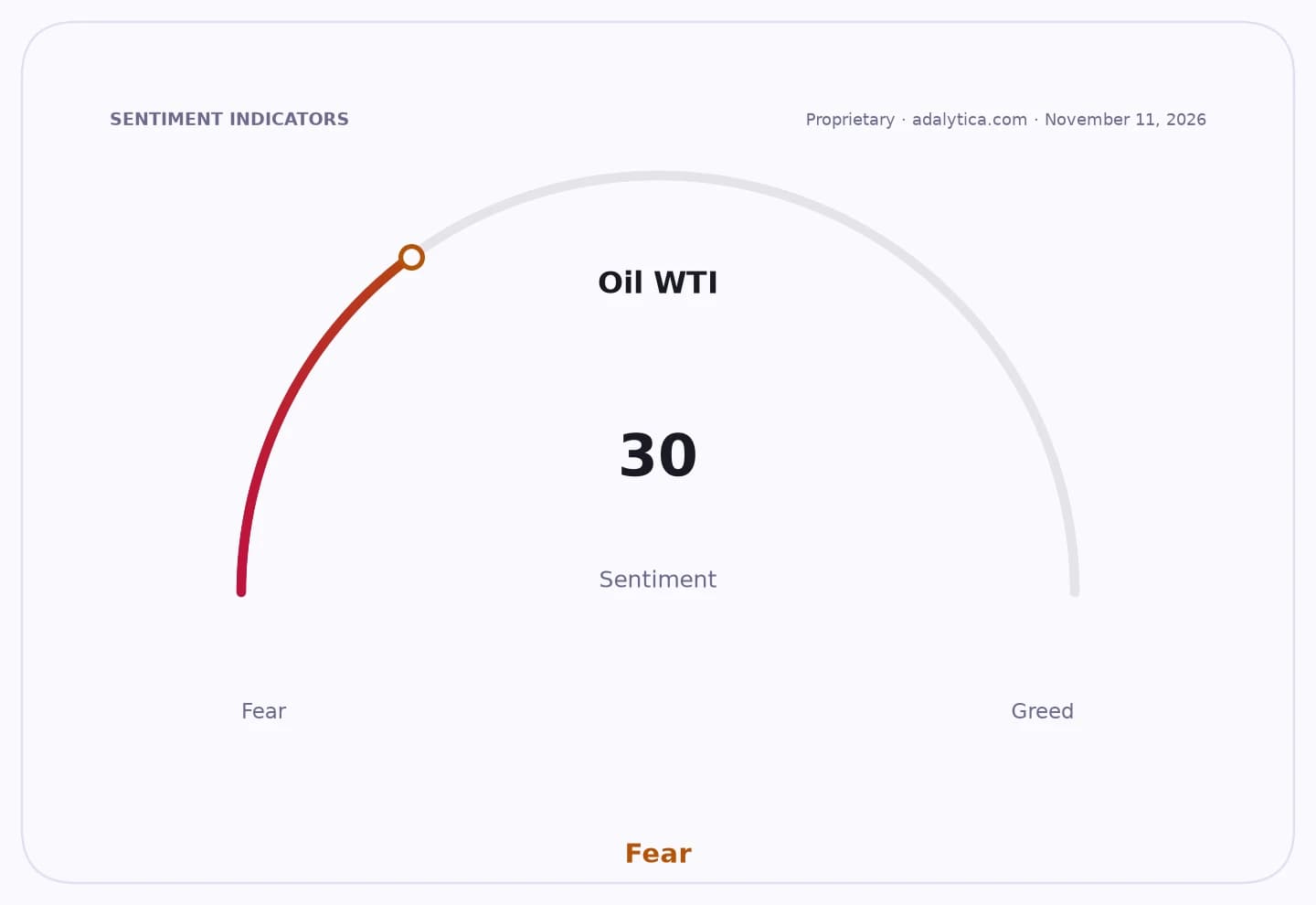
Sentiment Indicators
The broader backdrop is a sanctions regime that has become harder to wield as a leverage tool. Russian Foreign Minister Sergei Lavrov has said sanctions pressure has been exhausted, while the latest round of diplomacy has done little to narrow the gap between Moscow and Kyiv. At the same time, internal divisions inside the EU have complicated efforts to keep a unified front on additional measures.
Markets are still treating the geopolitical backdrop as a live risk rather than a settled trade. The euro-related gauge in Adalytica’s trade signals snapshot is flashing extreme greed, while its global stability sentiment has fallen to neutral with extreme fear in awareness, suggesting investors are pricing in more headline-driven volatility across Europe.
Geopolitical Risk vs EWUadalytica.com
Explore this data interactively — full history, time series and cross-market comparisons.
Geopolitical Risk
Oil traders are also watching closely. Brent-linked and U.S. crude benchmarks have swung sharply this year, and Russia’s ability to respond to sanctions through energy flows remains one of the biggest market variables in the conflict. Any escalation that hits exports, shipping, insurance or payment channels would ripple through crude prices, European energy costs and inflation expectations.
For investors, the immediate question is not only whether the EU moves ahead with asset seizure plans, but whether Moscow’s response lands on sovereign assets, corporate property or commercial relationships. The next catalyst is likely to come from the EU’s internal debate on frozen Russian funds and from any fresh Russian countermeasure that turns a legal dispute into a market event.
| Entity | Gains | Losses |
|---|---|---|
| EU policymakers | ▲More pressure on Russia | ▼Higher retaliation risk |
| Russia | ▲Leverage through countermeasures | ▼Access to frozen assets |
| European companies with Russia exposure | ▲Potentially none | ▼Asset seizure risk |
| Oil and FX traders | ▲Volatility opportunities | ▼Stability in prices |