Donald Trump’s push to bring Vladimir Putin and Volodymyr Zelensky to the table is rippling through markets as traders price a lower probability of prolonged conflict and the risk premium in crude oil starts to unwind.
Trump Ukraine Peace Push Hits Oil and Gold
The most immediate economic effect is a softer geopolitics bid in energy and safe havens. WTI-linked USO fell to $141.45 on Nov. 10 from $148.41 three sessions earlier, while its conventional technical indicators weakened further, with the 50-day moving average still above price but RSI at 33.7, near oversold territory, and MACD negative. Gold ETF GLD also slipped to $369.36 from $379.53 over the same period, reinforcing the view that investors are trimming hedges as the market reassesses war risk.
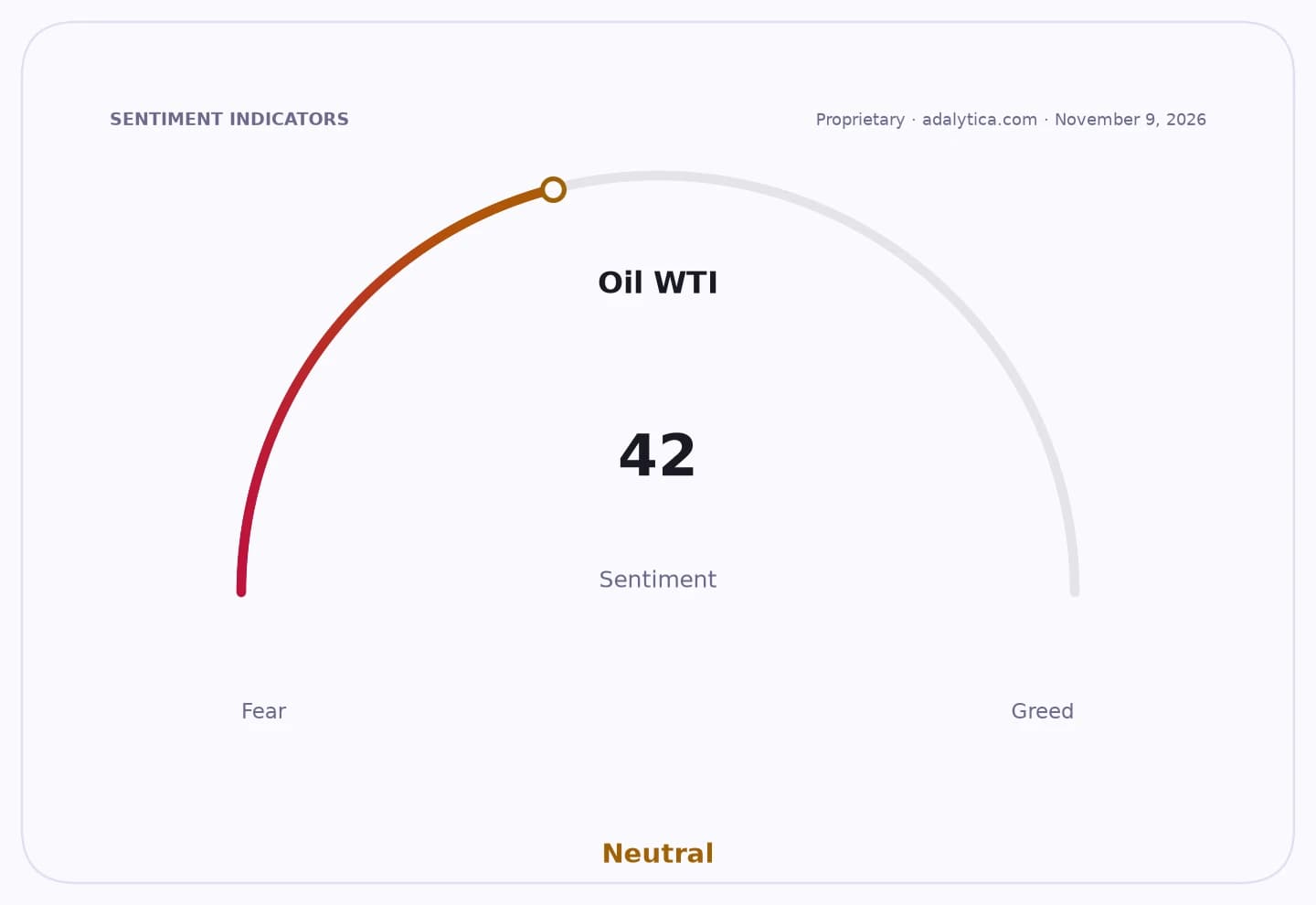
Sentiment Indicators

That move matters because the Russia-Ukraine war has been one of the clearest sources of inflation pressure and supply uncertainty in energy markets. Any credible diplomatic opening that reduces the odds of escalation, sanctions tightening or infrastructure disruption could lower crude’s geopolitical premium and ease pressure on fuel prices, transport costs and inflation expectations. Conversely, the market is still treating the peace effort as fragile: geopolitical risk sentiment from Adalytica’s Global Stability gauge fell sharply to 57 from 86 in two days, but its awareness reading remains in “Extreme Fear,” showing investors have not fully moved into a risk-on posture.
The diplomatic backdrop is still unsettled. Zelensky said he had seen a US proposal aimed at ending the war and expressed hope for a trilateral meeting involving Ukraine, Russia and the US, while Trump said he planned to organize a meeting between Zelensky and Putin soon. Russia, meanwhile, has accused Zelensky of obstructing dialogue, underscoring how quickly the process could stall. On the ground, the war continues, with drone attacks still hitting Ukraine and no sign of a broad ceasefire.
Geopolitical Risk — 30-day sentimentadalytica.com
Explore this data interactively — full history, time series and cross-market comparisons.
For investors, the key question is not whether a meeting happens, but whether it produces a durable path to reduced sanctions risk and lower commodity volatility. Energy producers such as Chevron and ConocoPhillips remain exposed to price swings, while refiners and fuel consumers would benefit from a sustained decline in crude. A genuine thaw would also pressure defensive assets such as gold, which has already lost some momentum, and could encourage rotation into cyclicals if broader risk appetite improves.
The bear case is that the talks prove cosmetic and oil rebounds quickly if fighting intensifies or negotiations collapse. The bull case is that even incremental progress caps the war premium in crude, helping anchor inflation and easing pressure on central banks and consumers. For now, markets are betting on the possibility of dialogue, but not yet on peace.
| Entity | Gains | Losses |
|---|---|---|
| Ukraine diplomacy | ▲Path to talks | ▼Leverage if talks stall |
| Oil consumers | ▲Lower fuel costs | ▼Less hedge against supply shock |
| Energy producers | ▲Stable demand if talks fail | ▼War premium in crude fades |
| Gold holders | ▲Safe-haven bid if talks collapse | ▼Haven demand eases |