Ukraine and Poland used the U.N. stage to make a blunt case that Russia can still inflict damage, but cannot achieve victory — a message that matters because the war is no longer just a battlefield contest, but a test of Europe’s security, energy costs and defense spending.
Russia war keeps Europe defense spending high
Polish Foreign Minister Radosław Sikorski’s line to Moscow — “You can still kill many people, but you cannot win” — captures the central market reality: Russia’s war has become a prolonged geopolitical shock that keeps the risk premium alive across European assets while reinforcing a structural bid for defense, energy security and allied military readiness.
Sentiment IndicatorsⓘProprietary · adalytica.com · October 1, 2026
This is a snapshot — live sentiment, awareness and momentum for 130+ markets update continuously in the dashboard.Open AlphaPulse
The economic stakes are straightforward. The conflict is extending the emergency cycle that drives government outlays, strains trade flows and keeps investors alert to supply disruptions, sanctions escalation and the possibility that attacks widen beyond Ukraine’s borders. Poland’s warning that Russia is planning drone and missile strikes against allied countries only raises the cost of complacency for Europe, where security spending is now part of the economic backdrop rather than a temporary response.
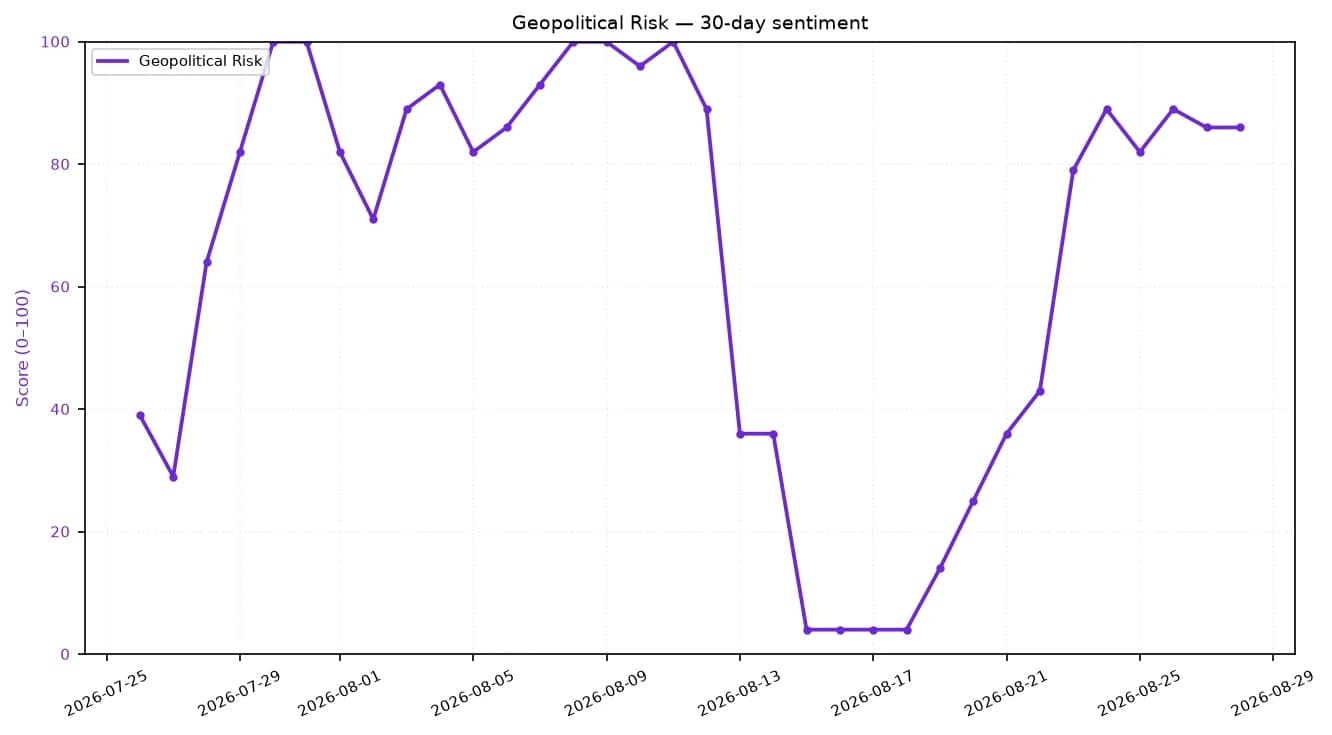
That is why this matters to investors even if front-line developments change day to day. A war that cannot be quickly settled keeps support under defense contractors, military logistics, air-defense systems, surveillance, drones and electronic warfare. It also sustains demand for energy hedges and safe-haven assets when escalation risk rises. The latest market signal fits that pattern: the global stability gauge from Adalytica shows awareness in “Extreme Fear,” even as broader sentiment remains neutral, a sign that headline risk is still powerful enough to move positioning.
Geopolitical Risk vs EUOadalytica.com
Explore this data interactively — full history, time series and cross-market comparisons.Open AlphaPulse
The pricing response in rates and FX also reflects how geopolitics feeds directly into markets. Investors have been rotating toward protection as volatility around Europe’s security outlook persists, while technical readings on euro exposure have strengthened, with the EUO ETF trading above both its 50-day and 200-day moving averages and its RSI near overbought levels. That suggests traders are already expressing some skepticism about the euro-area outlook if the war deepens or spreads.
Commodities remain part of the same story. Oil has been whipsawed by supply-risk fears, and the latest move back toward the mid-$90s a barrel shows how quickly geopolitical headlines can reprice energy markets. That matters for inflation, central banks and equities alike: higher crude would complicate policy easing and squeeze consumers, while benefiting integrated producers and parts of the U.S. energy complex.
The clearest investable conclusion is that this war is still an industrial policy event disguised as a security crisis. Europe’s rearmament cycle is not a tradeable headline; it is a multi-year capital allocation shift. Companies tied to missiles, air defense, drones, communications and battlefield electronics remain the cleanest beneficiaries, while import-dependent industrials, airlines and broad European risk assets face the greater downside if the conflict keeps escalating.
For now, the market is underestimating how durable that defense cycle can be. Investors looking for asymmetric exposure should stay positioned in defense, security and energy resilience themes rather than waiting for a peace dividend that may not arrive soon.
| Entity | Gains | Losses |
|---|---|---|
| Defense contractors | ▲Higher orders and budgets | ▼Peace talks that reduce urgency |
| Energy producers | ▲Geopolitical risk premium | ▼Lower oil from de-escalation |
| Europe/NATO allies | ▲Security urgency and spending | ▼Fiscal pressure and higher costs |
| Importers and airlines | ▲— | ▼Higher fuel and volatility |