Russia’s new state standard for instant coffee, due to take effect on Nov. 1, 2026, is set to formalize what can be sold as coffee, potentially raising compliance costs for roasters and importers and pushing up shelf prices for consumers.
Russia instant coffee standard may raise prices
CPI
The rule change matters because instant coffee remains a mass-market staple in Russia, where any move to define product quality more tightly can ripple through food inflation, retail margins and sourcing decisions. If the standard forces manufacturers to use more coffee solids or limits cheaper substitutes, producers may have less room to defend prices through lower-grade blends and fillers.
Sentiment Indicators
That makes the regulation economically relevant well beyond the coffee aisle. Higher input requirements would likely favor established brands and larger processors that can absorb testing, labeling and formulation changes, while smaller players could face thinner margins or exit pressure if they cannot adjust quickly.
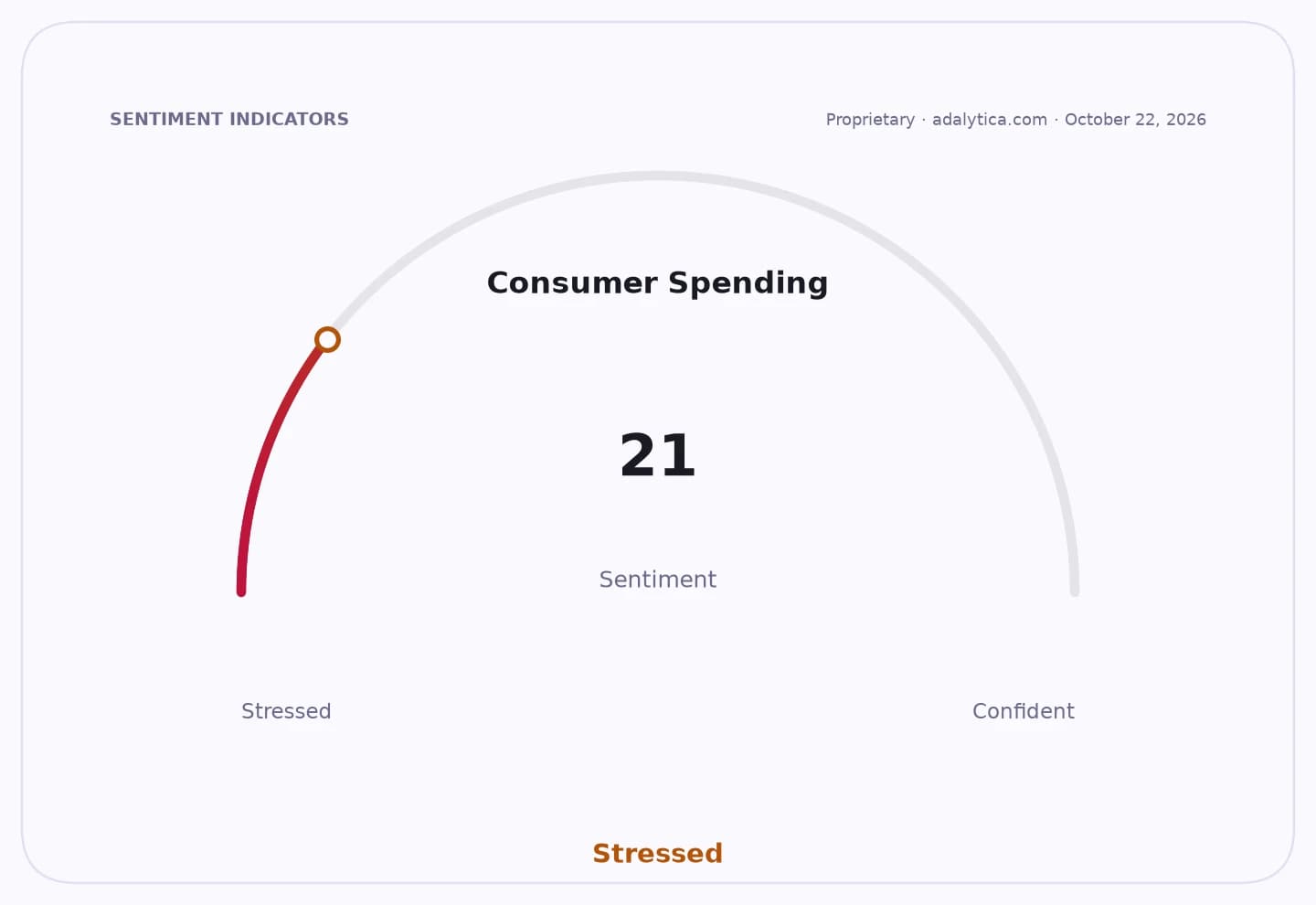
The timing also lands in a market already sensitive to consumer costs. Adalytica’s Consumer Spending Sentiment is at 96, in “Extreme Greed,” while CPI sentiment sits at 33, signaling that households may still be willing to spend but remain vulnerable to another food-price pass-through.
Coffee prices have also shown sharp swings, underscoring why industry players tend to pass regulation-related costs on to buyers when they can. Arabica futures on ICE, tracked by the KC=F contract, were at 286.55 on Oct. 29, below the 50-day average of 308.75 and the 200-day average of 305.78, suggesting a market that has already cooled from earlier spikes but remains volatile.
For investors, the key question is whether the new GOST becomes a one-off labeling and sourcing exercise or a broader catalyst for margin pressure across packaged coffee, distributors and retail chains. The clearest beneficiaries are premium and compliant producers; the biggest losers are low-cost importers, bargain brands and price-sensitive consumers.
The next catalyst is how Moscow writes the enforcement rules and whether producers disclose reformulation costs or planned price increases ahead of the Nov. 1 rollout.
| Entity | Gains | Losses |
|---|---|---|
| Premium coffee brands | ▲stronger positioning | ▼higher compliance burden |
| Large roasters/importers | ▲scale advantage | ▼smaller rivals’ share |
| Consumers | ▲clearer product standards | ▼higher shelf prices |
| Low-cost substitute brands | ▲none | ▼reformulation pressure |