Volodymyr Zelensky’s warning that Russia is preparing a major fall mobilization matters because it points to a longer, bloodier war — and to another round of pressure on energy, currencies and global risk appetite if Moscow can put far more manpower into the fight.
Russia Mobilization Risk Keeps Markets On Edge

For investors, the immediate takeaway is not a tradeable headline but a reminder that geopolitical shocks still feed directly into markets. Russia’s war in Ukraine has already helped keep oil, grain and defense spending elevated, and a fresh mobilization effort would reinforce the idea that the conflict is not drifting toward resolution. That typically supports safe-haven demand, keeps defense names in focus and raises the odds of renewed volatility in Europe-linked assets.
Zelensky said Moscow could call up as many as 500,000 troops, a scale that would signal the Kremlin is trying to offset battlefield losses and sustain pressure in eastern Ukraine. Russia’s recent changes to conscription rules also suggest it is building the administrative machinery for a broader draft, even as domestic unease grows over the cost of the war. If that estimate proves accurate, it would amount to a serious escalation of Russia’s capacity to keep fighting through the autumn and beyond.
The economic significance is straightforward: wars drain labor, capital and state finances, but they also rewire spending priorities. Russia would likely divert more resources toward weapons, logistics and troop support, while Ukraine would face another stretch of heavy defense needs. For the wider world, that means the supply disruptions tied to the conflict — especially in energy and agricultural markets — stay in the system longer than many investors would like.
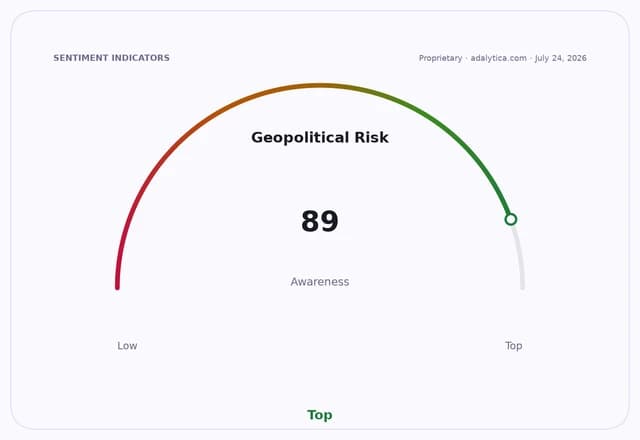
Geopolitical Risk — 30-day sentimentadalytica.com
Explore this data interactively — full history, time series and cross-market comparisons.Open AlphaPulse
Markets are already signaling that this remains a live geopolitical risk. The dollar has been edging higher, with the U.S. dollar index fund UUP trading around 28.58 and sitting above both its 50-day and 200-day moving averages, a sign of continued support for the greenback. The yen has also stayed weak, with FXY below its 50-day and 200-day averages, underscoring how investors continue to favor the dollar over other major currencies when uncertainty rises. Those are conventional technical indicators, but the bigger message is simple: investors are still paying up for safety.
Commodity investors have another reason to watch closely. DBA, which tracks broad agricultural prices, remains above both its 50-day and 200-day moving averages near 28.24, reflecting how food markets have been sensitive to geopolitical strain and supply anxiety. Even when the front line is far from a port or a refinery, the war can ripple outward into farm prices, shipping and insurance costs.
The human cost, of course, is the biggest factor here, and it is also the one that keeps the macro story unresolved. A larger mobilization would almost certainly prolong the conflict, increase casualties and make any near-term diplomatic breakthrough less likely. The Adalytica Global Stability Sentiment gauge, at 11 with an “Extreme Fear” label, captures that backdrop: awareness is high, but confidence in stability is collapsing.
For long-term investors, the lesson is not to chase every headline but to understand the portfolio implications of persistent conflict. Geopolitical risk can linger for quarters or years, not days, and it tends to reward diversified portfolios, energy resilience and defense spending more than complacency. If Russia does move ahead with a major mobilization, the war’s economic drag could deepen before any durable peace process begins. That makes this a story worth watching — and a reminder to stay patient, diversified and focused on the long run.
| Entity | Gains | Losses |
|---|---|---|
| Russia’s war effort | ▲More manpower | ▼Higher domestic strain |
| Ukraine and allies | ▲Stronger case for support | ▼Bigger battlefield pressure |
| Defense companies | ▲Sustained demand | ▼None in the near term |
| Energy and grain consumers | ▲— | ▼Ongoing supply risk |