Russians are being told the best moment to pay off a mortgage early is now, and the logic is increasingly financial rather than emotional: when mortgage rates sit well above deposit yields, every extra ruble sent to principal can lock in a bigger guaranteed saving than leaving cash in the bank.
Russia mortgages: early payoff vs deposit yields

That matters because the gap between borrowing costs and savings returns is likely to stay wide enough to keep prepayments attractive for many households. A market mortgage may still cost 14% to 15% in 2027, while bank deposits are expected to yield just 10% to 11%, according to the guidance cited in the source material. In that setup, borrowers with standard mortgages can still outperform deposits by cutting debt early, while the math becomes less obvious for subsidized loans at 6%, where a deposit could temporarily earn more.
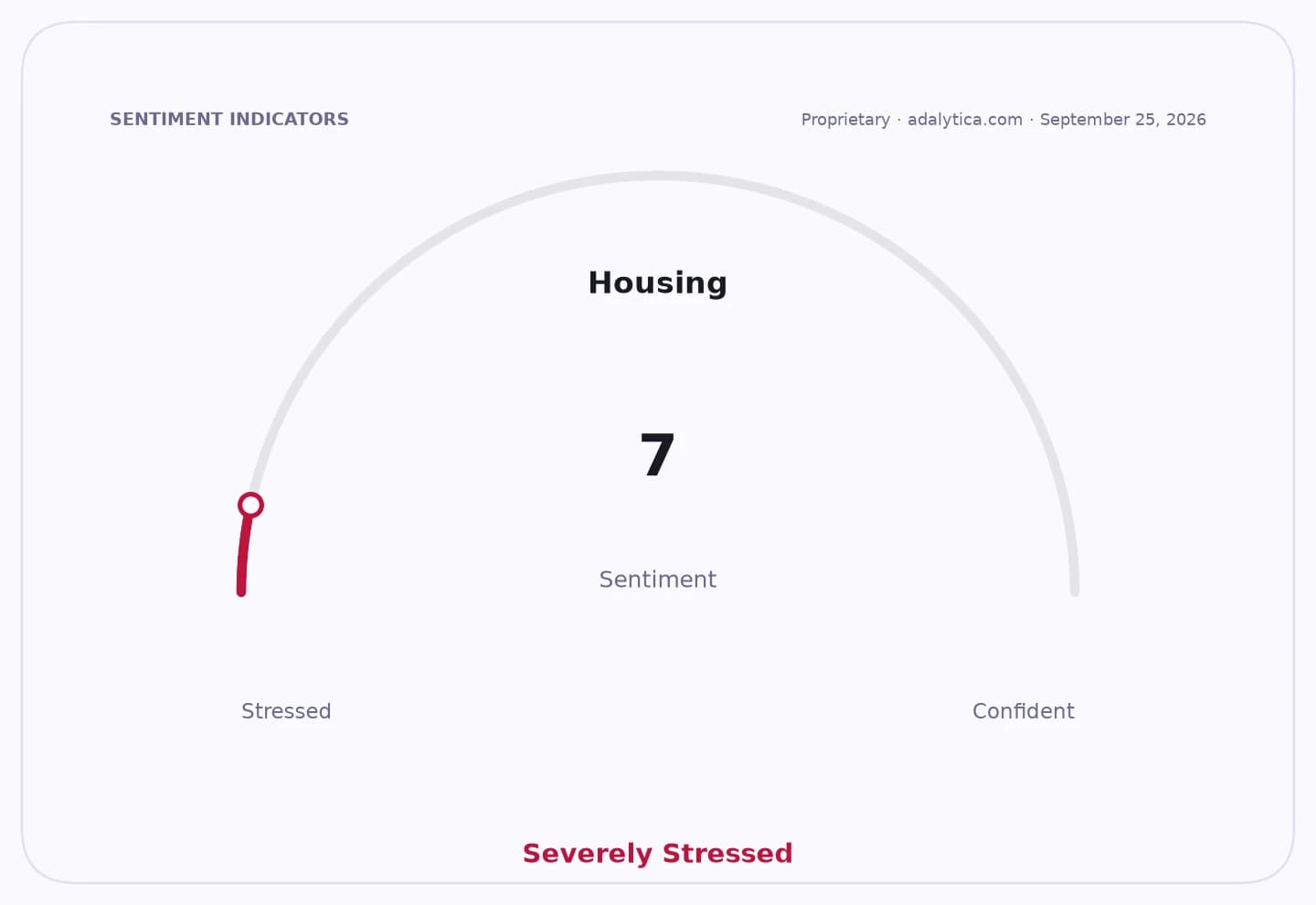
Sentiment IndicatorsⓘProprietary · adalytica.com · September 7, 2026
This is a snapshot — live sentiment, awareness and momentum for 130+ markets update continuously in the dashboard.Open AlphaPulse
For households, this is a direct cash-flow decision. If a mortgage rate exceeds the return on a safe deposit, prepayment delivers a risk-free return equal to the avoided interest charge. That is why experts are urging borrowers making partial repayments to shorten the loan term rather than reduce the monthly payment: the former cuts the total interest bill more aggressively. Lowering the instalment is still useful for families that need breathing room or expect income pressure, but it sacrifices some of the savings on future interest.
The investor angle is clearer than it may first appear. This kind of advice tends to favor banks and lenders with stronger retail funding franchises, because deposits remain sticky even as households weigh whether to use cash to shrink debt. It also underscores a market in which mortgage demand is being constrained by rate levels, not by lack of housing appetite. In Russia, that keeps the housing-finance trade dependent on monetary conditions rather than credit demand alone.
The broader message is that consumers are being pushed into a capital-allocation mindset usually associated with investors: compare the mortgage rate against the deposit rate, then choose the higher guaranteed return. That framework becomes especially important when inflation, taxes on interest income and the safety buffer for emergencies are all part of the calculation. If borrowing costs stay elevated while deposit yields drift lower, the incentive to prepay should strengthen further.
For borrowers, the takeaway is simple: when your mortgage costs more than your savings earn, debt reduction is the trade. For investors, the opportunity sits with lenders, deposit-heavy banks and housing-finance names that can navigate a high-rate, low-volume mortgage market better than peers.
| Entity | Gains | Losses |
|---|---|---|
| Mortgage borrowers | ▲Lower lifetime interest | ▼Cash liquidity |
| Banks with deposit funding | ▲Sticky household balances | ▼Slower mortgage growth |
| Lenders on subsidized loans | ▲Deposit-funded spread income | ▼Prepayment demand |
| Cash-rich savers | ▲Optionality on funds | ▼Guaranteed mortgage savings |