Russia said it will seek to meet its OPEC+ production obligations “as much as possible,” but the gap between its current output and its quota shows how little spare room Moscow has to raise supply without a material operational push.
Russia OPEC+ output gap keeps oil supply tight
That matters because Russia remains one of the cartel’s largest producers and a key swing factor in a market already balancing tighter Middle East risks against a softer demand outlook. Deputy Prime Minister Alexander Novak’s comments at Russian Energy Week came as the latest OPEC report showed Russian crude production fell by 38,000 barrels a day in September to 8.643 million bpd, leaving it 1.306 million bpd below its assigned quota.
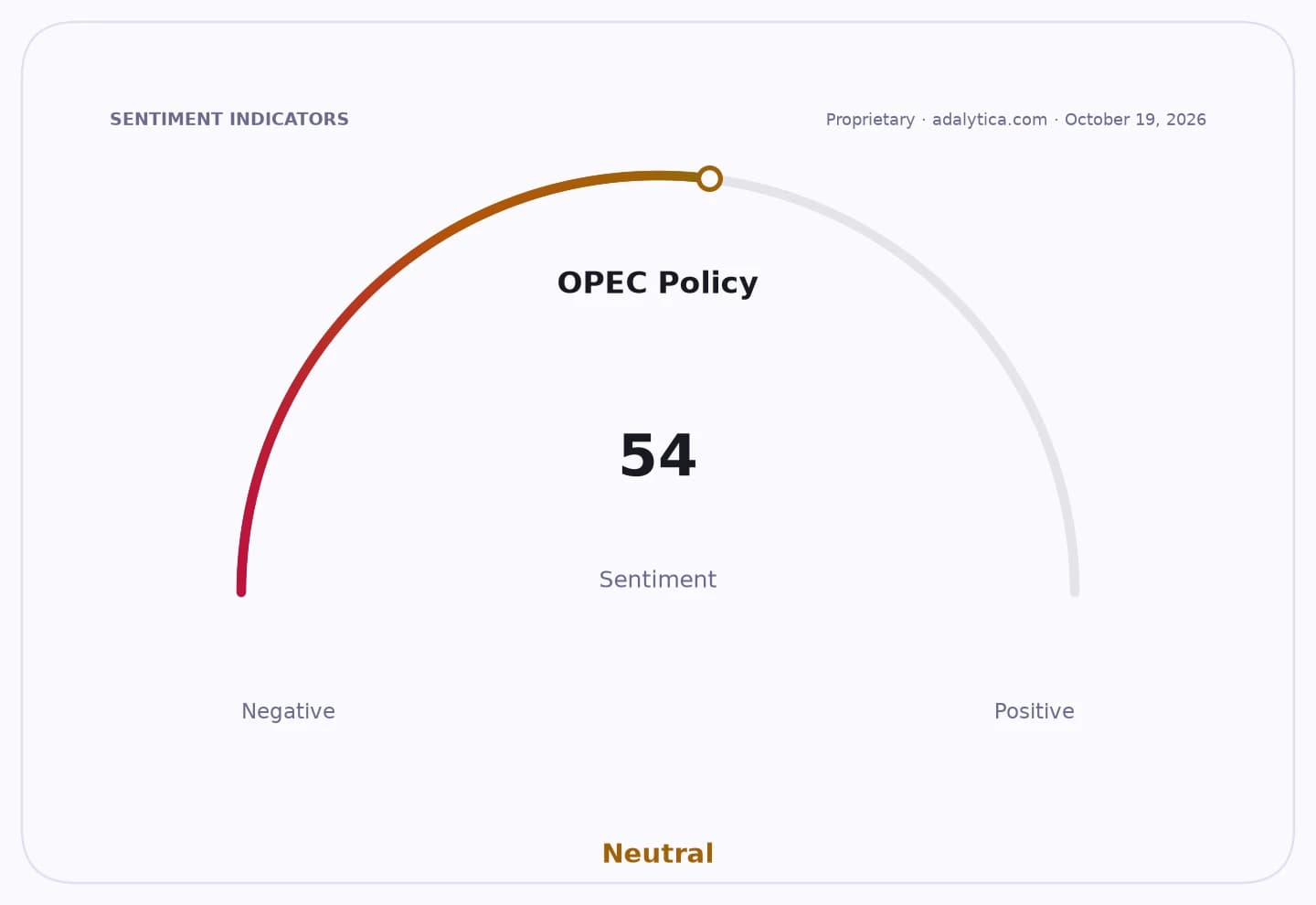
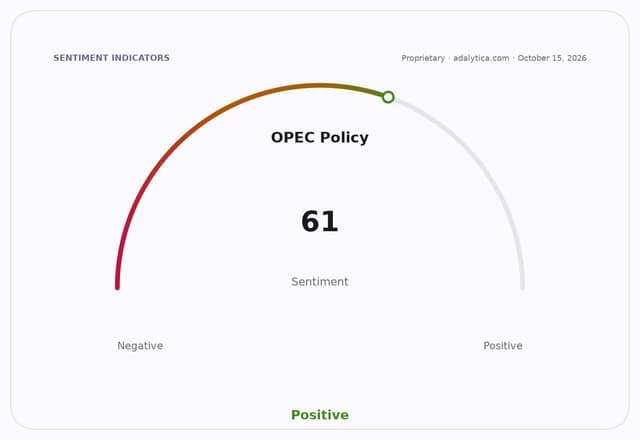
Sentiment IndicatorsⓘProprietary · adalytica.com · October 15, 2026
This is a snapshot — live sentiment, awareness and momentum for 130+ markets update continuously in the dashboard.Open AlphaPulse
OPEC+ has already decided to keep November quotas unchanged, signaling a preference for stability after years of production management and periodic compliance disputes. Under the current arrangement, Russia’s November quota is 9.949 million bpd, compared with Saudi Arabia’s 10.478 million bpd and Iraq’s 4.431 million bpd. For Moscow, the challenge is not simply political discipline but the practical limits of ramping output in a sanctions-hit industry that has had to reroute exports and work around financing, technology and logistics constraints.
For oil markets, the message is two-sided. On one hand, Russia’s willingness to talk up compliance reduces the risk that OPEC+ cohesion fractures at a time when prices are still sensitive to supply headlines. On the other, the data suggest Russia is not in a position to flood the market even if it wanted to, which supports the view that actual OPEC+ supply could remain below headline quotas. That backdrop helps explain why crude has stayed firm: US crude futures were around $95.8 a barrel in the latest trade signals, while the US Oil Fund and energy equities have both remained well bid.
Investors will read the latest move through three lenses. First, higher compliance would be bearish for incremental supply, but only if Russia can physically lift barrels from current levels. Second, the persistence of a large output shortfall against quota suggests the market may continue to discount official targets and focus instead on realizable supply. Third, the interplay between OPEC+ restraint and geopolitical risk keeps the floor under prices, which is supportive for producers and oilfield service names but costly for refiners, importers and consumers.
The broader narrative is that OPEC+ is trying to preserve market control while navigating a world in which geopolitical disruptions and weaker demand growth are pulling in opposite directions. Russia’s pledge to do what it can is less a promise of near-term supply expansion than a reminder that, for now, capacity constraints and policy discipline are reinforcing the cartel’s hold on the market.
| Entity | Gains | Losses |
|---|---|---|
| Russia | ▲Maintains OPEC+ standing | ▼Faces limits on higher output |
| OPEC+ producers | ▲Support firmer prices | ▼Risk tighter quotas discipline |
| Oil equities/USO holders | ▲Benefit from supply restraint | ▼Exposed if compliance eases |
| Refiners/importers | ▲Lower risk of oversupply | ▼Higher feedstock costs |