Russia is preparing to levy a new port fee on exporters to help finance a widening funding gap in its Arctic icebreaker fleet, a move that would spread the cost of keeping the Northern Sea Route open across the country’s commodity shippers.
Russia plans port fee for Arctic icebreakers

The proposed charge of 20.07 rubles a ton would apply to export cargoes moving through Russian seaports, with the proceeds earmarked for completion of two Project 22220 nuclear icebreakers, auxiliary vessels and rescue ships. The transport ministry says the measure is needed after the cost of the “Leningrad” and “Stalingrad” icebreakers, plus one maintenance vessel, jumped from 143 billion rubles to 225.6 billion rubles, a 58% increase. Without new funding, the ministry warned, icebreaker operations could become uneconomic for business and future Arctic escort tariffs could rise to as much as 52 million rubles a day.
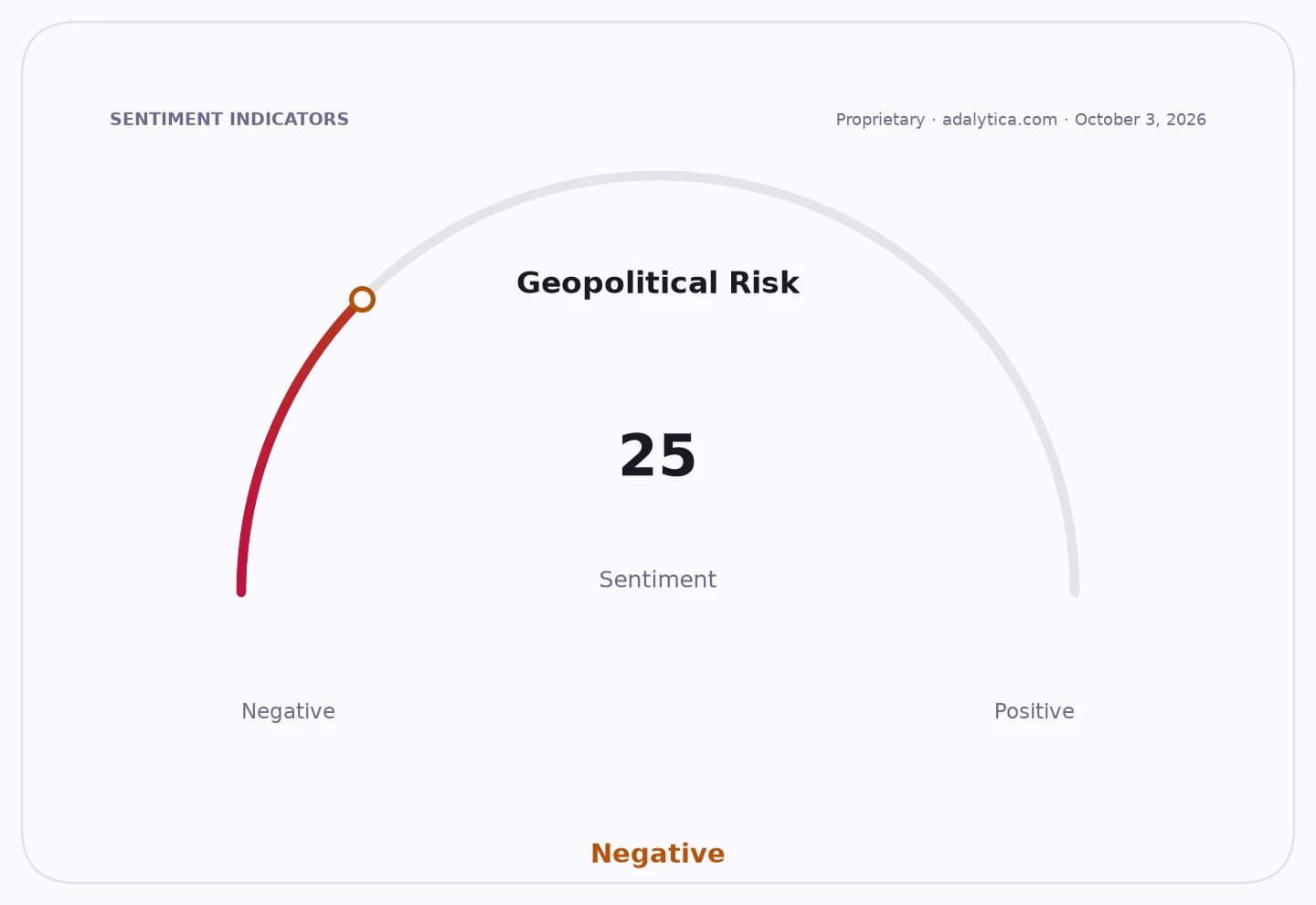
Sentiment IndicatorsⓘProprietary · adalytica.com · October 1, 2026
This is a snapshot — live sentiment, awareness and momentum for 130+ markets update continuously in the dashboard.Open AlphaPulse
Economically, the issue is not just a line item for exporters. It is part of Russia’s effort to preserve year-round Arctic shipping capacity at a time when sanctions, inflation and procurement frictions are making strategic infrastructure more expensive to build and operate. The proposed fee would run through the end of 2036 and is designed to close a financing gap that the budget alone is no longer covering. In effect, Moscow is shifting more of the burden from the state to the users of the route, especially large raw-material exporters that depend on reliable port access and ice-class logistics.
That matters because the Northern Sea Route has become a strategic outlet for Russian exports, particularly oil, coal and fertilizers, where even small changes in transport costs can affect margins, route economics and shipment timing. For bulk exporters, 20 rubles a ton looks manageable in isolation, but the ministry’s own argument is that the alternative is far more costly: if the fleet is underfunded, daily escort charges could become prohibitive and choke off traffic. The policy is therefore as much about preventing a future bottleneck as it is about raising money today.
The stakes are also operational. The ministry said a failure to finish the specialized support fleet could eventually sideline existing nuclear icebreakers because reactor refueling and technical servicing would be impossible without the new maintenance vessel. That raises the risk of a capacity crunch precisely when Russia is trying to protect export flows and maintain the commercial relevance of its Arctic corridor. For policymakers, the fee is a form of co-financing; for exporters, it is a mandatory surcharge on a route that is becoming more central to long-term trade planning.
Investors will read the proposal through three lenses. First, it reinforces the value of Arctic logistics assets tied to Russian export chains, because state support is being structured to protect the operating model rather than abandon it. Second, it adds a small but durable cost headwind for shippers and port-linked commodity producers, especially in lower-margin cargoes. Third, it signals that Russia is increasingly relying on quasi-user-pay financing for strategic infrastructure, which may keep projects moving but also transfer more policy risk into the export base.
The near-term market impact on individual shippers may be limited, but the broader message is that Russia is trying to safeguard the Northern Sea Route by taxing the trade that depends on it. If the proposal is adopted, exporters will face another structural charge; if it is not, the risk is delayed icebreaker completion, higher eventual tariffs and a less reliable Arctic shipping system.
| Entity | Gains | Losses |
|---|---|---|
| Russian state / Transport Ministry | ▲Icebreaker funding | ▼Budget burden |
| Arctic icebreaker fleet | ▲Completion support | ▼Financing gap |
| Exporters through Russian ports | ▲Route continuity | ▼New port fee |
| Low-margin commodity shippers | ▲Predictable access | ▼Margin pressure |