Russia is set to push back refinery modernization deadlines as drone attacks on energy infrastructure force the industry to prioritize repairs, not expansion, a shift that underscores how wartime damage is reshaping the country’s fuel strategy.
Russia refinery modernization deadlines may be extended
Deputy Prime Minister Alexander Novak told the Federation Council that the government is prepared to formally extend upgrade timelines for oil refineries, saying the immediate task is to restore damaged units rather than build new ones. The move matters because Russia’s refinery program, launched in 2020, was designed as a multi-year effort to overhaul 21 plants with state incentives tied to investment, including a refinery modernization premium to the crude export tax mechanism.
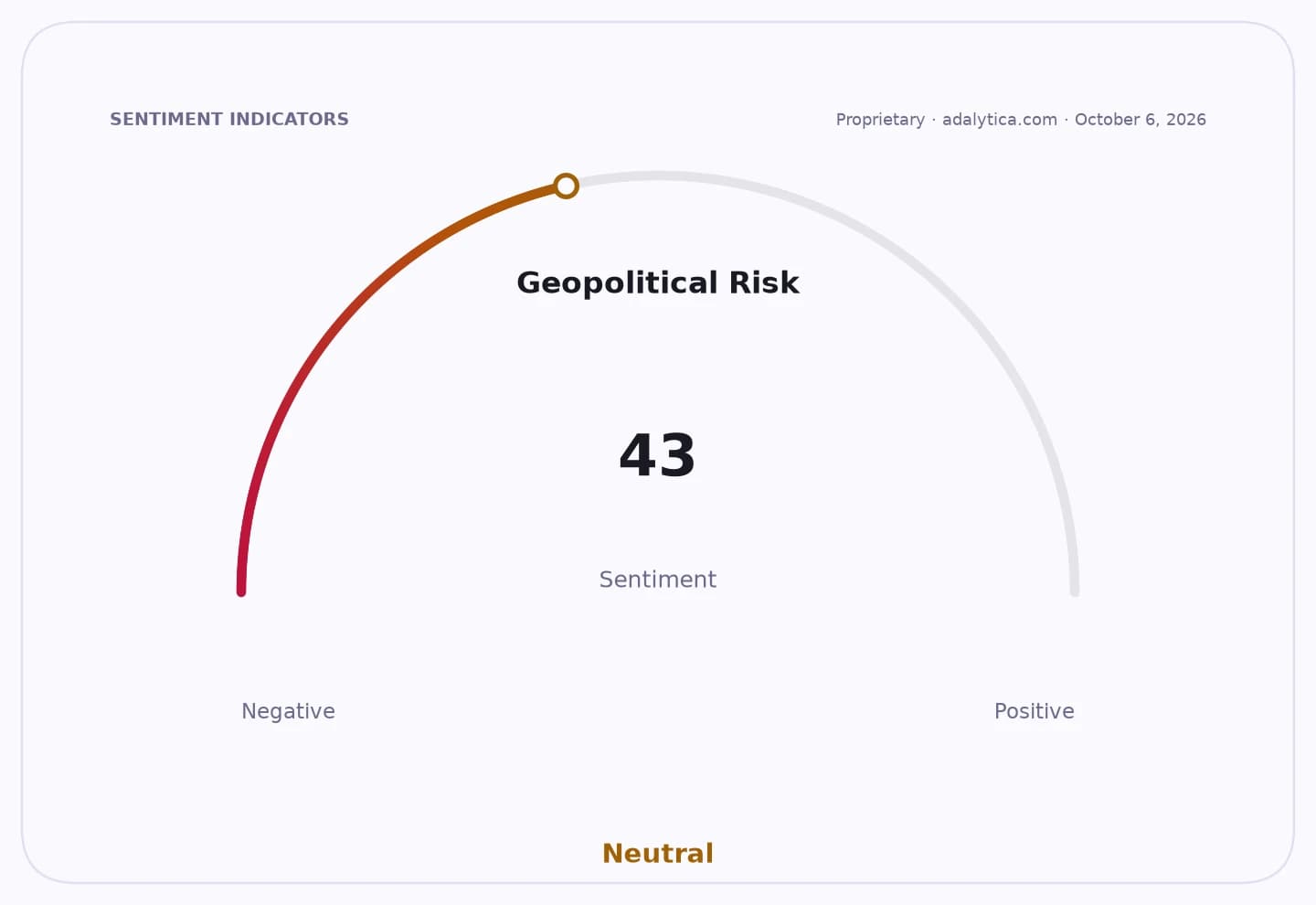
Sentiment IndicatorsⓘProprietary · adalytica.com · October 3, 2026
This is a snapshot — live sentiment, awareness and momentum for 130+ markets update continuously in the dashboard.Open AlphaPulse
For investors and fuel markets, the change points to a government increasingly focused on keeping barrels flowing now rather than preserving the original modernization schedule. That is a pragmatic response to repeated strikes on infrastructure, which have forced companies to divert capital and manpower to emergency restoration. It also suggests that downstream bottlenecks, not crude production, are becoming the key constraint on Russia’s domestic energy system.
Novak said protective systems, including air defenses and physical barriers, have been strengthened and are helping reduce the scale of damage and speed up restarts. Even so, the policy shift is a clear admission that refinery operators cannot simultaneously absorb attack-related repairs and complete planned capacity upgrades on time.
The economic trade-off is straightforward: postponing modernization may preserve fiscal support for refiners, but it also delays efficiency gains, product quality improvements and longer-term resilience. Russia had expected the 2020 program to bring 50 new units on line across the sector at a cost of about 1 trillion rubles. That investment case is now being subordinated to short-term supply security.
The domestic fuel picture is uneven. Novak said diesel remains balanced, with output about 80% above internal demand, and the government is considering reopening some exports if inventories build too much and risk curbing refining runs. Gasoline is tighter, but officials said the situation remains under control.
That helps explain why Moscow is also leaning on distribution controls. Novak ordered tighter oversight of retail pricing and priority supply for independent fuel stations, especially in regions such as Omsk and Tomsk, to avoid localized shortages during autumn field work and ahead of winter. For the government, the political risk is not only national supply but regional price spikes that can quickly become a broader inflation problem.
The shift favors operational refineries and firms able to restore units quickly, while it hurts the long-term modernization narrative that supported investment spending across the sector. For consumers, the immediate benefit is more emphasis on physical availability and price stability. For shareholders, the message is that capital discipline in Russian refining is being replaced, at least temporarily, by damage control.
Western energy investors are watching because the same geopolitical forces that are pressuring Russian refineries are keeping global fuel markets tight. U.S. refiners have already cited strong margins and structural advantages, while disruptions abroad have limited capacity elsewhere. If Russia continues to defer upgrades while repairing existing assets, it could keep product flows volatile and maintain support for refined-fuel prices, even if crude benchmarks soften.
The broader implication is that Russia’s refining industry is moving into a reactive phase in which resilience matters more than modernization. Until attacks ease, the sector’s investment cycle will be dictated less by planned upgrades than by the pace at which damaged plants can be brought back online.
| Entity | Gains | Losses |
|---|---|---|
| Russian refiners | ▲Keeps state support | ▼Delayed modernization |
| Consumers | ▲Short-term fuel supply | ▼Less efficiency gains |
| Independent gas stations | ▲Priority deliveries | ▼Tighter oversight |
| Global refiners | ▲Higher product margins | ▼More supply volatility |