Russia has brushed off Norway’s push to hold talks on reducing the risk of sea incidents, underscoring how fragile even limited military contacts remain as NATO strengthens its posture in the Arctic and Europe watches for any spillover from the Ukraine war.
Russia Rejects Norway Talk on Arctic Sea Incidents
The response matters because maritime deconfliction between Russia and a NATO member would normally be a modest but useful way to lower the chance of accidents at sea. Instead, Russian officials are framing Oslo’s offer as a “game,” signaling that Moscow is treating the initiative with suspicion rather than as a confidence-building step.
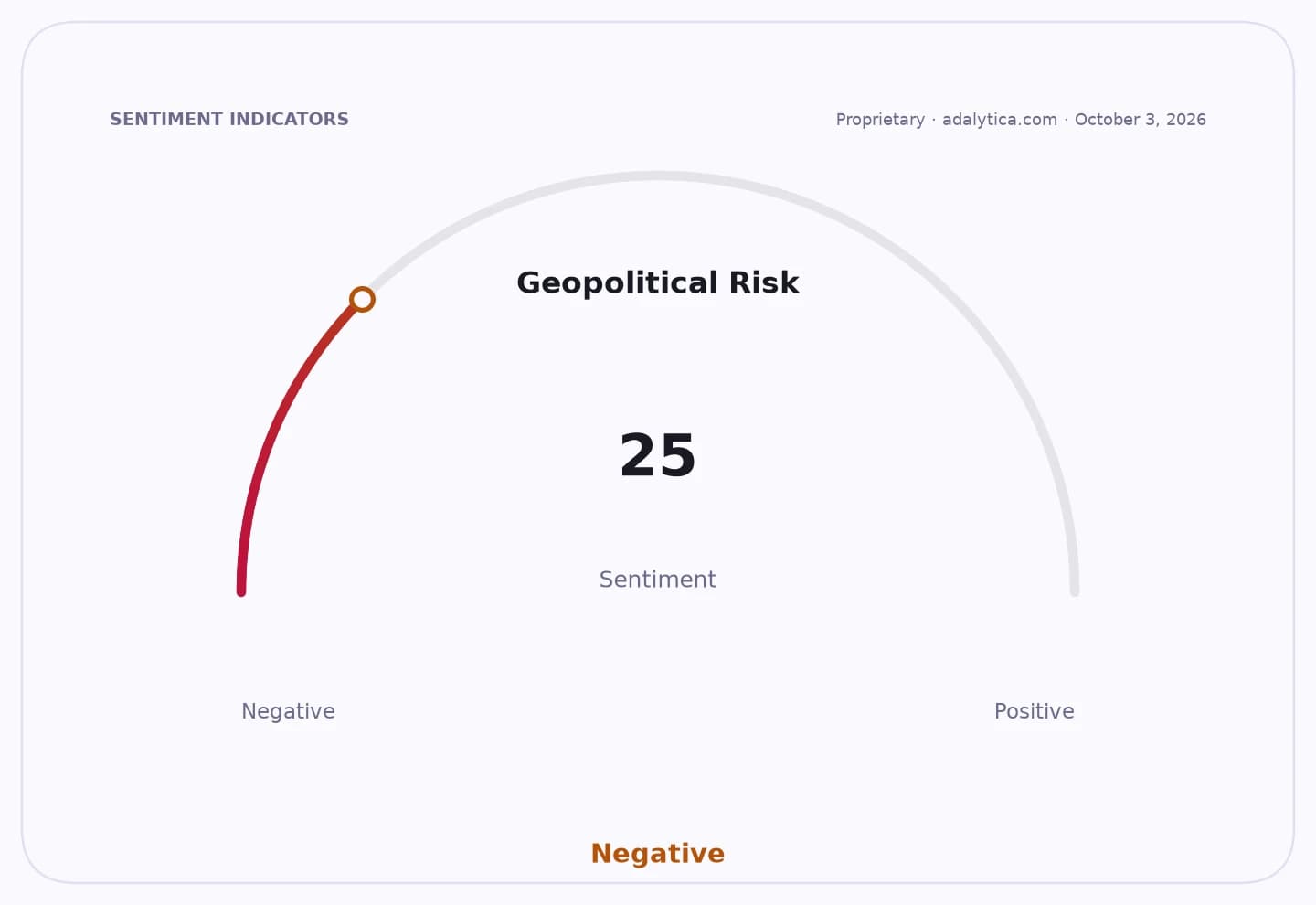
Sentiment IndicatorsⓘProprietary · adalytica.com · September 9, 2026
This is a snapshot — live sentiment, awareness and momentum for 130+ markets update continuously in the dashboard.Open AlphaPulse
Viktor Sobolev, a member of the Russian State Duma defense committee, said Russia should pay attention to “real steps” rather than statements and described Norway as an “unfriendly country,” according to Gazeta.Ru. His remarks came after Norwegian armed forces spokesman Rune Hårstad said Oslo wanted consultations with Moscow by the end of 2026 to prevent incidents in open water, with the Norwegian military tasked with organizing the meeting.
The exchange highlights the broader strategic breakdown between Russia and NATO, where even practical military-to-military channels are being filtered through geopolitical rivalry. That matters economically because the Arctic is emerging as a more contested corridor for shipping, energy flows and military logistics, raising the premium on stability for insurers, shippers and energy-linked investors.
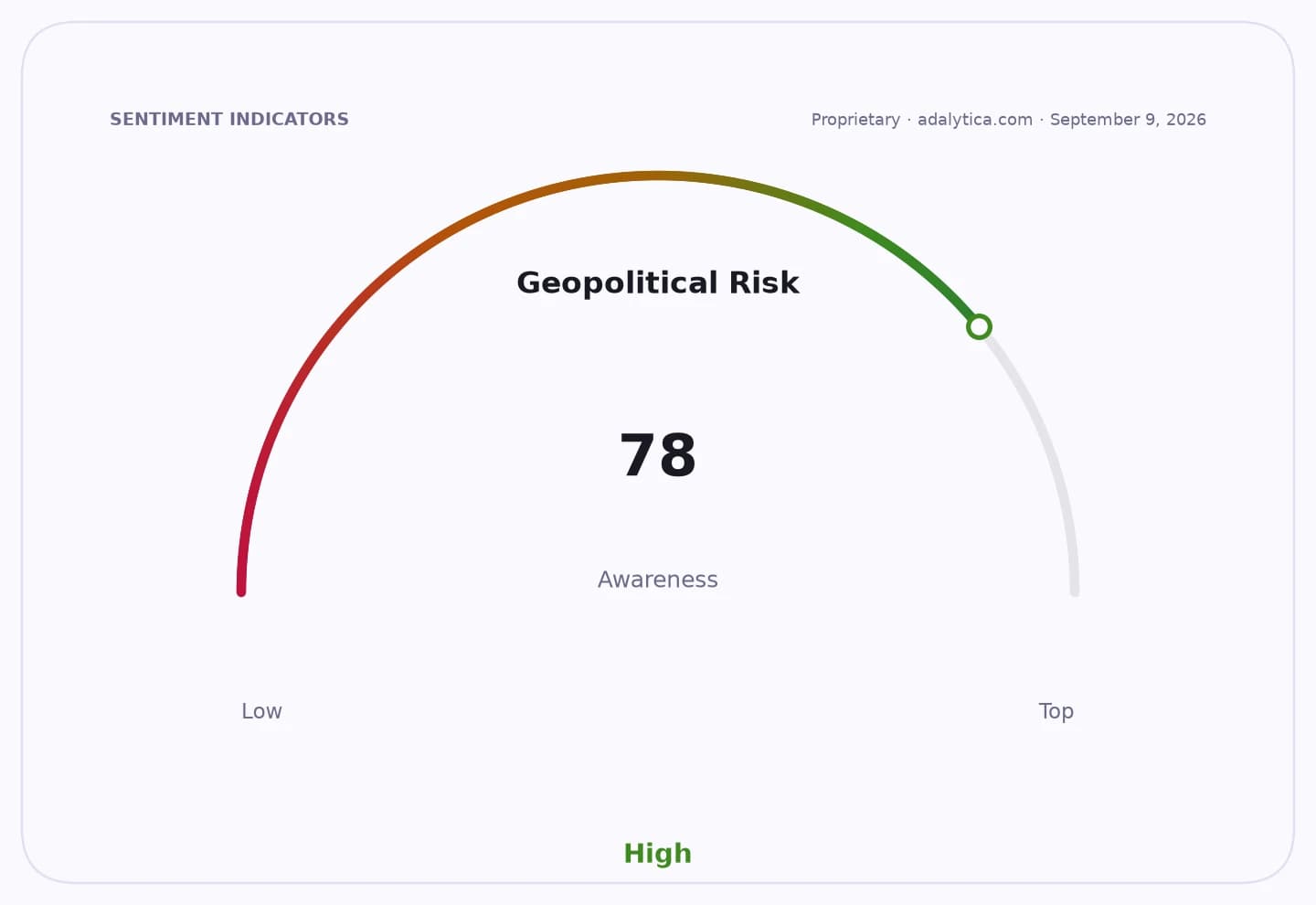
For markets, the immediate read is not a direct price catalyst so much as a reminder that geopolitical risk around the high north remains elevated. Adalytica’s Global Stability Sentiment sits at 44, in neutral territory, but awareness is elevated at 78, suggesting investors are still closely tracking the risk of escalation even after the latest dip in the gauge.
Russias hard line also fits a wider pattern of heightened rhetoric around NATO’s military buildup and Moscow’s warning that the alliance is preparing for war. For investors, that keeps the focus on defense spending, energy security and any assets exposed to North Atlantic shipping routes or sanctions risk.
The next watch point is whether Norway follows through on the consultation plan and whether Russia signals any willingness to engage beyond public rebuttals. Any real talks would be a modest de-escalatory step; failure to engage would reinforce the view that Arctic security remains a live geopolitical risk for Europe.
| Entity | Gains | Losses |
|---|---|---|
| Norway | ▲Diplomatic initiative | ▼Credibility if Russia rebuffs |
| Russia | ▲Strategic leverage | ▼Trust with NATO neighbors |
| Shipping and insurers | ▲Lower incident risk if talks happen | ▼Higher risk premium if tensions rise |
| NATO allies | ▲Better deconfliction if dialogue opens | ▼More escalation risk if it fails |