Russia’s latest attempt to redraw Ukraine’s map is raising the geopolitical risk premium on Europe’s eastern flank, even as markets in the region show that investors still prefer to buy the dip rather than price an outright crisis.
Russia Rhetoric Lifts Europe Geopolitical Risk Premium
The immediate issue is not just rhetoric from Moscow but what it implies for the durability of the postwar European security order. By reviving claims that parts of western Ukraine “belong” to Romania, Hungary and Poland, President Vladimir Putin is signaling that the conflict is not confined to a bilateral war over Ukraine’s sovereignty. It is a challenge to borders, alliances and the credibility of NATO’s deterrence in countries that sit closest to the front line.
That matters economically because border risk changes how capital is allocated across Europe. Higher perceived instability tends to widen sovereign spreads, lift hedging costs, delay investment and keep foreign capital cautious toward central and eastern Europe. It also raises the likelihood of prolonged defense spending, sanctions pressure and trade disruption. For exporters, logistics firms and energy importers, the cost of doing business rises when the security backdrop deteriorates.
The market read-through is visible in exchange-traded funds tied to the region. The iShares MSCI United Kingdom ETF, EWU, has climbed to 47.26, above its 50-day moving average of 46.26 and its 200-day average of 44.62, with RSI at 50.4 and the MACD still positive. Poland-focused EPOL has also strengthened, rising to 40.99, above both its 50-day and 200-day moving averages, while RSI at 65.6 points to momentum that is firm but not yet extreme. The iShares MSCI Hong Kong ETF, EWH, though less directly exposed to the war, has also pushed higher, underscoring a broader appetite for risk assets even as geopolitical fear remains elevated.
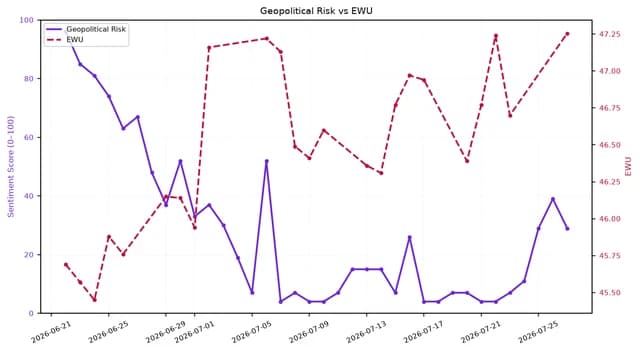
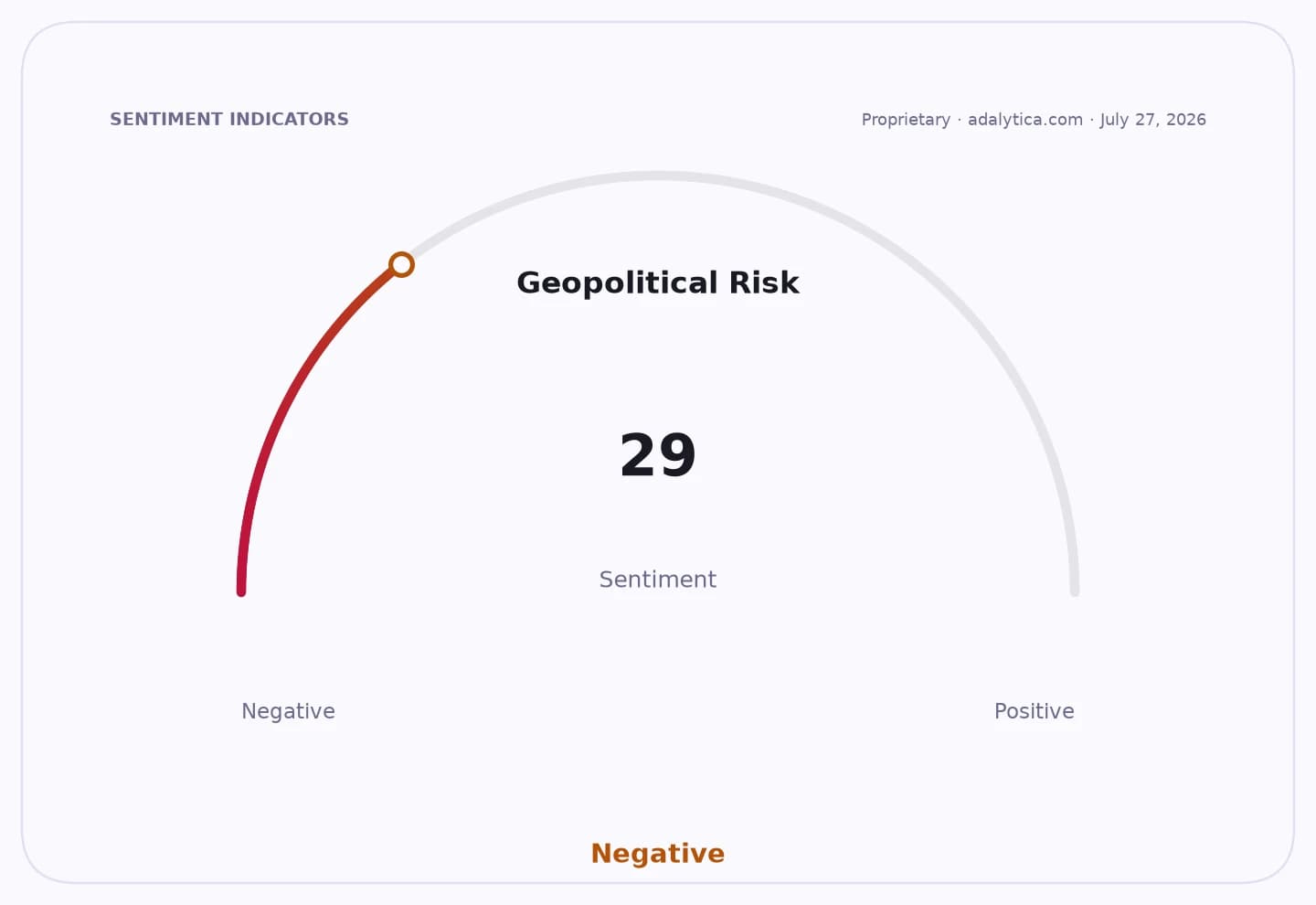
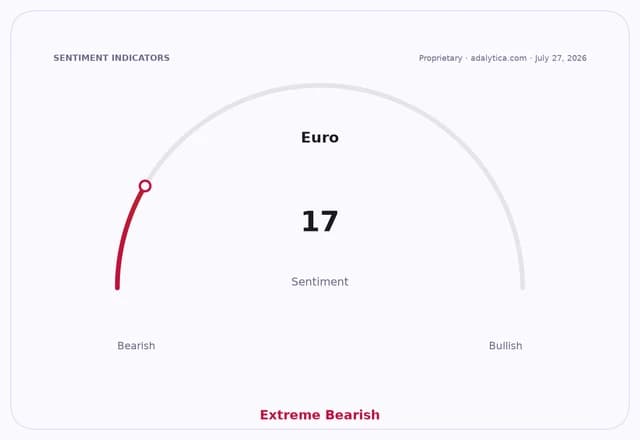
That tension is the story for investors: the war is becoming more dangerous, but markets are not yet fully discounting the tail risks. Adalytica’s Global Stability Sentiment gauge is in “Fear” at 29, with the one-day reading down 7 points even after a sharp seven-day jump in volatility. The euro trade signal is even more telling: awareness is at 95, but sentiment is just 17, a combination that suggests traders are watching Europe closely while remaining wary of a clean risk-on call.
For Poland, Romania and Hungary, Putin’s framing is more than propaganda. It is a reminder that Russia may use historical claims to justify pressure not only on Kyiv but on NATO’s eastern members. That keeps defense stocks, border-security contractors and infrastructure resilience themes in focus, while arguing for caution on assets most sensitive to any disruption in the Black Sea, overland supply chains and cross-border energy flows.
The bull case for markets is that such rhetoric remains part of Moscow’s pressure campaign and does not immediately translate into new territory or NATO confrontation. The bear case is that repeated claims against neighboring states normalize a wider revisionist agenda, increasing the odds of miscalculation and of a longer, more expensive conflict for Europe.
For now, the key catalyst is whether battlefield escalation turns into diplomatic spillover. If Moscow keeps broadening the political scope of the war, investors are likely to demand a higher premium for anything tied to eastern Europe — even if broad equity benchmarks continue to trade near technical support and momentum remains constructive.
| Entity | Gains | Losses |
|---|---|---|
| Defense contractors | ▲Higher order expectations | ▼Longer conflict risk |
| Eastern European equities | ▲Strategic interest | ▼Geopolitical discount |
| Ukraine | ▲Western support focus | ▼Territorial pressure |
| Poland/Romania/Hungary | ▲NATO relevance | ▼Border security risk |




