Russia is framing its confrontation with the West as a long-running economic and information war, a message that underscores why sanctions, energy shocks and geopolitical risk are likely to remain embedded in global markets even if the fighting in Ukraine eventually cools.
Russia Sanctions and Geopolitical Risk Keep Support
Foreign Minister Sergei Lavrov told a forum in Moscow that the “information war” against Russia began long before what the Kremlin calls its special military operation, arguing it accelerated when Vladimir Putin began pursuing a more independent domestic and foreign policy in the early 2000s. He said Russia now faces more than 30,000 sanctions — a record burden compared with any other country — and cast Western trade tools as part of a broader campaign of containment.
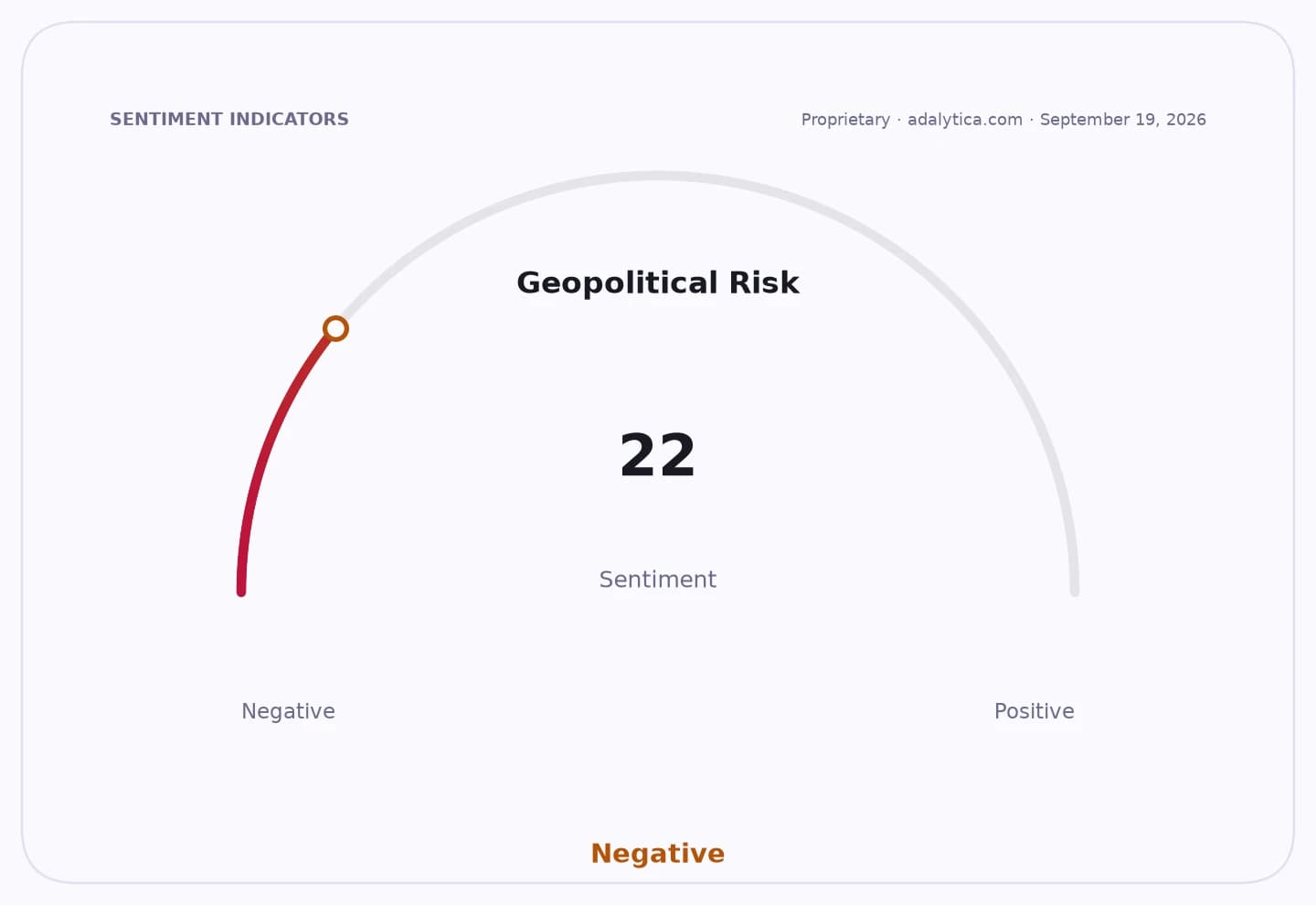
Sentiment IndicatorsⓘProprietary · adalytica.com · September 26, 2026
This is a snapshot — live sentiment, awareness and momentum for 130+ markets update continuously in the dashboard.Open AlphaPulse
That narrative matters because it keeps the Ukraine conflict from being viewed as a temporary wartime dislocation. If Moscow sees sanctions, tariffs and diplomatic pressure as structural rather than episodic, then the policy response is more likely to be a durable reordering of trade flows, payment systems, supply chains and commodity routing. For investors, that means the war premium is not just a headline risk; it is a standing feature of the market architecture.
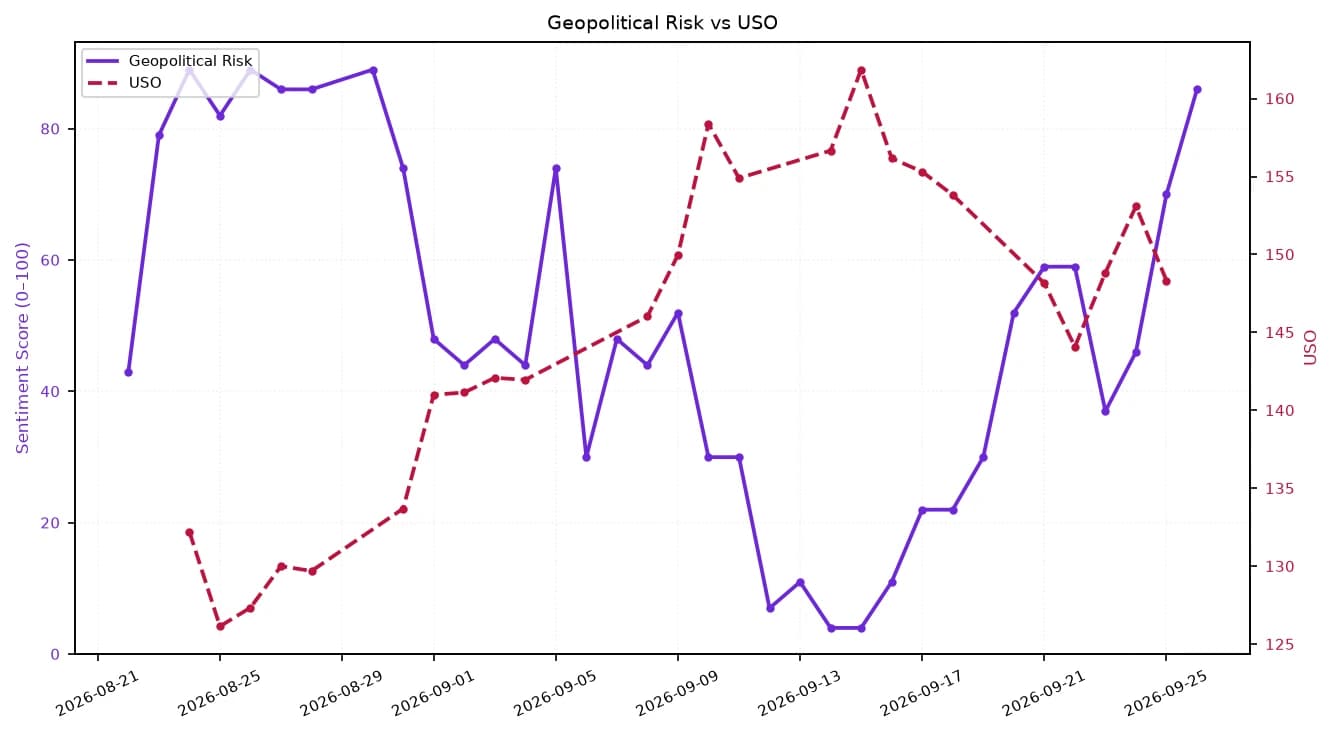
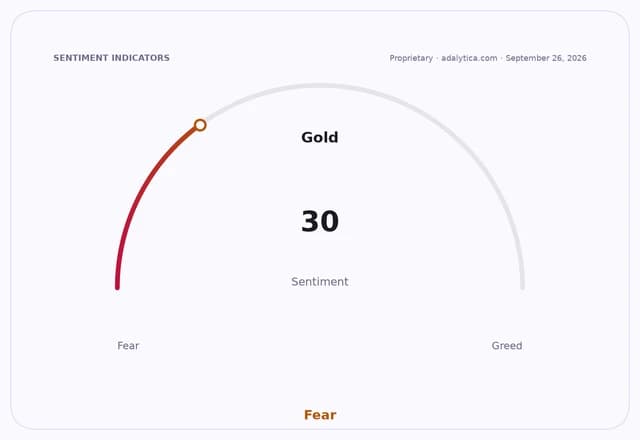
The biggest market implication is that geopolitical risk continues to support hard assets and security-linked sectors even when peace talks advance. Brent-style energy exposure and gold remain the obvious hedges when the world’s major powers are locked in a contest over narrative, leverage and trade. The gold ETF GLD has been trading below its 50-day moving average and is technically weaker in the near term, but that does not change the strategic case for owning metal when confidence in the global order is fragile.
Oil is the more immediate read-through. USO has surged far above its 50-day average, and while its recent pullback shows some cooling, the broader message is clear: energy markets are still pricing a world where geopolitics can interrupt supply, reroute barrels and force traders to add a risk premium quickly. In that kind of environment, the market underestimates the staying power of producers, pipeline operators and service companies that can benefit from chronic volatility rather than just one-off spikes.
Lavrov also tied Western pressure to what he described as declining Western economic influence and the growing weight of developing economies. That is a familiar Kremlin argument, but the investment takeaway is real: sanctions fragmentation accelerates the shift toward non-Western trade alliances, localized settlement systems and commodity deals insulated from dollar-based pressure. The winners are not just state actors, but also defense contractors, cyber-security firms, shipowners, insurers and infrastructure names tied to energy security.
The more useful thesis here is not whether Moscow or the West is right on the information war. It is that both sides are digging in for a prolonged contest, and prolonged contests are capital-allocation events. The market is already telling us where that capital is moving: into defense, energy, gold and strategic infrastructure, and away from the assumption that globalization will snap back to its pre-war shape.
If this confrontation remains frozen in place, the next leg higher in geopolitically sensitive assets could come from any escalation in sanctions, any setback in negotiations, or any fresh disruption to shipping and energy flows. For investors, the play is to stay positioned in the toll roads of conflict — the companies and funds that get paid when the world gets less cooperative, not more.
| Entity | Gains | Losses |
|---|---|---|
| Energy producers | ▲Higher risk premium | ▼Demand softness |
| Gold and GLD holders | ▲Safe-haven demand | ▼Real-yield spikes |
| Defense contractors | ▲More spending urgency | ▼Peace-dividend hopes |
| Importers in Europe | ▲Limited supply options | ▼Higher input costs |