Prices on Russia’s secondary housing market are rising because buyers are shifting away from new-builds and toward existing homes, a move that is lifting demand for the segment most readily accessible to households in a tight and uncertain credit environment.
Russia Secondary Housing Prices Rise
The Academy of Mortgages and Real Estate said the change in buyer preference has altered the pricing profile across housing types, with secondary-market homes seeing the clearest increase. That matters because in Russia, as elsewhere, the resale market is where price discovery is fastest: it is less dependent on developer incentives, more sensitive to household cash flow, and often the first place buyers turn when mortgage costs or construction risks make primary housing less attractive.
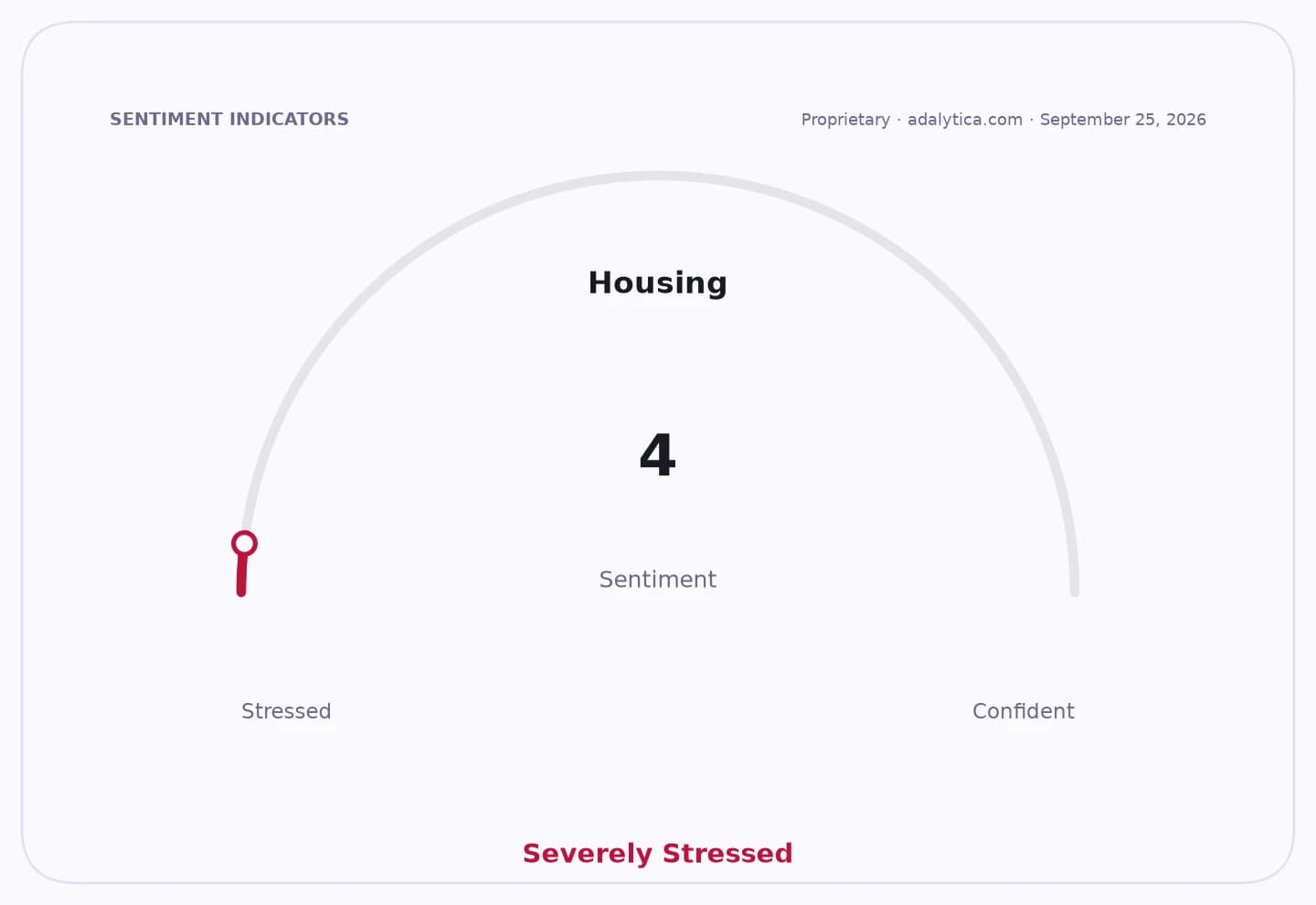
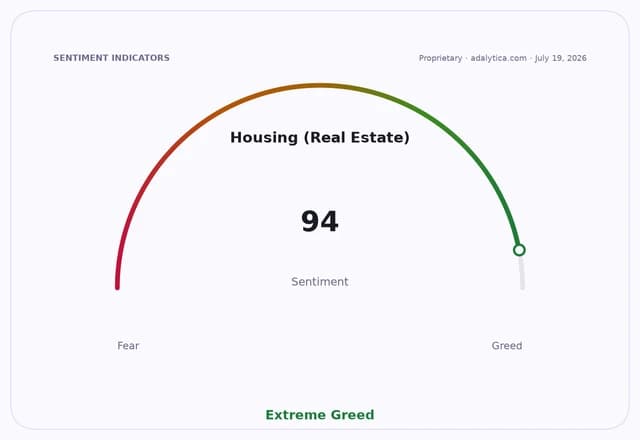
Sentiment IndicatorsⓘProprietary · adalytica.com · July 19, 2026
This is a snapshot — live sentiment, awareness and momentum for 130+ markets update continuously in the dashboard.Open AlphaPulse
For the economy, the shift signals a reallocation rather than a broad-based housing boom. If households are trading down to finished apartments and existing stock, it suggests affordability pressure remains acute and that demand is being shaped by financing constraints, not just by underlying demographics. That can support transaction volumes in the short term, but it also points to a bifurcated market in which sellers of ready housing gain pricing power while developers face a tougher environment for moving inventory without discounts or subsidized lending.
The data backdrop reinforces that view. In the public market gauge tracked by Adalytica.com, Russia-linked housing indicators show extreme greed in housing sentiment, while conventional technical indicators on LND and GHI point to a market that has been volatile rather than steadily improving. LND has recovered above its 50-day moving average and is hovering near that trend line, while GHI remains below its 200-day moving average after a steep drawdown, a pattern consistent with selective rather than broad housing optimism. In market terms, that usually favors assets tied to immediate rental or occupancy demand over those reliant on a stronger financing cycle.
The economic implications are mixed. A stronger secondary market can help stabilize household mobility, support notary and brokerage activity, and keep prices from softening too sharply in major cities. But it can also make entry-level ownership harder if buyers crowd into the limited stock of affordable existing homes, potentially widening the gap between households that can transact now and those waiting for better credit conditions. For developers, the message is more negative: if demand is migrating to resale units, the primary market may need deeper incentives, more flexible payment plans or policy support to avoid a slowdown.
Investors should read the move as a signal about Russian consumer resilience and about where housing value is concentrating. Owners of well-located existing apartments may benefit from firmer pricing, while new-home developers, mortgage lenders and construction-linked businesses may face more pressure if the preference shift persists. The key catalyst to watch is whether this is a temporary rotation driven by affordability and interest-rate conditions, or the start of a more durable repricing in which the secondary market becomes the main beneficiary of stressed buyers.
| Entity | Gains | Losses |
|---|---|---|
| Secondary-home sellers | ▲Higher asking prices | ▼Less bargaining power for buyers |
| Homebuyers seeking ready units | ▲Faster occupancy | ▼Higher upfront costs |
| Developers of new-builds | ▲— | ▼Slower sales and more discounting |
| Brokers and resale-market intermediaries | ▲More transaction flow | ▼— |