The Kremlin said Russia has not changed its position on Ukraine, underscoring that Moscow is still seeking a settlement on its own terms even as tougher US sanctions threaten to narrow the room for diplomacy.
Russia says Ukraine position unchanged amid sanctions
For markets, the message matters less as a fresh policy turn than as evidence that the war remains structurally entrenched. Kremlin spokesman Dmitry Peskov told reporters Russia wants “peace, not a ceasefire,” while reiterating that Moscow remains open to a political settlement. That distinction is important: a ceasefire would freeze the battlefield, but the Kremlin is signaling it does not see a pause as an acceptable end state unless it addresses Russia’s core demands.
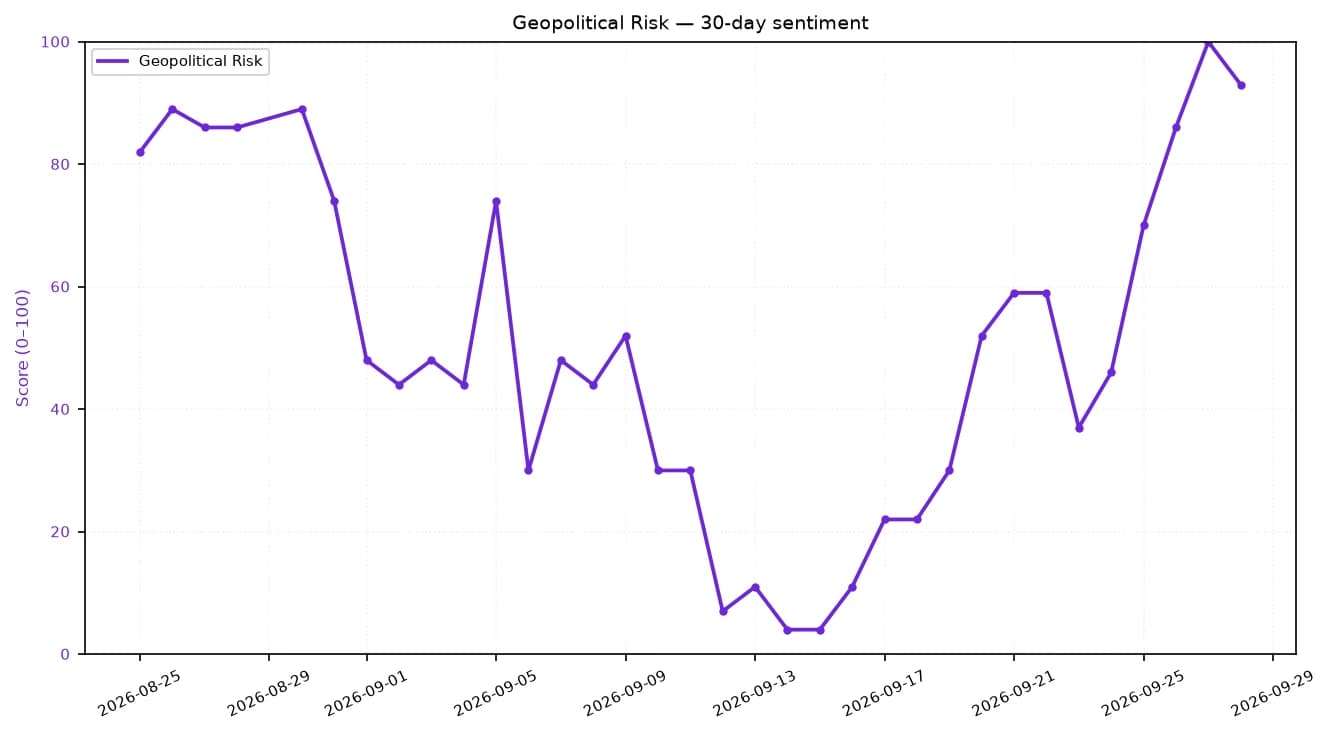
Sentiment IndicatorsⓘProprietary · adalytica.com · September 29, 2026
This is a snapshot — live sentiment, awareness and momentum for 130+ markets update continuously in the dashboard.Open AlphaPulse
The statement comes as Washington has approved new sanctions on Russia, a move Moscow says will make any deal harder to reach. In practical terms, that raises the risk of a longer war, more sanctions pressure and a deeper split between the US and Russia-backed negotiations. It also suggests any diplomatic opening will likely remain fragile, because both sides continue to frame the conflict in incompatible terms.
For investors, the immediate readthrough is to energy, commodities and broader risk appetite. A prolonged conflict tends to keep a geopolitical floor under oil and gas markets, even if supply disruptions are not immediate. It also preserves demand for safe havens when escalation risk rises. That backdrop helps explain why the market has remained sensitive to every diplomatic signal, even as the broader “global stability” gauge in Adalytica’s data shows extreme greed alongside extreme fear — a sign that headline risk can still reprice assets quickly.
The positioning in crude-linked USO and gold proxy GLD reflects that tension. USO closed at $150.01 on Sept. 28, well above its 50-day average of $136.15, while GLD finished at $377.91, below both its 50-day average of $395.62 and 200-day average of $416.39 after a recent pullback. That mix suggests traders still see geopolitical premium in oil, but gold has been less of a one-way hedge as expectations for policy, rates and risk sentiment shift.
The deeper economic issue is that sanctions and war-related uncertainty keep distorting trade flows, capital allocation and defense spending across Europe and beyond. For Russia, tighter sanctions can further limit access to technology, financing and export channels. For the West, they can sustain inflationary pressure in energy-sensitive sectors and complicate central bank easing if commodity prices spike again.
The bull case for markets is that Moscow’s insistence on being open to talks keeps a diplomatic channel alive, limiting the odds of outright escalation. The bear case is that the Kremlin’s insistence it has not changed position signals little movement on the substantive terms needed for a deal, making sanctions, battlefield friction and periodic market shocks the more likely baseline.
What investors should watch next is whether sanctions enforcement widens, whether Ukraine-Russia contacts produce any prisoner or body exchange momentum, and whether energy markets start to price a more durable geopolitical premium rather than a series of short-lived flare-ups.
| Entity | Gains | Losses |
|---|---|---|
| Russia | ▲Keeps leverage in talks | ▼Faces deeper sanctions pressure |
| US policymakers | ▲Increase pressure on Moscow | ▼Risk harder diplomacy |
| Oil producers | ▲Geopolitical price support | ▼Demand shocks if escalation hurts growth |
| Gold holders | ▲Safe-haven bid on conflict risk | ▼Lower hedge appeal if talks improve |