Russia is framing President Volodymyr Zelenskyy’s refusal to yield on territory as a benefit to Moscow just as U.S.-led consultations with Ukraine and European officials gather pace in Abu Dhabi, underscoring how the war’s diplomacy is being shaped by battlefield attrition and stalled compromise.
Russia-Ukraine Talks in Abu Dhabi Continue

The immediate significance is that any prolonged delay in negotiations can feed Russia’s military calculus, with the Kremlin-friendly assessment that “the longer Zelenskyy drags this out, the more territory” Russian forces can seize. That makes the talks matter not just as a diplomatic exercise, but as a potential determinant of the front line and the bargaining position of both sides.
Sentiment Indicators
The remarks came as Jared Kushner and U.S. special envoy Steve Witkoff were due to meet Europeans before three-way talks involving Russia and Ukraine, with discussions extending to European security and Ukraine’s postwar future. For markets, the key issue is whether the latest round of diplomacy produces even a temporary de-escalation or instead confirms that the conflict remains stuck in a grinding, high-risk phase.
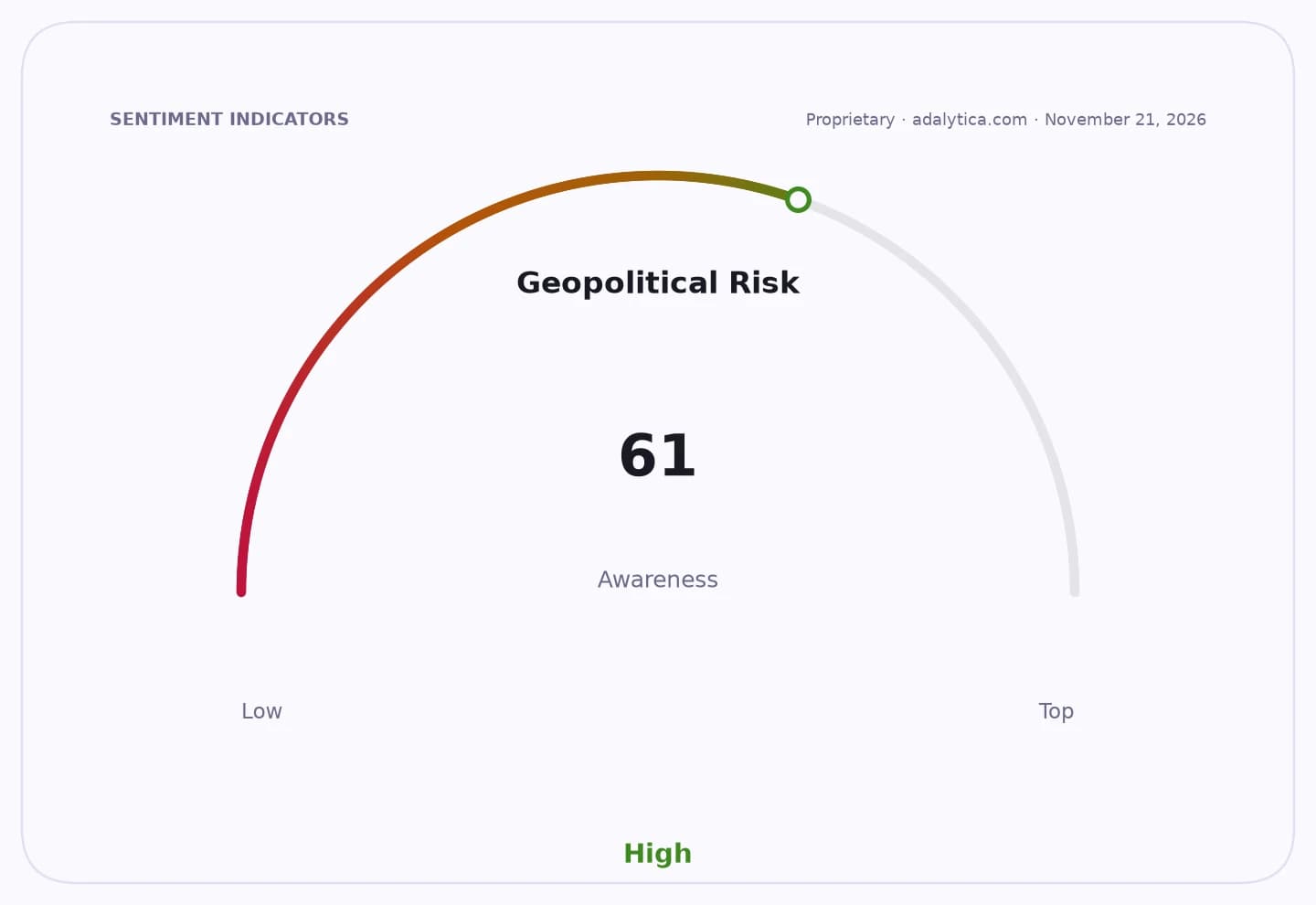
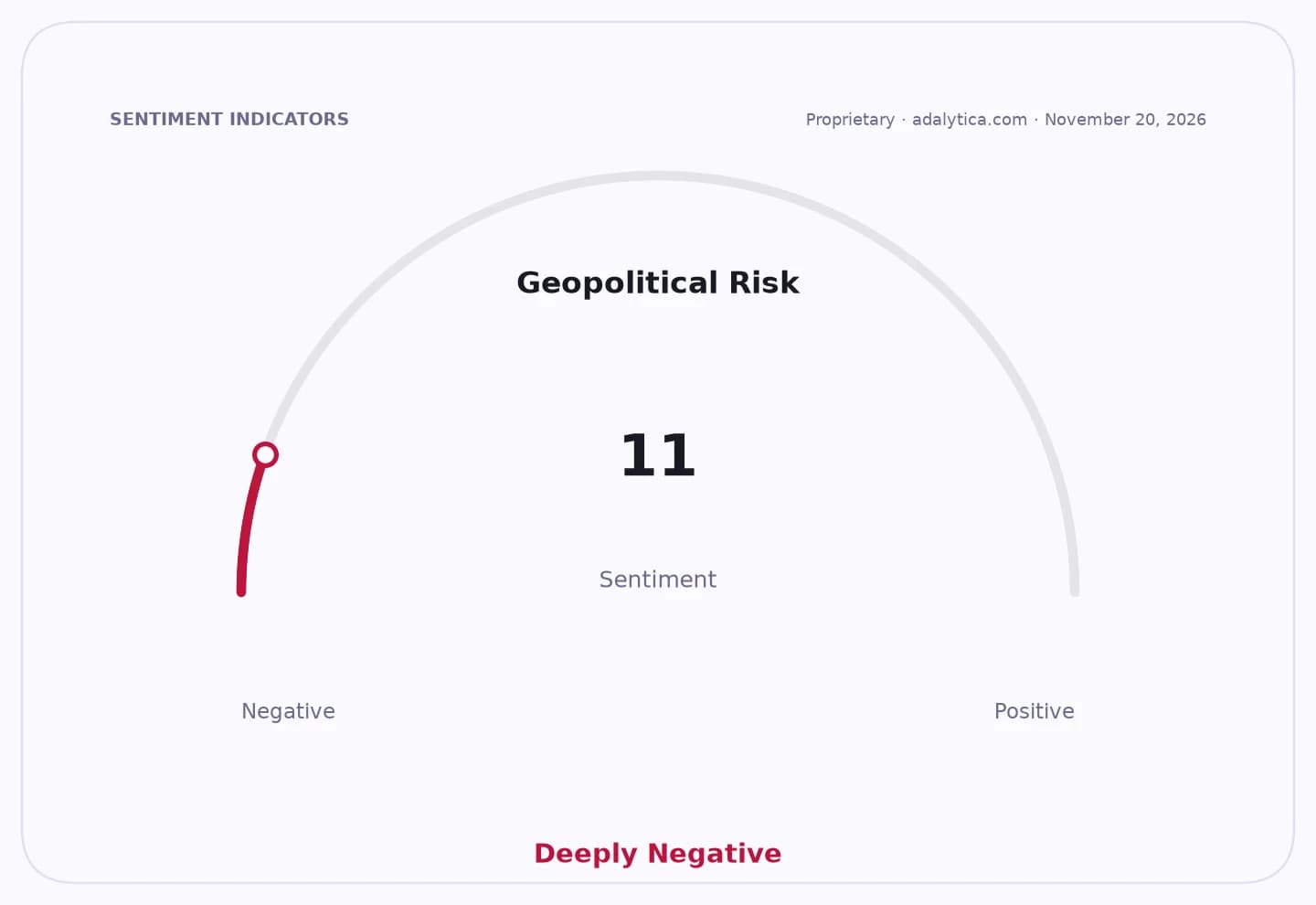
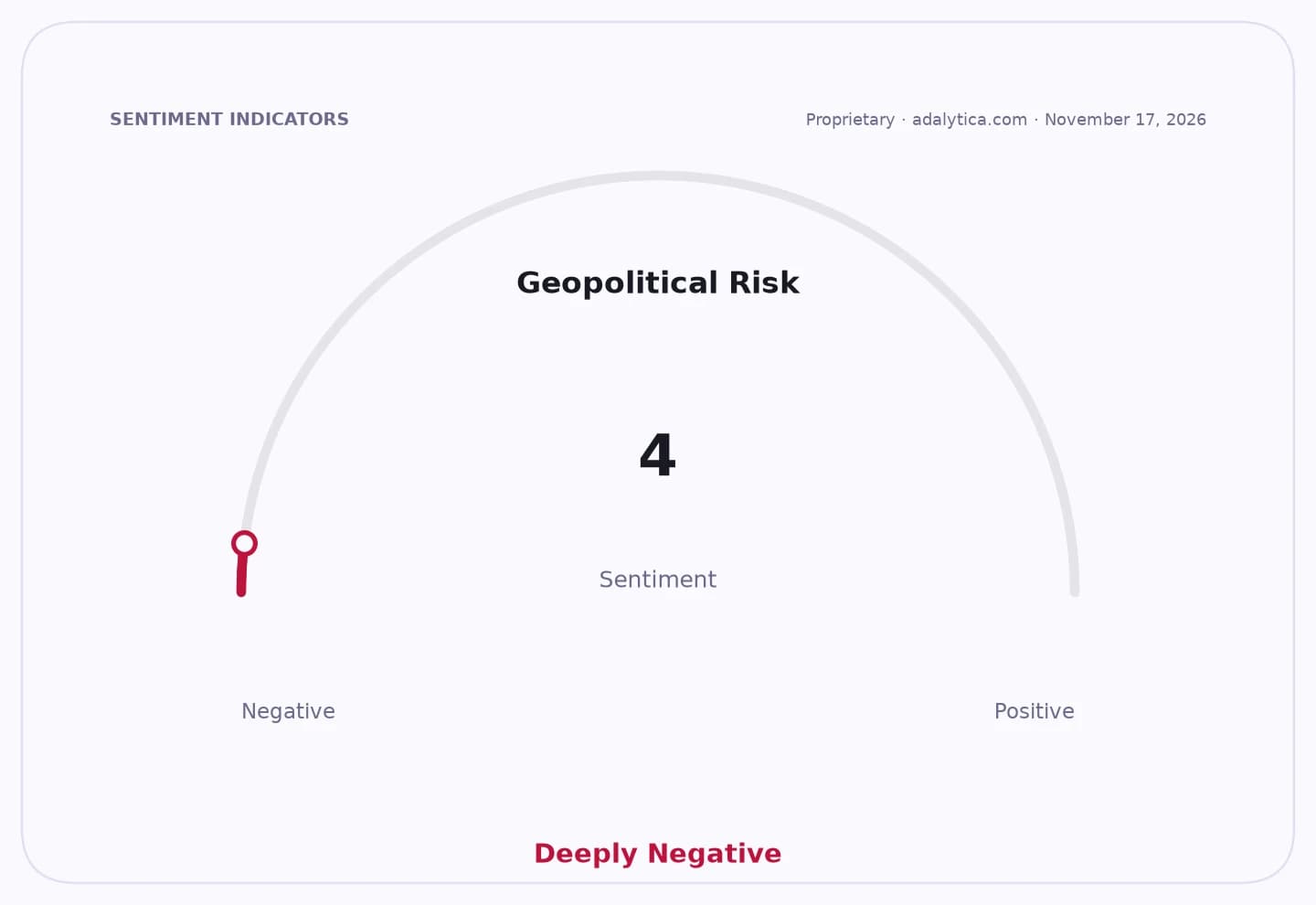
The broader backdrop is worsening global risk sentiment. Adalytica’s Global Stability Sentiment gauge shows “Extreme Fear” at 14, after a 52-point drop over seven days, reflecting how geopolitical tension continues to weigh on investor confidence even as western governments deepen support for Kyiv. The EU has approved fresh sanctions on Russia and a record aid package for Ukraine, reinforcing the view that the conflict is still a major drag on regional stability and energy, currency and defense markets.
Geopolitical Risk — 30-day sentimentadalytica.com
Explore this data interactively — full history, time series and cross-market comparisons.
For investors, the story is less about any single headline from Abu Dhabi than the probability that the war stays a volatility driver. A breakthrough could ease pressure on European assets and risk-sensitive currencies, while failure would keep defense spending, sanctions risk and safe-haven demand elevated.
| Entity | Gains | Losses |
|---|---|---|
| Russia | ▲More time to press battlefield advantage | ▼Negotiating pressure if talks harden |
| Ukraine | ▲Continued Western backing | ▼More territorial and military strain |
| European markets | ▲Relief if talks progress | ▼Higher volatility if war escalates |
| Safe havens | ▲Support from risk aversion | ▼Momentum if geopolitical fear eases |