Russia said resolving the return of diplomatic property and restoring direct air links with the United States would be a key step toward normalizing relations, underscoring how limited but tangible issues are now anchoring a wider diplomatic thaw.
Russia seeks U.S. talks on flights and diplomatic property
The remarks from the Russian foreign ministry point to a practical bargaining track rather than a sweeping political breakthrough. Moscow is effectively saying that progress on two concrete files — embassy and consular property, and direct aviation links — could unlock broader dialogue on security, regional disputes and other bilateral irritants. For investors, that matters because even incremental de-escalation between Washington and Moscow can alter the geopolitical risk premium across currencies, energy, defense and Europe-linked assets.
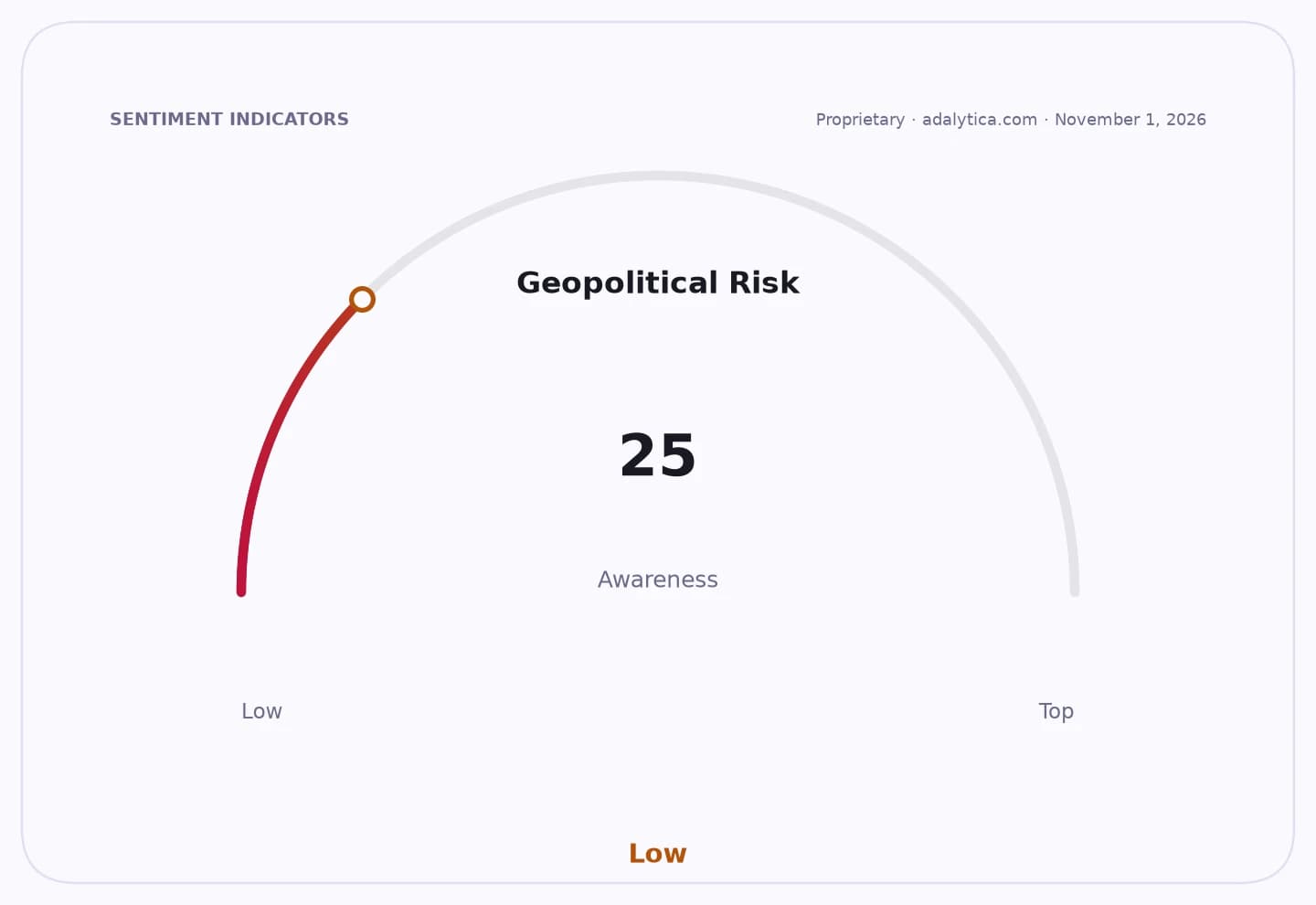
Sentiment Indicators
Alexander Gusarov, director of the Foreign Ministry’s North Atlantic Department, said in an interview with the magazine International Affairs that Russia still does not see enough political will from the U.S. side, but that Moscow continues to search for ways to address the issues. He added that the next round of talks to remove problematic factors in the relationship could take place by year-end, with exact timing to be coordinated through diplomatic channels.
The emphasis on a year-end meeting suggests both sides are keeping the door open even as broader tensions remain elevated. That is notable because the U.S.-Russia relationship has remained among the most distorted major-power links since the war in Ukraine, with sanctions, asset restrictions, aviation curbs and the closure of diplomatic facilities all weighing on commerce and mobility. Any progress on the specific items highlighted by Moscow would not amount to normalization on its own, but it would signal a willingness to restore at least some operational baselines.
Economically, direct flights and property access are not only symbolic. Aviation links affect business travel, logistics, insurance and the broader feasibility of commercial engagement. Diplomatic property disputes, meanwhile, are a proxy for the state of bilateral relations and can either obstruct or facilitate staffing, consular services and negotiation capacity. Even modest improvement could ease some transaction costs for companies and institutions that still have exposure to Russia-related or Europe-adjacent risk.
Markets are unlikely to price in a major shift until there is more than diplomatic signaling, especially given the unresolved strategic backdrop. That is where the gap between bullish and bearish interpretations remains wide. The bull case is that incremental talks reduce the risk of further escalation and create room for narrowly defined accommodations. The bear case is that Moscow is simply creating diplomatic optics without concessions from Washington, while the core conflict dynamics remain unchanged.
Adalytica’s Global Stability Sentiment gauge shows “Extreme Greed” at 100 with “Extreme Fear” in awareness, reflecting how quickly geopolitical headlines can swing market positioning even when the policy path remains uncertain. Against that backdrop, any sign of lower U.S.-Russia friction tends to benefit risk assets at the margin and pressure safe-haven demand, while renewed deadlock would reinforce demand for defensive positioning.
For now, the story is less about a reset than about process. If the two sides can agree on even narrow technical steps before year-end, that would indicate the relationship is moving from confrontation toward managed contact. If talks stall, the signal will be the opposite: that symbolic openness remains easier than substantive normalization.
| Entity | Gains | Losses |
|---|---|---|
| Russia | ▲Diplomatic leverage | ▼Continued isolation |
| United States | ▲Reduced escalation risk | ▼Hardline posture flexibility |
| Risk assets | ▲Lower geopolitical premium | ▼Safe-haven demand |
| Defense and sanctions trades | ▲Less immediate urgency | ▼Sustained tension premium |