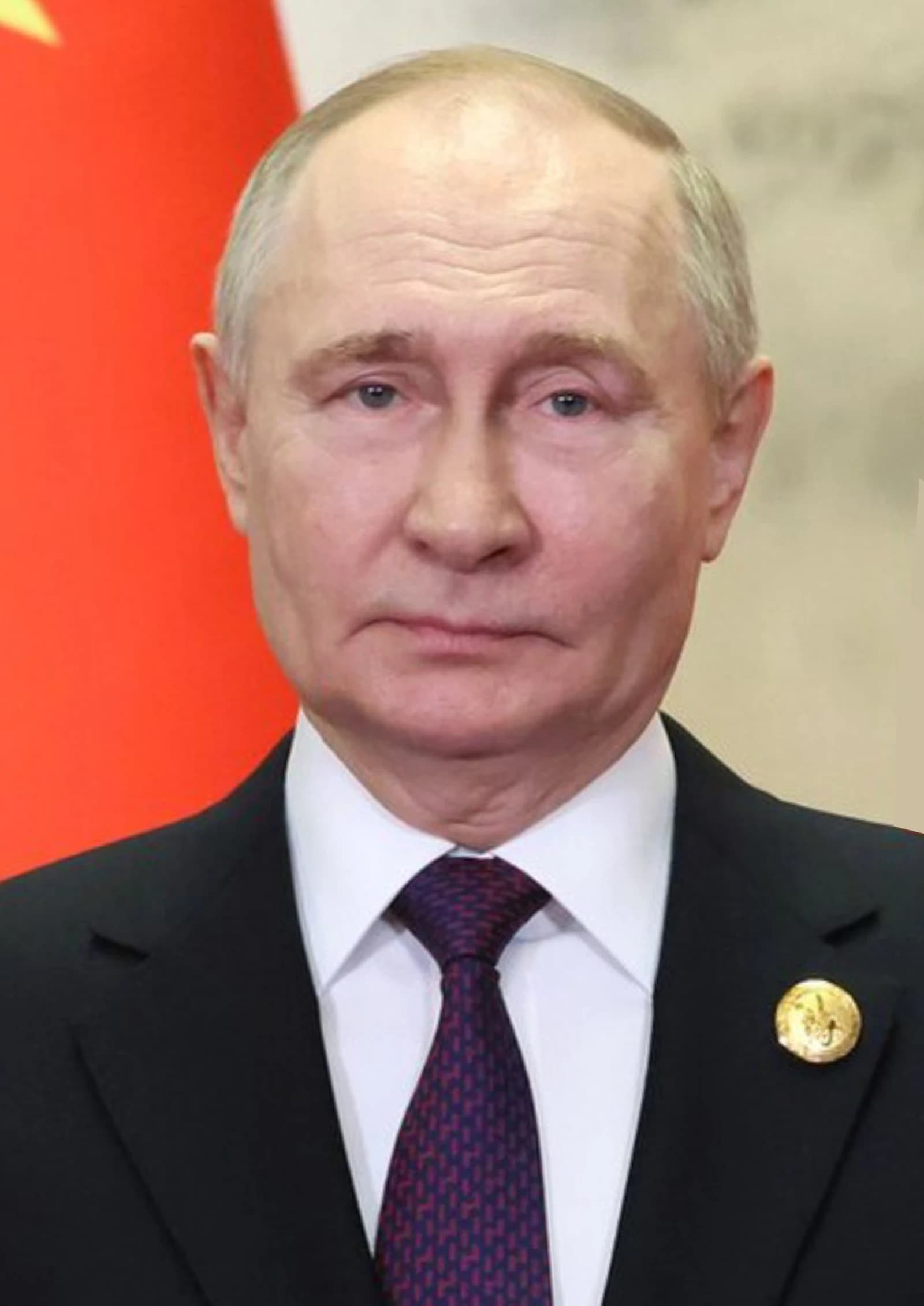
Russia’s claim to great-power status is being tested by the war in Ukraine, with former Foreign Minister Pavlo Klimkin saying the U.S. does not see the Kremlin as a global equal and with Moscow now facing attacks on its own infrastructure deep inside the country.
Russia war pressure deepens as Ukraine strikes inland
That matters because the perception of Russian strength still shapes diplomacy, sanctions policy and investor risk appetite around everything from energy flows to regional security. If Washington and its allies increasingly treat Russia as a declining military power rather than a peer competitor, Moscow’s leverage in any future negotiations weakens even as the war raises costs for Europe and global commodities.
Sentiment Indicators
The latest fighting shows why that question is more than rhetorical. Moscow said it came under a drone attack in Nizhny Novgorod, while Russian strikes have battered Ukrainian infrastructure, including power grids, gas stations and homes in the Kharkiv region. Ukraine says more than 550,000 families have been left without electricity, underscoring how the conflict continues to grind down civilian life and critical services on both sides.
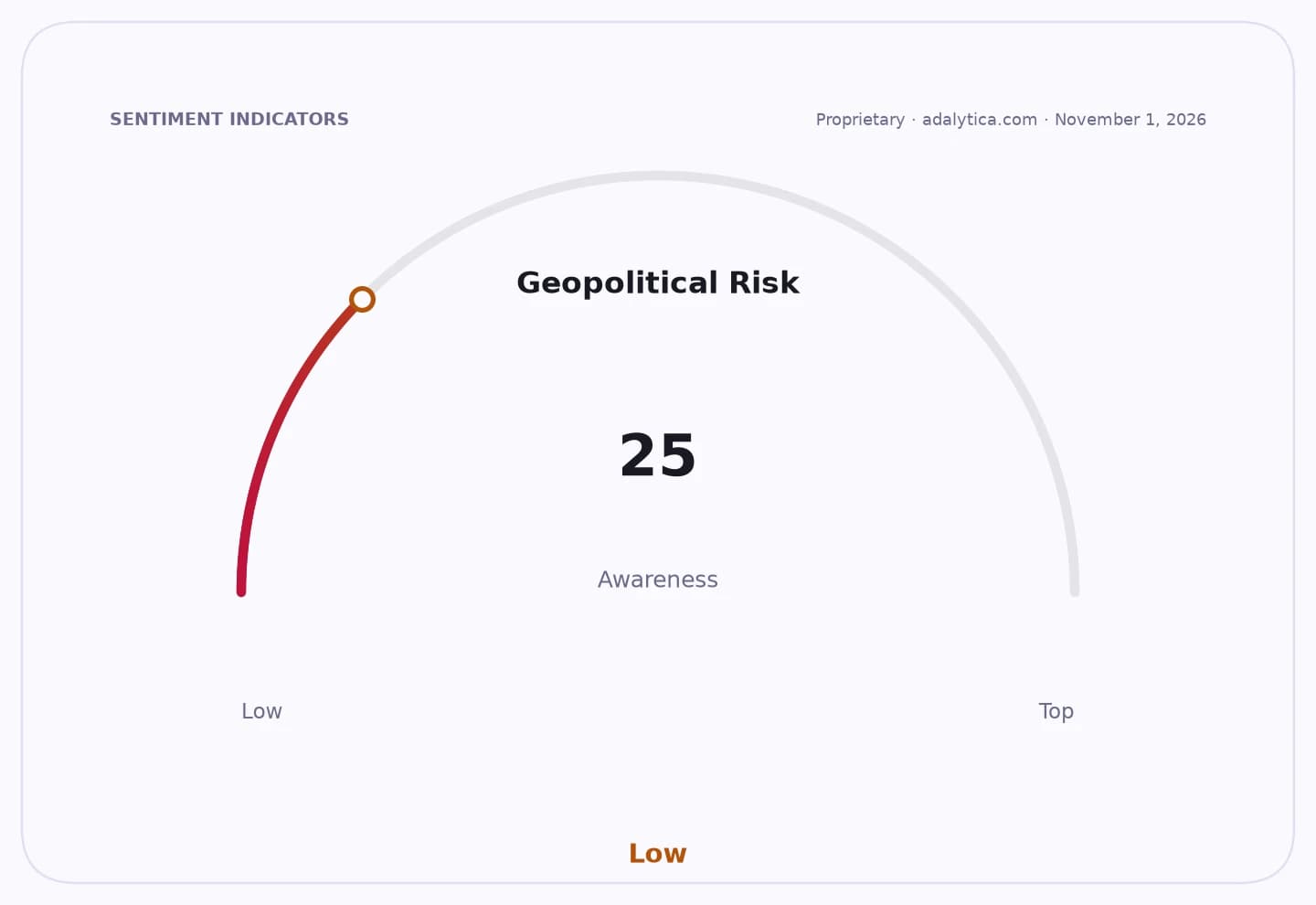
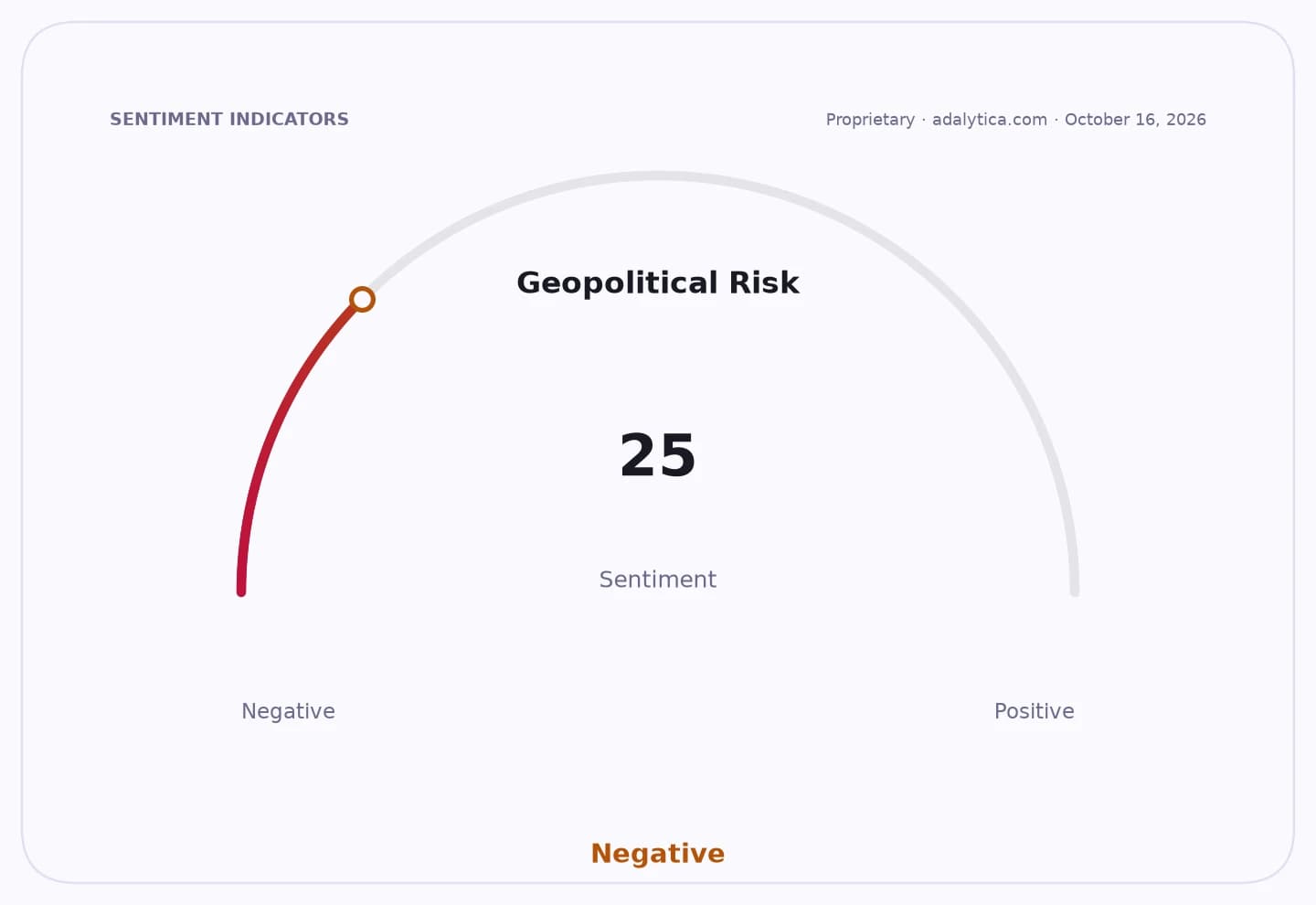
For investors, the immediate takeaway is that the war remains a volatility engine for energy, defense and broader European risk assets. Russia’s ability to project power is under pressure as Ukraine’s Neptune missile has demonstrated longer-range reach, hitting deep inside Russian territory and sharpening Moscow’s security concerns at a time when the country is still trying to preserve its image as a major power.
Geopolitical Risk — 30-day sentimentadalytica.com
Explore this data interactively — full history, time series and cross-market comparisons.
The geopolitical backdrop is complicated by selective diplomacy. Russia has signaled it values dialogue with the U.S. and is exploring renewed contacts with NATO, while also pushing nuclear cooperation with African countries and Egypt, a reminder that Moscow is trying to offset battlefield setbacks with outreach in the Global South.
For markets, the key risk is that escalation stays one-way: more infrastructure damage, more pressure on energy security and no clear off-ramp. Until that changes, Russia’s standing as a “great power” will matter less for prestige than for the price of oil, the outlook for sanctions and the premium investors assign to geopolitical risk.
| Entity | Gains | Losses |
|---|---|---|
| Ukraine | ▲More leverage from deep strikes | ▼Faces continued infrastructure damage |
| Russia | ▲Diplomatic outreach outside the West | ▼Great-power credibility and battlefield control |
| Europe | ▲Stronger case for security spending | ▼Higher energy and geopolitical risk |
| Energy markets | ▲Potential risk premium | ▼Stability and supply predictability |